

Many people assume all moisturizers hydrate skin the same way, but that’s far from the truth. The secret to truly effective hydration lies in understanding humectants, specialized ingredients that actively attract and bind water to your skin. While some products simply sit on the surface, humectants work at a molecular level to draw moisture where it’s needed most. This guide reveals how humectants function, which ones deliver the best results, and how to use them properly to transform your skincare routine and achieve lasting hydration.
Table of Contents
- What Are Humectants And How Do They Work?
- The Three Pillars Of Moisturizers: Humectants, Occlusives, And Emollients
- Key Humectant Ingredients And How To Choose The Right Ones For Your Skin
- How Environmental Humidity Affects Humectant Effectiveness And Skin Hydration
- Enhance Your Skincare Routine With Effective Humectant Products
- Frequently Asked Questions
Key takeaways
| Point | Details |
|---|---|
| Humectants attract moisture | These ingredients pull water molecules from the air or deeper skin layers to hydrate the stratum corneum effectively. |
| Humidity impacts performance | In high humidity, humectants draw moisture from the environment, but in dry conditions, they may pull water from your skin instead. |
| Pairing prevents moisture loss | Combining humectants with occlusives creates a barrier that locks in hydration and prevents water from escaping. |
| Common types include glycerin | Glycerin and hyaluronic acid are proven humectants that suit most skin types and deliver consistent hydration benefits. |
| Balanced formulas work best | Effective moisturizers combine humectants, occlusives, and emollients to hydrate, protect, and smooth skin simultaneously. |
What are humectants and how do they work?
Humectants are skincare ingredients specifically designed to attract and bind water molecules from the atmosphere or deeper skin layers to the stratum corneum, your skin’s outermost protective barrier. This unique ability makes them essential for maintaining proper skin hydration and supporting overall skin health.
The mechanism behind humectants centers on their hygroscopic nature and chemical structure. These molecules contain multiple polar groups that form hydrogen bonds with water, creating a magnetic attraction that pulls moisture toward them. When you apply a humectant to your skin, it doesn’t just sit on the surface. Instead, it actively seeks out water molecules and binds them to the stratum corneum, where they can penetrate and plump skin cells.
The source of this moisture depends on environmental conditions. In humid environments, humectants draw water from the surrounding air, delivering external hydration directly to your skin. In drier conditions, they may pull moisture from the dermis, the deeper layer beneath the stratum corneum, bringing it to the surface where it’s most visible and beneficial.
Understanding the stratum corneum’s role helps explain why humectants matter so much. This thin outer layer acts as your skin’s primary defense against environmental damage and water loss. When properly hydrated, it remains flexible, smooth, and resilient. When dehydrated, it becomes rough, flaky, and prone to irritation. Humectants ensure this critical barrier stays saturated with moisture, supporting both appearance and function. Proper hydration in skincare creates the foundation for healthy, radiant skin.
Common humectant ingredients you’ll find in skincare products include:
- Glycerin, a versatile humectant that works across all skin types
- Hyaluronic acid, which holds up to 1,000 times its weight in water
- Alpha hydroxy acids like lactic acid, which hydrate while gently exfoliating
- Urea, a natural moisturizing factor that also softens skin
- Propylene glycol, a synthetic humectant used in many formulations
Pro Tip: Check ingredient lists for humectants in the first five ingredients, where concentrations are highest and most effective for visible hydration results.
The three pillars of moisturizers: humectants, occlusives, and emollients
Effective moisturizers don’t rely on a single ingredient type. Instead, they combine three distinct categories that work together to hydrate, protect, and smooth your skin. Humectants work with occlusives and emollients to create comprehensive moisture management that addresses multiple skin needs simultaneously.
Humectants attract water to the skin, as we’ve discussed. Occlusives create a physical barrier on the skin’s surface that prevents water from evaporating, essentially sealing in the moisture that humectants deliver. Emollients fill gaps between skin cells, smoothing texture and improving the skin’s appearance while supporting barrier function.
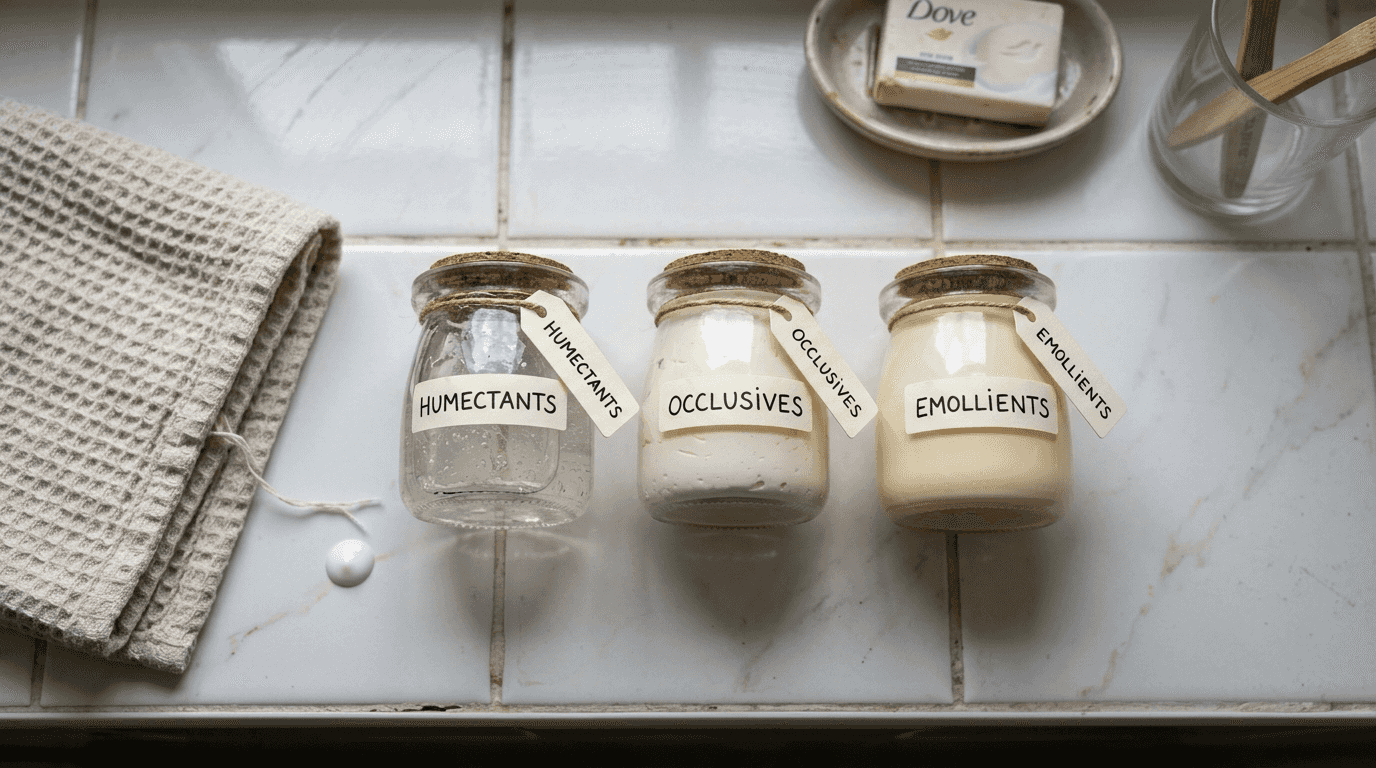
This table breaks down how each component contributes to skin hydration:
| Component | Primary Function | Common Examples | Skin Effect |
|---|---|---|---|
| Humectants | Attract and bind water molecules | Glycerin, hyaluronic acid, urea | Increases moisture content in stratum corneum |
| Occlusives | Form barrier to prevent water loss | Petrolatum, dimethicone, beeswax | Reduces transepidermal water loss by up to 98% |
| Emollients | Fill spaces between skin cells | Ceramides, fatty acids, squalane | Smooths texture and improves skin flexibility |
The synergy between these ingredients explains why balanced formulations outperform single-ingredient products. When you apply only a humectant in low humidity conditions, it may actually cause moisture loss by pulling water from deeper skin layers to the surface, where it evaporates into dry air. Without an occlusive to trap that moisture, you end up drier than when you started.
Occlusives solve this problem by creating a semi-permeable seal. Think of humectants as a sponge that soaks up water, and occlusives as a lid that keeps that water from escaping. Together, they maintain optimal hydration levels throughout the day. Products focusing on occlusive benefits can dramatically reduce moisture loss when layered over humectant serums.
Emollients add another dimension by improving how your skin feels and looks. While humectants and occlusives focus on water management, emollients address texture issues by softening rough patches and creating a smooth surface. They also support the lipid barrier that naturally protects your skin, helping it retain moisture more effectively on its own. Understanding emollients for sensitive skin reveals how these ingredients calm irritation while improving hydration.
The best moisturizers balance all three components based on skin type and environmental conditions. Oily skin benefits from lightweight humectants with minimal occlusives, while dry skin needs richer formulations with more occlusive protection. Combination skin may require different ratios in different areas.
Pro Tip: Layer products strategically by applying humectant serums first on damp skin, then sealing with a moisturizer containing occlusives and emollients for maximum hydration retention.
Key humectant ingredients and how to choose the right ones for your skin
Not all humectants perform identically. Each type offers distinct benefits, works better for specific skin concerns, and functions optimally under different conditions. Understanding these differences helps you select products that deliver real results for your unique needs.
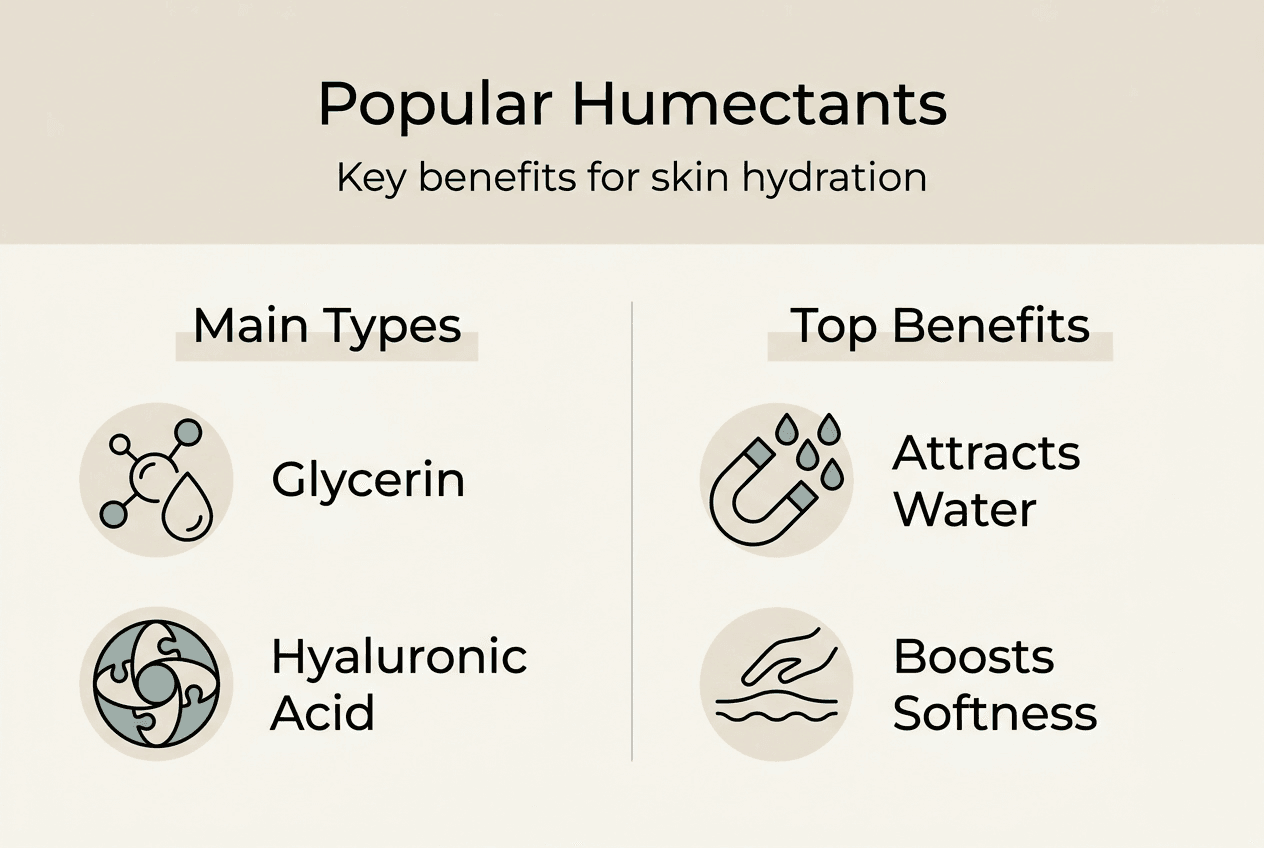
Glycerin stands out as one of the most effective humectants available, with research showing it’s gentle enough for all skin types while delivering consistent hydration. This ingredient has been used in skincare for decades because it works reliably across various formulations and climates. Glycerin can attract ten times its weight in water, making it incredibly efficient at boosting moisture levels.
Hyaluronic acid has gained massive popularity for good reason. This molecule holds extraordinary amounts of water relative to its size, creating an immediate plumping effect that smooths fine lines and improves skin texture. It works particularly well in serums applied before moisturizer, where it can penetrate effectively and deliver concentrated hydration. Learning what hyaluronic acid does helps you use it correctly for best results.
Alpha hydroxy acids like lactic and glycolic acid serve dual purposes. They hydrate skin while gently dissolving dead cells on the surface, revealing fresher skin underneath. This makes them excellent for addressing both dryness and dullness simultaneously, though they require careful use to avoid irritation.
This comparison shows how different humectants stack up:
| Humectant | Hydration Capacity | Best For | Considerations |
|---|---|---|---|
| Glycerin | High | All skin types, daily use | Extremely versatile and gentle |
| Hyaluronic Acid | Very High | Plumping, anti-aging | Works best with occlusive layer |
| Lactic Acid | Moderate | Dry, dull skin | May cause sensitivity initially |
| Urea | Moderate to High | Very dry, rough skin | Softens while hydrating |
| Propylene Glycol | Moderate | Oily, acne-prone skin | Lightweight, non-greasy |
Choosing the right humectants involves considering several factors beyond just the ingredient itself. Follow these steps to match humectants to your specific situation:
- Assess your climate and typical indoor humidity levels, as this dramatically affects humectant performance.
- Identify your primary skin concern, whether that’s dehydration, texture issues, or signs of aging.
- Consider your skin’s sensitivity level, choosing gentler options like glycerin if you react easily to active ingredients.
- Evaluate your current routine to ensure you’re pairing humectants with appropriate occlusives and emollients.
- Start with lower concentrations of potent humectants like hyaluronic acid, increasing gradually as your skin adapts.
Environmental humidity plays a crucial role in humectant selection. In humid climates, most humectants perform excellently by drawing abundant moisture from the air. In dry climates, you need formulations that combine humectants with strong occlusives to prevent the reverse effect where moisture gets pulled from your skin.
Strong humectants used alone in very dry conditions can backfire. Without adequate atmospheric moisture to draw from, they may extract water from the dermis and bring it to the surface, where low humidity causes rapid evaporation. This leaves skin drier than before application. Always pair powerful humectants with protective occlusives in arid environments.
How environmental humidity affects humectant effectiveness and skin hydration
The air around you determines whether humectants help or harm your skin. This environmental factor influences how these ingredients behave, where they source moisture, and whether they deliver the hydration benefits you expect. Understanding this relationship prevents common mistakes that can worsen dryness.
In high humidity environments above 60%, humectants perform at their peak. The abundant atmospheric moisture provides an external water source that humectants readily absorb and transfer to your skin. Humid conditions allow humectants to draw moisture from the air rather than from deeper skin layers, creating ideal hydration without risk of depletion. Your skin benefits from this external water supply, staying plump and hydrated throughout the day.
Low humidity below 30% creates the opposite scenario. With minimal atmospheric moisture available, humectants still seek water to bind with, but they find it in your dermis instead. Low humidity causes humectants to pull water from deeper skin layers to the surface, where dry air quickly evaporates it away. This process can actually increase transepidermal water loss, leaving skin dehydrated despite using hydrating products.
The solution lies in proper formulation and layering strategies. When humectants are combined with occlusives in the same product or routine, the occlusive barrier prevents moisture from escaping even in dry conditions. This allows humectants to hydrate the stratum corneum without causing net moisture loss. Products emphasizing occlusive protection become essential in low-humidity environments.
The effectiveness of humectants depends heavily on ambient humidity. In high humidity, they draw beneficial moisture from the air, while in low humidity conditions, they can inadvertently draw water from the skin itself, potentially causing dryness if not properly formulated with occlusives.
Best practices for using humectants across different climates include:
- Apply humectant products to damp skin immediately after cleansing to give them moisture to bind with
- Layer an occlusive moisturizer over humectant serums within three minutes to seal in hydration
- Use richer, more occlusive formulations in winter or dry climates compared to summer or humid areas
- Run a humidifier indoors during dry seasons to maintain ambient moisture above 40%
- Choose products with built-in occlusive ingredients if you live in consistently arid regions
- Avoid using pure humectant serums without follow-up moisturizer in low-humidity conditions
Seasonal adjustments matter too. Your skin’s needs shift as weather changes, requiring different humectant strategies. Summer humidity may allow lighter humectant-focused products, while winter dryness demands heavier occlusive protection. Pay attention to how your skin responds and adjust your routine accordingly.
Indoor environments present their own challenges. Heated buildings in winter and air-conditioned spaces in summer both create artificially low humidity that affects humectant performance. These controlled environments often have humidity levels below 30%, making occlusive protection essential regardless of outdoor conditions.
Enhance your skincare routine with effective humectant products
Now that you understand how humectants work and which ingredients deliver results, it’s time to put this knowledge into practice. Selecting products formulated with proven humectants transforms theoretical understanding into visible skin improvements.

Our curated collections feature scientifically-backed formulations that combine humectants with complementary occlusives and emollients for optimal hydration. Explore facial creams and gels designed to deliver moisture exactly where your skin needs it most. The COSRX skincare collection offers innovative humectant-rich products that have earned cult status for their effectiveness. For mature skin seeking both hydration and anti-aging benefits, anti-wrinkle products combine powerful humectants with ingredients that address fine lines and texture concerns simultaneously. Each product is selected to ensure you get properly formulated humectants that work with your skin, not against it.
Frequently asked questions
What are humectants in skincare?
Humectants are ingredients that attract and bind water molecules to your skin, increasing moisture content in the stratum corneum. They work by using their hygroscopic properties to draw water from the environment or deeper skin layers, then holding it where it benefits your skin most.
Can humectants cause dryness?
Yes, humectants can cause dryness when used alone in low-humidity environments. Without occlusives to seal in moisture, humectants may pull water from deeper skin layers to the surface, where it evaporates into dry air. Always pair humectants with occlusive moisturizers in arid conditions.
Which humectants are best for dry or sensitive skin?
Glycerin and hyaluronic acid work exceptionally well for dry or sensitive skin because they provide intense hydration without irritation. These gentle humectants suit most skin types and deliver consistent results when properly formulated with occlusives and emollients.
How does humidity affect humectants’ performance?
High humidity above 60% allows humectants to draw beneficial moisture from the air, optimizing their hydrating effects. Low humidity below 30% forces humectants to extract water from your skin instead, potentially increasing dryness unless you use occlusive protection to prevent moisture loss.
Should I use humectants morning and night?
Yes, using humectants twice daily maximizes hydration benefits for most skin types. Apply humectant serums or moisturizers after cleansing both morning and evening, always following with an occlusive layer to lock in the moisture they attract.