

Finding reliable ways to keep skin hydrated leaves many people searching through endless advice and contradictory claims. For health-conscious women who want a glowing complexion, hydration is more than just a beauty trend. In fact, American dermatologists report that nearly one in two women struggles with dehydrated skin at some point. By breaking down the science behind hydration and clearing up common myths, this guide reveals practical steps anyone can take for soft, resilient skin.
Table of Contents
- Defining Hydration In Skincare Routines
- Hydration Versus Moisturization Explained
- How Dehydration Affects Skin Health
- Key Ingredients Supporting Skin Hydration
- Common Myths About Skin Hydration
Key Takeaways
| Point | Details |
|---|---|
| Hydration is Essential for Healthy Skin | Maintaining optimal hydration levels is crucial for skin elasticity, barrier function, and overall health. Proper hydration creates a plump and radiant complexion. |
| Difference Between Hydration and Moisturization | Hydration refers to adding water to the skin, while moisturization focuses on preventing water loss. Both processes are necessary for effective skincare. |
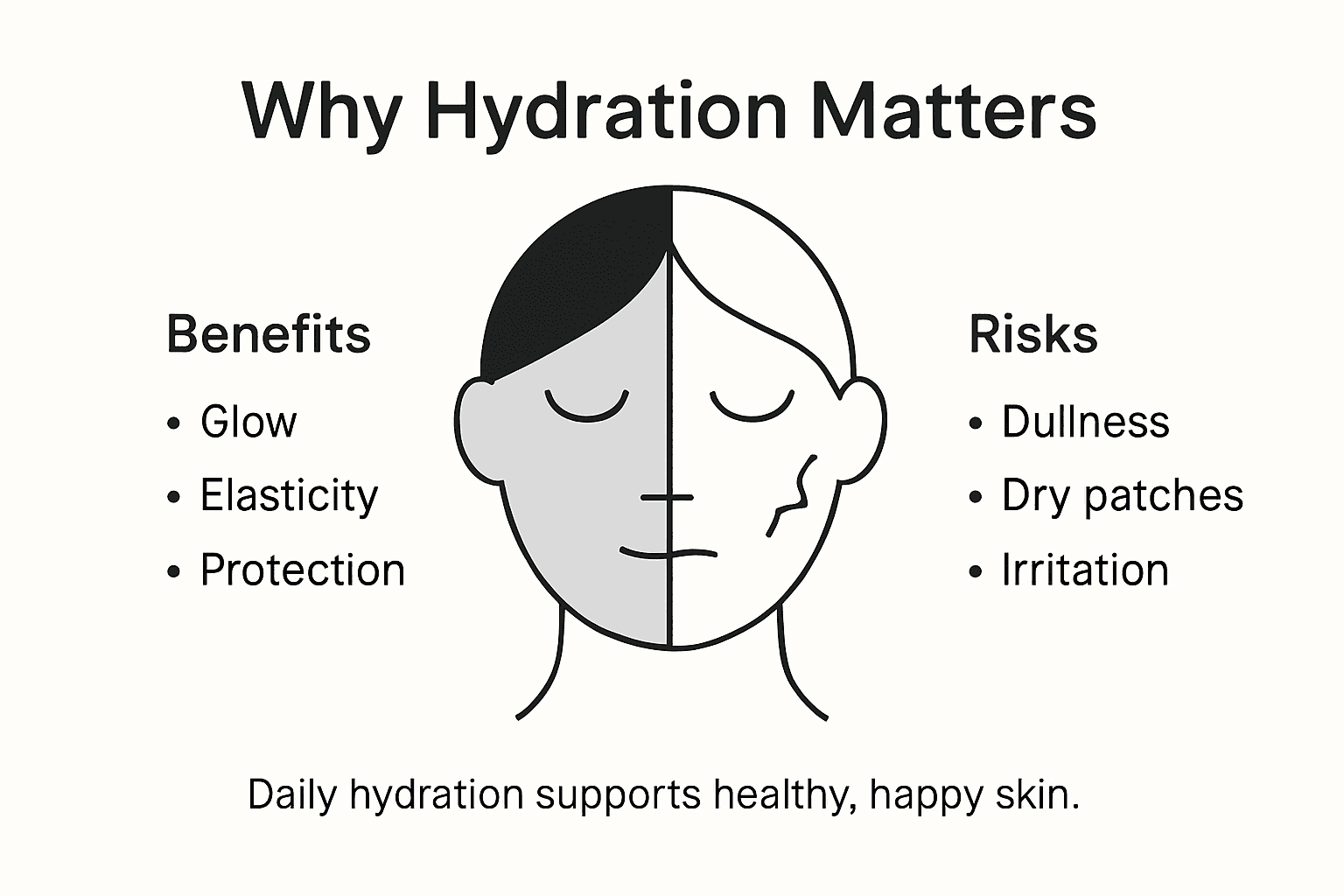
| Impact of Dehydration on Skin | Dehydration can lead to reduced elasticity, dullness, and increased sensitivity. It negatively affects the skin’s barrier and heightens the risk of irritation. |
| Key Ingredients for Hydration | Humectants like hyaluronic acid and glycerin are essential for attracting moisture. Tailored formulations based on skin type enhance hydration effectiveness. |
Defining Hydration in Skincare Routines
Hydration in skincare is more than a simple buzzword - it represents the fundamental process of maintaining water content within skin cells that keeps our complexion healthy and radiant. Skin hydration is essential for preserving epidermal barrier integrity and creating an environment where skin can function optimally.
At its core, skin hydration involves maintaining adequate water levels within skin cells and the extracellular matrix. This process goes beyond surface-level moisturizing and penetrates deeper cellular layers. When skin is properly hydrated, it appears plump, smooth, and exhibits a natural glow that reflects overall health. Hydration supports critical functions like cell turnover, nutrient transportation, and protecting against environmental stressors.
Understanding hydration requires recognizing the difference between hydration and moisturization. While moisturizers create a protective barrier to prevent water loss, hydrating ingredients actually introduce water into the skin. Components like hyaluronic acid, glycerin, and aloe vera are powerful hydrating agents that attract and retain moisture, helping skin maintain its elasticity and resilience. These ingredients work by drawing water molecules into skin cells, creating a reservoir of hydration that supports long-term skin health.
Scientific measurements confirm the importance of skin hydration. Advanced devices can now objectively assess hydration levels, providing precise data about skin’s water content and overall health. This technological approach allows skincare professionals to develop targeted strategies for maintaining optimal skin hydration.
Pro tip: Track your skin’s hydration levels by performing a simple pinch test - if your skin takes a few seconds to bounce back after pinching, you might need to increase your hydration routine.
Hydration Versus Moisturization Explained
Understanding the nuanced difference between hydration and moisturization is crucial for developing an effective skincare routine. Hydration and moisturization are distinct but complementary processes essential for maintaining optimal skin health, each playing a unique role in keeping skin looking and feeling its best.
Hydration refers to the water content within skin cells, focusing on infusing the skin with water to improve its ability to absorb moisture and nutrients. This process involves ingredients like hyaluronic acid and glycerin that attract water molecules, plumping up skin cells and creating a more supple, vibrant appearance. When skin is well-hydrated, it looks fuller, more elastic, and demonstrates a natural radiance that goes beyond surface-level appearance.
In contrast, moisturization is about creating a protective barrier that prevents water loss from the skin. Moisturizers typically contain oils, lipids, and occlusives that seal in existing moisture and create a protective layer against environmental stressors. While hydration adds water to the skin, moisturization helps retain that water, preventing dehydration and maintaining the skin’s protective barrier. This means that truly effective skincare requires both hydration and moisturization working in tandem.
People with different skin types require varying approaches to hydration and moisturization. Oily skin might benefit from lightweight, water-based hydrating serums, while dry skin often needs richer, more occlusive moisturizers that provide both hydration and a robust protective barrier. Understanding your skin’s specific needs allows you to create a personalized skincare strategy that balances these two critical components.
Here’s a concise comparison of hydration and moisturization in skincare:
| Attribute | Hydration | Moisturization |
|---|---|---|
| Primary function | Adds water to skin cells | Prevents water loss |
| Main ingredients | Hyaluronic acid, glycerin | Oils, lipids, occlusives |
| Skin appearance impact | Plump, glowing, elastic | Soft, protected, less dry |
| Best for | All skin types needing water balance | Dry or compromised skin barrier |
Pro tip: Layer your skincare products from lightest to heaviest - start with hydrating serums, then apply moisturizer to lock in that hydration and create a protective seal.
How Dehydration Affects Skin Health
Poor skin hydration significantly compromises the body’s largest protective organ, creating a cascade of potential health and aesthetic challenges. Dehydration goes far beyond simple dryness, fundamentally altering skin’s ability to protect, regenerate, and maintain its natural resilience.

Skin barrier function becomes critically compromised when dehydration sets in. Without adequate water content, skin loses its natural elasticity and becomes more vulnerable to environmental stressors. The skin’s protective mechanisms break down, leading to increased sensitivity, potential inflammation, and a higher risk of irritation. This vulnerability means that dehydrated skin is more susceptible to microbial invasion, accelerated aging, and potential dermatological complications.
The physical manifestations of dehydration are both visible and tactile. Skin begins to appear dull, feels tight and rough, and loses its characteristic plumpness and glow. Reduced skin turgor becomes a clear indicator of inadequate hydration, with skin taking longer to return to its original position when gently pinched. This decreased elasticity not only affects appearance but also signals deeper cellular distress, where skin cells struggle to maintain their normal functions and regenerative processes.
Understanding the root causes of skin dehydration is crucial for prevention. Factors like low water intake, excessive caffeine or alcohol consumption, environmental conditions, harsh skincare products, and certain medical conditions can all contribute to moisture loss. Age also plays a significant role, as skin naturally becomes less efficient at retaining moisture over time, making proactive hydration strategies increasingly important.
Review these common causes and effects of skin dehydration:
| Cause of Dehydration | Effect on Skin | Prevention Tip |
|---|---|---|
| Low water intake | Dullness, loss of turgor | Drink adequate fluids daily |
| Harsh products | Barrier disruption | Use gentle cleansers |
| Aging | Decreased moisture retention | Use targeted hydrators |
| Environment (dry air) | Increased water loss | Protect with moisturizers |
Pro tip: Perform a quick skin hydration test by gently pinching the skin on the back of your hand - if it takes more than a few seconds to bounce back, it’s time to increase your water intake and hydration routine.
Key Ingredients Supporting Skin Hydration
Molecular water channels called aquaporins play a crucial role in regulating skin hydration, creating a sophisticated network of hydration support within our skin cells. Understanding these key ingredients is essential for developing an effective skincare strategy that maintains optimal moisture levels and skin health.
Humectants are the primary heroes of skin hydration, with ingredients like hyaluronic acid and glycerin leading the charge. These powerful compounds attract water molecules, drawing moisture into the skin and creating a reservoir of hydration. Skincare formulations increasingly combine humectants with occlusive agents to maximize water retention and improve barrier function, ensuring that moisture remains locked within the skin’s layers.
Beyond traditional hydrating ingredients, advanced skincare now incorporates bioactive compounds that interact directly with skin’s cellular mechanisms. Ingredients such as glyceryl glucoside, peptides, and specific plant extracts can modulate aquaporin expression, essentially upgrading the skin’s natural water transportation systems. These sophisticated ingredients do more than simply add moisture - they enhance the skin’s inherent ability to manage and maintain hydration at a cellular level.
Different skin types require tailored hydration approaches. Oily skin benefits from lightweight, water-based hydrators, while dry skin needs richer, more intensive formulations. Key ingredients like urea, ceramides, and retinoids can provide targeted hydration support, addressing specific skin concerns while maintaining overall moisture balance. The goal is not just surface-level hydration, but a comprehensive approach that supports skin health from within.
Pro tip: Look for skincare products that combine multiple hydrating ingredients - a multi-layered approach ensures more comprehensive and sustained skin moisture.
Common Myths About Skin Hydration
Hydration myths can significantly mislead individuals seeking optimal skin health, creating confusion about effective skincare strategies. These misconceptions often prevent people from developing truly beneficial hydration routines that address their unique skin needs.
One of the most persistent skin hydration myths is the universally recommended ‘8 glasses of water per day’ rule. Scientific research demonstrates that hydration requirements vary dramatically based on individual factors like body composition, activity level, and environmental conditions. What works for one person might be insufficient or excessive for another, making personalized hydration approaches crucial. Simply drinking water without considering your specific physiological needs can lead to ineffective hydration strategies.
Another common misconception is that topical moisturizers alone can solve skin hydration challenges. In reality, skin hydration is a complex process involving internal and external factors. Diet, overall fluid intake, environmental conditions, and individual skin characteristics all play significant roles. Relying solely on external products without addressing underlying lifestyle and nutritional factors can result in temporary, superficial improvements rather than long-term skin health.
Misunderstandings about hydration extend to the belief that thirst is an accurate indicator of hydration status. By the time you feel thirsty, your body has already experienced a notable decrease in optimal hydration levels. Moreover, different skin types respond differently to hydration techniques. Oily skin, for instance, requires a nuanced approach that balances moisture without exacerbating oil production, while dry skin needs more intensive, multi-layered hydration strategies.
Pro tip: Monitor your skin’s hydration through multiple indicators - urine color, skin elasticity, and overall texture - rather than relying on a single, oversimplified metric.
Unlock Radiant Skin Through Expert Hydration Care
The article highlights the critical role of hydration in maintaining youthful, glowing skin and preventing issues that arise from dehydration such as dullness and loss of elasticity. If you find your skin struggling with dryness or sensitivity despite using various products, it might be time to focus on replenishing and locking in moisture effectively. Understanding the distinct functions of hydration and moisturization is key to overcoming these challenges.
Discover targeted solutions that work with your skin’s natural needs at Skin-Styles.com. Our carefully curated selection of Facial Serums – Skin Styles features powerful hydrating ingredients like hyaluronic acid and glycerin to boost internal moisture levels. Complement these with nourishing options from our Facial Creams & Gels – Skin Styles collection to create a protective barrier that seals hydration and restores your skin’s resilience.

Don’t wait for dehydration to show on your skin. Start your personalized hydration routine today by exploring our expert skincare products designed to deliver lasting moisture and radiant health. Visit Skin-Styles.com now and transform your skincare regimen into a hydration powerhouse.
Frequently Asked Questions
What is the difference between hydration and moisturization in skincare?
Hydration adds water to the skin cells, improving their ability to absorb moisture and nutrients, while moisturization creates a protective barrier to prevent water loss from the skin. Both processes are essential for optimal skin health.
How can I tell if my skin is dehydrated?
You can perform a simple pinch test - gently pinch the skin on the back of your hand. If it takes longer than a few seconds to bounce back, your skin may be dehydrated. Other indicators include dullness and tightness.
What ingredients should I look for to improve skin hydration?
Key hydrating ingredients include hyaluronic acid, glycerin, and aloe vera. These humectants attract and retain moisture, helping to keep your skin plump and supple.
Can dehydration affect my skin’s appearance and health?
Yes, dehydration can lead to a dull complexion, reduced elasticity, and a compromised skin barrier, making your skin more prone to irritation and environmental damage.