

You invest in quality skincare products expecting radiant results, but improper storage can sabotage your routine before you notice. Heat, humidity, and light exposure degrade active ingredients faster than most consumers realize, turning your premium serums and moisturizers into ineffective formulas. This guide reveals practical storage techniques that preserve product potency, extend shelf life, and maximize the return on your skincare investment through simple environmental controls and organizational strategies.
Table of Contents
- Understanding The Problem: Why Improper Storage Ruins Skincare
- Preparing Your Space: What You Need To Store Skincare Properly
- Step-By-Step Guide: How To Store Skincare Products Effectively
- Troubleshooting And Common Mistakes In Skincare Storage
- Expected Benefits And Signs Your Skincare Is Stored Properly
- Explore Effective Skincare Products And Storage Solutions
- How To Store Skincare Products: Common Questions
Key takeaways
| Point | Details |
|---|---|
| Temperature control matters | Cool, stable environments prevent ingredient breakdown and bacterial growth |
| Light protection extends life | UV and visible light degrade active compounds, requiring dark storage |
| Proper sealing prevents contamination | Airtight containers block air and moisture that compromise formulations |
| Organization improves rotation | Grouping by expiry date reduces waste and ensures freshest product use |
Understanding the problem: why improper storage ruins skincare
Skincare formulations contain delicate active ingredients that respond poorly to environmental stress. Heat, light, and air exposure cause active ingredients to break down faster, reducing their therapeutic benefits and potentially creating irritating byproducts. Vitamin C serums oxidize and turn brown when exposed to light. Retinol formulas lose potency in warm environments. Peptide complexes degrade when contaminated with bacteria from repeated exposure to air and fingers.
Temperature fluctuations create the perfect breeding ground for microbial growth. When products warm up, their preservative systems work harder to maintain stability. Cool them down again, and condensation can introduce water that dilutes formulations and encourages bacterial colonization. This cycle repeats every time you move a product between hot and cold spaces, gradually compromising its safety and effectiveness.
Contamination happens faster than you think. Every time you dip fingers into a jar, you introduce skin flora and environmental bacteria. Open containers sitting on bathroom counters collect airborne particles and moisture. Products stored near heat sources like radiators or sunny windowsills experience accelerated chemical reactions that alter their pH, texture, and active ingredient concentration.
The consequences extend beyond wasted money:
- Degraded products deliver minimal results despite consistent use
- Contaminated formulas can trigger breakouts, rashes, or infections
- Oxidized ingredients may cause stinging or increased sensitivity
- Separated emulsions apply unevenly and feel unpleasant on skin
“Proper storage isn’t optional; it’s essential for getting the results you paid for and protecting your skin from compromised formulations.”
Recognizing these risks motivates better storage habits. Your skincare routine’s effectiveness depends as much on how you store products as which products you choose. Understanding degradation mechanisms helps you create storage conditions that preserve formulation integrity from first use to last drop.
Preparing your space: what you need to store skincare properly
Creating an optimal storage environment requires strategic location selection and simple organizational tools. The ideal space maintains consistent cool temperatures between 50 and 70 degrees Fahrenheit, stays dry with humidity below 60 percent, and receives no direct sunlight throughout the day. Bedrooms, closets, and dedicated vanity drawers typically meet these criteria better than bathrooms, which experience temperature swings and high humidity from showers.
Evaluate potential storage locations by monitoring conditions over several days. Place a basic thermometer and humidity gauge in candidate spots to identify the most stable environment. Avoid areas near windows, heating vents, radiators, or exterior walls that experience temperature fluctuations. Interior spaces with minimal air circulation changes provide the most consistent conditions for preserving skincare formulations.
Gather organizational tools that protect products while keeping them accessible:
- Opaque storage containers or boxes that block light completely
- Drawer organizers with compartments sized for different product types
- Small bins or baskets for grouping items by category or expiration date
- Labels and markers for tracking purchase dates and expiry information
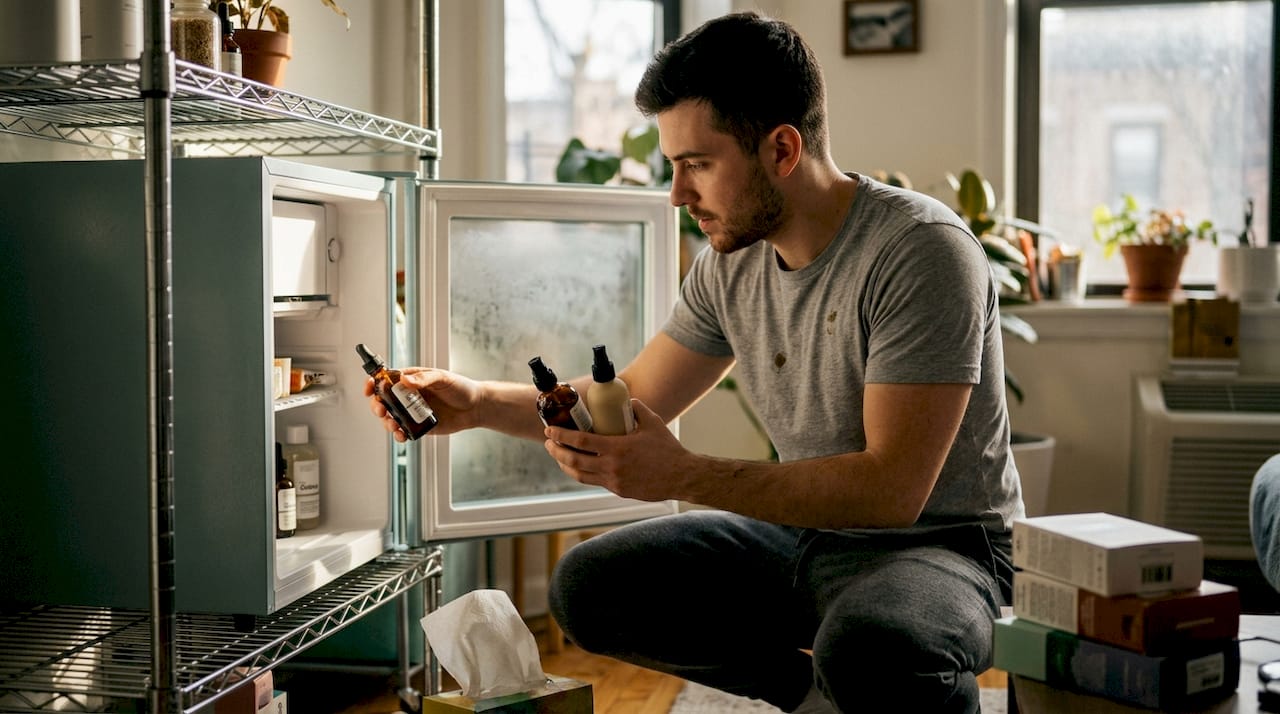
- A small refrigerator dedicated to skincare if you use many active ingredient products
Pro Tip: Keep a simple inventory list on your phone noting each product’s purchase date and expiration period so you can rotate stock and use items before they degrade.
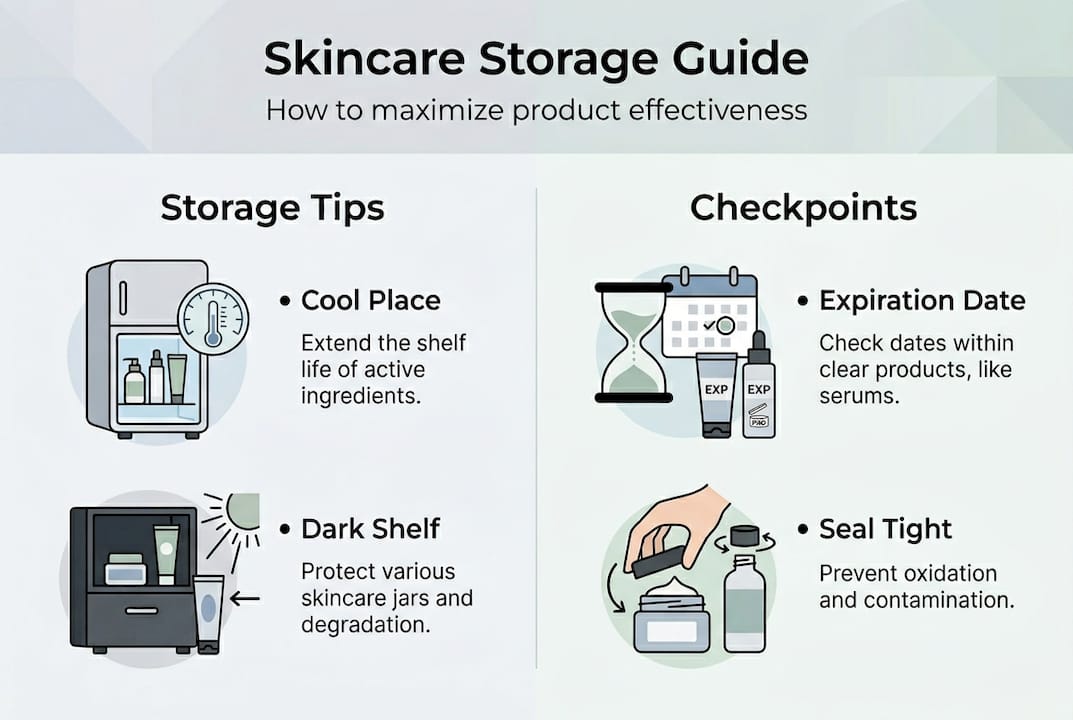
Keeping products in a cool, dark environment preserves their active ingredients longer, particularly for formulations containing retinoids, vitamin C, and growth factors. These compounds remain stable when protected from environmental stressors but degrade rapidly under poor conditions.
| Storage Requirement | Recommended Range | Container Type |
|---|---|---|
| Temperature | 50 to 70°F | Insulated drawer or mini fridge |
| Humidity | Below 60% | Airtight containers with silica packets |
| Light exposure | Complete darkness | Opaque boxes or closed cabinets |
| Air circulation | Minimal fluctuation | Sealed organizers |
Consider investing in a small skincare refrigerator for products with particularly unstable active ingredients. These compact units maintain consistent cool temperatures without the food odors and temperature variations of kitchen refrigerators. They work especially well for vitamin C serums, eye creams, sheet masks, and natural formulations without robust preservative systems.
Prepare your storage space by cleaning it thoroughly and ensuring good air quality. Dust, mold spores, and volatile organic compounds from cleaning products can contaminate skincare items. Wipe down shelves and containers with gentle cleansers, allow them to dry completely, and maintain regular cleaning schedules to prevent buildup.
Step-by-step guide: how to store skincare products effectively
Implementing proper storage requires consistent habits and systematic organization. Follow this sequence to protect your skincare investment and maintain product efficacy throughout its lifespan.
-
Close all product lids immediately after each use, ensuring they seal completely without gaps. Tighten pump dispensers, screw caps firmly onto jars, and press dropper caps down securely. This single action prevents the majority of air exposure and contamination issues.
-
Store products in temperature controlled rooms away from bathrooms. Designate a bedroom drawer, closet shelf, or vanity cabinet as your primary skincare storage location. Bathrooms experience humidity spikes above 80 percent during showers, creating conditions that promote bacterial growth and formula separation.
-
Group products by category and expiration date for systematic rotation. Place serums together, moisturizers in another section, and treatments in a third area. Within each category, position items expiring soonest at the front so you use them before degradation occurs.
-
Protect all products from sunlight and heat sources by storing them in opaque containers or closed drawers. Even products in dark bottles benefit from additional light protection, as repeated exposure accumulates over time and accelerates ingredient breakdown.
-
Transfer products to cool storage immediately after purchase rather than leaving them in shopping bags or on counters. This prevents initial degradation and establishes good habits from the start of each product’s lifecycle.
-
Use dedicated applicators like spatulas or cotton swabs instead of fingers when accessing jar products. This practice dramatically reduces bacterial introduction and extends product safety, particularly for formulations without strong preservative systems.
-
Monitor storage area conditions monthly with a thermometer and humidity gauge. Make adjustments if you notice temperature creeping above 70 degrees or humidity exceeding 60 percent, as these changes indicate your products face increased degradation risk.
Pro Tip: Proper sealing and avoiding bathroom humidity help maintain product integrity, especially during travel when products face additional environmental stress from temperature changes and jostling.
For particularly sensitive items like retinol treatments, vitamin C serums, and natural oils, consider refrigerated storage between 40 and 50 degrees Fahrenheit. Cool temperatures slow chemical reactions and microbial activity, significantly extending these products’ effective lifespan. Allow refrigerated products to reach room temperature before application for better skin absorption and comfort.
Create a simple tracking system using your phone’s notes app or a small notebook. Record each product’s name, purchase date, and expiration period. Review this list monthly to identify items approaching expiration and prioritize their use. This systematic approach prevents waste and ensures you always apply products at peak potency.
Troubleshooting and common mistakes in skincare storage
Even well intentioned consumers make storage errors that compromise their skincare routines. Recognizing these mistakes helps you avoid them and correct existing problems before they cause significant product degradation.
Bathroom storage remains the most prevalent error. Many users mistakenly store skincare in bathrooms leading to humidity damage, yet the convenience of having products near the sink makes this habit difficult to break. Shower steam raises humidity to 90 percent or higher, condensing on product containers and seeping into formulations. Temperature swings from hot showers to cooler air create expansion and contraction that can break seals and introduce contamination.
Direct sunlight exposure destroys active ingredients faster than any other factor. Windowsill storage, bathroom counters near windows, and open shelving in bright rooms all expose products to UV radiation that breaks molecular bonds in retinoids, antioxidants, and peptides. Even indirect bright light accelerates degradation, making dark storage essential for preserving potency.
Leaving lids open or loose after use invites rapid oxidation and contamination. Oxygen reacts with many active ingredients, causing color changes, odor development, and reduced effectiveness. Airborne bacteria settle on exposed product surfaces, multiplying rapidly in the nutrient rich formulations.
Common storage mistakes include:
- Storing products on top of radiators or near heating vents
- Keeping items in cars where temperatures fluctuate dramatically
- Using bathroom medicine cabinets that trap steam and heat
- Leaving products on sunny vanities or near bright makeup lights
- Transferring products to containers without proper sealing mechanisms
- Ignoring expiration dates and continuing to use degraded formulations
| Incorrect Practice | Correct Alternative | Impact on Product Life |
|---|---|---|
| Bathroom counter storage | Bedroom drawer storage | Doubles effective lifespan |
| Leaving caps loose | Sealing immediately after use | Prevents 80% of oxidation |
| Windowsill placement | Dark cabinet storage | Preserves active ingredients 3x longer |
| Finger application from jars | Spatula or applicator use | Reduces contamination by 90% |
If you discover products stored improperly, assess their condition before continuing use. Check for color changes, unusual odors, texture separation, or altered consistency. Discard any products showing these signs, as they may irritate skin or deliver no benefits. Products stored correctly but nearing expiration should be used quickly or replaced to ensure optimal results.
Correct existing storage problems immediately by relocating products to appropriate environments. Clean new storage areas thoroughly, organize products systematically, and establish routines that maintain proper conditions. The effort invested in fixing storage mistakes pays dividends in extended product life and better skincare results.
Expected benefits and signs your skincare is stored properly
Proper storage practices deliver measurable improvements in product performance, longevity, and skin health outcomes. You’ll notice several positive indicators when your storage methods effectively protect skincare formulations.
Properly stored skincare lasts longer and remains safe and effective for your skin, often exceeding manufacturer estimates when conditions stay optimal. Products maintain their original characteristics throughout their lifespan rather than degrading prematurely. Serums stay clear instead of turning brown or cloudy. Creams retain smooth textures without separating into oil and water phases. Formulations smell fresh rather than developing rancid or chemical odors.
Your skin responds better to properly stored products because active ingredients remain at therapeutic concentrations. Vitamin C continues brightening dark spots. Retinol keeps smoothing fine lines. Hyaluronic acid maintains its moisture binding capacity. You see consistent results that match product promises rather than diminishing returns as formulations degrade.
Extended shelf life reduces replacement frequency and saves money over time. Products that might last six months under poor conditions can remain effective for 12 to 18 months when stored correctly. This extended usability means fewer purchases and less waste, improving both your budget and environmental impact.
Key benefits you should observe:
- Consistent product texture, color, and scent from first use to last
- Maintained efficacy with visible skin improvements throughout product life
- Reduced skin irritation and sensitivity from stable, uncontaminated formulations
- Better inventory management with clear expiration tracking
- Less product waste from premature degradation
- Improved confidence in product safety and performance
Monitor your products for positive stability indicators. Pump dispensers should deliver consistent amounts without clogging. Dropper bottles should maintain clear, uniform liquids. Jar products should feel smooth and blend easily without graininess or separation. These signs confirm your storage methods preserve formulation integrity.
Track your skin’s response over time as another verification method. Properly stored active ingredient products should deliver progressive improvements rather than plateau or cause unexpected reactions. If you notice declining results despite consistent use, evaluate storage conditions before assuming the product itself has failed.
Explore effective skincare products and storage solutions
Now that you understand how proper storage maximizes skincare effectiveness, explore quality formulations designed to deliver results when protected correctly. Skin Styles offers curated collections of facial creams and gels formulated with active ingredients that respond well to optimal storage conditions. These products work synergistically with the storage techniques you’ve learned, maintaining potency and safety throughout their lifespan.

Discover targeted solutions in our COSRX collection, featuring innovative Korean skincare that combines effective actives with stable formulations. When stored properly, these products deliver consistent results that address specific skin concerns from hydration to texture refinement. Our anti wrinkle treatments contain potent ingredients like retinol and peptides that particularly benefit from the cool, dark storage methods outlined in this guide, ensuring you get maximum age defying benefits from every application.
How to store skincare products: common questions
Can you refrigerate all skincare products?
Most skincare products tolerate refrigeration well, but some formulations may thicken or separate when cooled. Water based serums, eye creams, sheet masks, and vitamin C products benefit most from refrigeration. Oil based products and thick balms may become difficult to dispense when cold but won’t be harmed.
How long can skincare products last if stored correctly?
Properly stored unopened products typically last two to three years, while opened items remain effective for six to 18 months depending on formulation and preservative system. Active ingredient products like retinol and vitamin C have shorter lifespans of six to 12 months even with optimal storage. Always check manufacturer recommendations and monitor for degradation signs.
Is it okay to store skincare in the bathroom?
Bathroom storage is not recommended due to high humidity and temperature fluctuations from showers. These conditions promote bacterial growth, accelerate ingredient degradation, and can compromise product safety. Store skincare in bedrooms, closets, or dedicated vanity areas with stable, cool, dry conditions instead.
How do you tell if a product has gone bad?
Watch for color changes, particularly browning or darkening in serums. Unusual or rancid odors indicate oxidation or bacterial contamination. Texture changes like separation, graininess, or extreme thinning suggest formula breakdown. Any of these signs mean you should discard the product immediately to avoid skin irritation.
Should you keep skincare in original packaging?
Yes, original packaging provides optimal protection designed specifically for each formulation. Manufacturers engineer containers to minimize light exposure, air contact, and contamination risk. Transferring products to different containers usually reduces these protections unless you use specialized airless or opaque storage designed for skincare.
Do natural or organic products require different storage?
Natural and organic products often contain fewer or gentler preservatives, making them more susceptible to contamination and degradation. These formulations benefit even more from refrigeration, strict hygiene practices, and prompt use after opening. Store them in the coolest, darkest location available and use within manufacturer recommended timeframes.