

Finding reliable natural skincare in the American market can be challenging with so many confusing labels and bold claims. For families who want safe solutions free from harmful chemicals, knowing the truth matters more than ever. Over half of parents say that deciphering ingredient lists is their biggest obstacle when choosing trusted products. This guide reveals key myths, product types, and how to spot genuine skincare that protects your loved ones.
Table of Contents
- Defining Natural Skincare And Common Myths
- Types Of Natural Skincare Products Explained
- Key Ingredients And Labeling Standards
- Benefits And Limitations For Families
- Safety Risks And How To Avoid Greenwashing
Key Takeaways
| Point | Details |
|---|---|
| Understanding Natural Skincare | Natural skincare uses minimally processed ingredients from nature but lacks standardized definitions, which can mislead consumers. |
| Ingredient Transparency | Look for brands that provide clear ingredient lists and adhere to recognized certifications for authenticity. |
| Safety and Efficacy | Both natural and synthetic ingredients can have risks; patch test new products to determine personal compatibility. |
| Avoiding Greenwashing | Be cautious of vague marketing claims and prioritize products with verified certifications and detailed ingredient information. |
Defining Natural Skincare and Common Myths
The world of natural skincare is complex and often misunderstood, with consumers increasingly seeking products that align with health-conscious values. Despite growing popularity, many misconceptions persist about what truly constitutes a natural skincare product. Scientific research exploring ingredient definitions reveals significant nuances that challenge common assumptions.
At its core, natural skincare involves using ingredients sourced directly from nature - typically plant-based extracts, minerals, and occasionally animal-derived components that have minimal processing. However, the term “natural” lacks standardized legal definitions in many countries, creating substantial confusion for consumers seeking genuine, safe products. This regulatory ambiguity means that product labels can be misleading, with marketing claims often stretching the boundaries of what consumers might reasonably understand as “natural”.
One persistent myth is that natural automatically means safer or more effective than synthetic alternatives. Scientific assessments consistently demonstrate that both natural and synthetic ingredients can pose potential risks or provide significant benefits. Plant-based ingredients are not inherently gentler - some can trigger allergic reactions or skin sensitivities just as synthetic compounds might. The key is understanding individual ingredient properties, their interactions, and how they specifically respond to your unique skin chemistry.
Pro tip: Always patch test new skincare products, regardless of whether they are marketed as natural or synthetic, to understand how your specific skin will react.
Types of Natural Skincare Products Explained
Natural skincare encompasses a diverse range of products designed to nourish and protect the skin using ingredients sourced from nature. Recent scientific reviews highlight the complexity and innovation within natural skincare product categories, showcasing how plant, marine, and mineral derivatives are transforming skincare formulations.
The primary categories of natural skincare products include:
- Moisturizers: Plant-based oils and extracts that hydrate and protect skin barrier function
- Cleansers: Gentle formulations using botanical ingredients to remove impurities
- Sunscreens: Mineral-based protection using zinc oxide or titanium dioxide
- Anti-aging Serums: Concentrated treatments with antioxidant-rich plant extracts
- Treatment Products: Targeted solutions addressing specific skin concerns like acne or hyperpigmentation
Modern natural skincare goes beyond simple ingredient sourcing, focusing on complex biological mechanisms. Advanced formulations now integrate probiotics, peptides, and specialized plant extracts that offer multifunctional benefits. These products aim to support skin health through natural mechanisms like reducing inflammation, protecting against environmental damage, and enhancing cellular repair processes.
Pro tip: When selecting natural skincare products, prioritize brands that provide transparent ingredient lists and demonstrate scientific validation of their botanical formulations.
Key Ingredients and Labeling Standards
Navigating the world of natural skincare requires understanding the complex landscape of ingredients and labeling regulations. Regulatory frameworks for natural cosmetics have become increasingly sophisticated, establishing comprehensive guidelines to protect consumer safety and ensure transparency.
Key natural skincare ingredients typically fall into several critical categories:
- Plant Extracts: Botanical derivatives with specific skin benefits
- Essential Oils: Concentrated plant compounds with therapeutic properties
- Biotechnologically Derived Actives: Scientifically processed natural ingredients
- Mineral Components: Natural mineral-based skin protectants
Labeling standards are crucial in helping consumers make informed choices. Manufacturers must now provide detailed ingredient lists using International Nomenclature of Cosmetic Ingredients (INCI) names, displaying components in descending order of concentration. This approach ensures transparency, allowing consumers to understand exactly what they are applying to their skin. Voluntary certification programs like COSMOS and NaTrue have further established rigorous standards for ingredient sourcing, processing, and environmental sustainability.
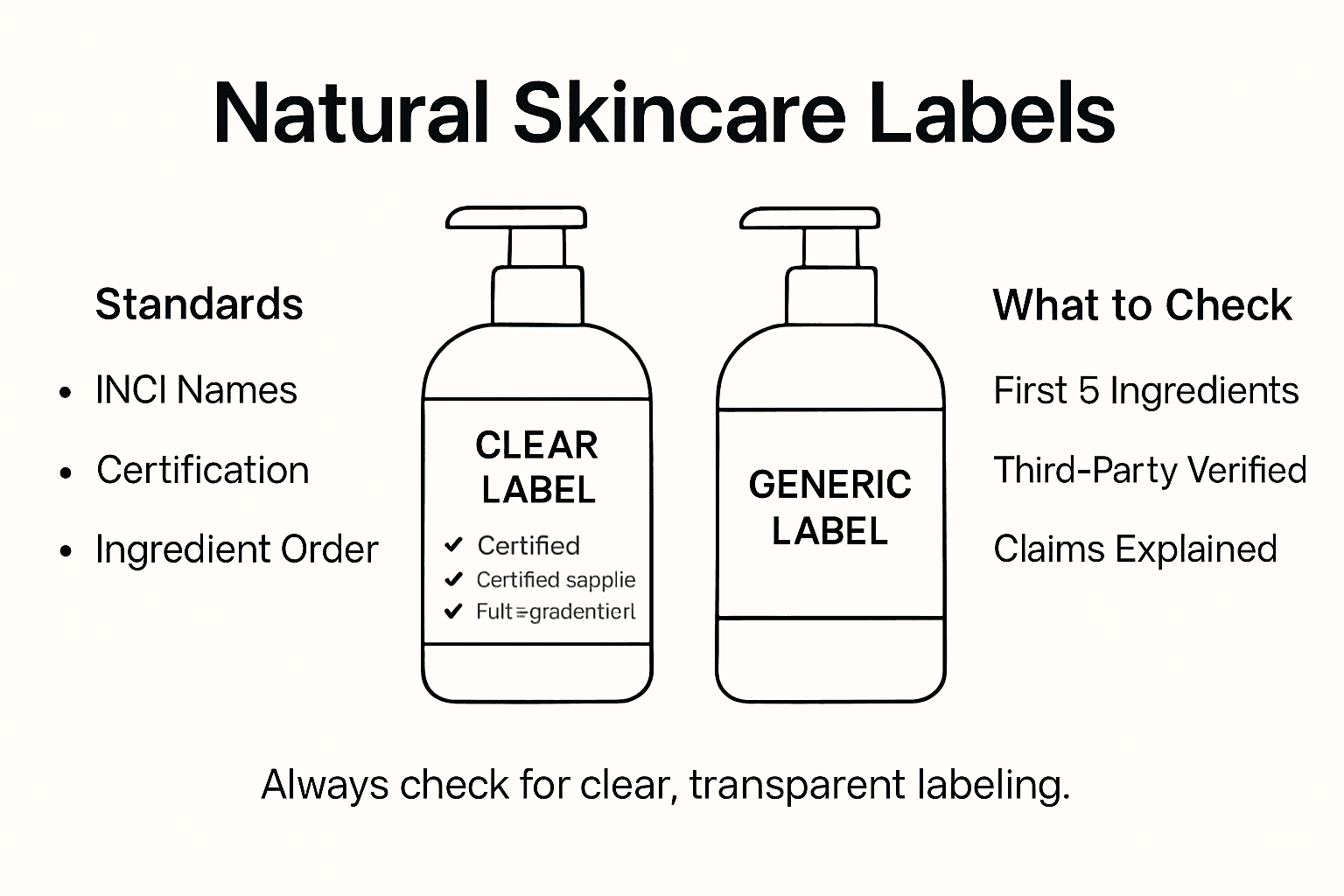
Here’s a summary of how natural skincare labeling differs from conventional standards:
| Criteria | Natural Skincare Labeling | Conventional Labeling | Impact on Consumers |
|---|---|---|---|
| Ingredient Listing | Uses INCI names, detailed | May use simplified names | Clarity about product contents |
| Source Disclosure | Often transparent | Typically less transparent | Informs ethical purchasing |
| Certification | COSMOS, NaTrue, optional | Rarely includes certifications | Indicates authenticity and safety |
| Regulatory Oversight | Limited, evolving | Established, more regulated | Affects consumer trust and safety |
Pro tip: Always scan the first five ingredients on a product label, as these represent the most significant components in the formulation.
Benefits and Limitations for Families
Scientific research exploring natural skincare options reveals both promising advantages and important considerations for families seeking gentler skincare solutions. Natural skincare products offer significant potential benefits, particularly for individuals with sensitive skin or those concerned about synthetic chemical exposure.
Key benefits for families include:
- Reduced Chemical Exposure: Minimizing contact with potentially harmful synthetic ingredients
- Skin Nourishment: Natural ingredients often provide more holistic nutritional support
- Gentler Formulations: Less likely to cause irritation for sensitive skin types
- Environmentally Friendly: Typically more sustainable production processes
However, families must also understand potential limitations. Natural skincare is not inherently without risks - some botanical extracts can trigger allergic reactions, and the efficacy can vary dramatically based on ingredient quality and processing methods. Scientific assessments indicate that not all natural ingredients are universally safe or effective, and consumers should approach marketing claims with critical awareness. Standardized testing, precise sourcing, and understanding individual skin sensitivities remain crucial when selecting natural skincare products.

Comparing benefits and limitations helps families make informed skincare choices:
| Aspect | Benefit for Families | Limitation to Consider |
|---|---|---|
| Chemical Composition | Fewer synthetic additives | Potential for allergens |
| Skin Suitability | Gentle for sensitive skin | Variable effectiveness |
| Environmental Impact | Lower ecological footprint | Availability and higher cost |
| Product Consistency | Natural ingredient diversity | Batch variation in performance |
Pro tip: Conduct patch tests with new natural skincare products and carefully monitor your family’s skin reactions, especially for children or individuals with known sensitivities.
Safety Risks and How to Avoid Greenwashing
Consumer research investigating greenwashing tactics reveals significant challenges in the natural skincare marketplace, where marketing claims often outpace scientific substantiation. Families seeking authentic natural products must develop critical skills to navigate complex labeling and marketing strategies designed to create misleading perceptions of safety and sustainability.
Common greenwashing tactics include:
- Vague Terminology: Using undefined phrases like “eco-friendly” without clear meaning
- Selective Disclosure: Highlighting one positive attribute while concealing potential drawbacks
- Misleading Visual Imagery: Using green colors, nature scenes, and organic imagery to imply naturalness
- Unverified Certifications: Creating or displaying pseudo-scientific endorsements
To protect themselves, consumers should prioritize products with transparent, verifiable claims. Look for standardized third-party certifications from recognized organizations, carefully read ingredient lists, and research brands that provide comprehensive information about sourcing, processing, and environmental impact. Understanding that “natural” does not automatically mean safe or superior is crucial for making informed skincare choices that genuinely support family health.
Pro tip: Always cross-reference product claims with independent scientific sources and prioritize brands that provide comprehensive, transparent ingredient information.
Make Safe and Natural Skincare Choices for Your Family Today
Understanding the challenge of finding genuine natural skincare products that are both safe and effective is crucial for protecting your family’s skin health. The article highlights important concerns such as misleading labeling, potential allergens in botanical ingredients, and the need for transparency in skincare formulations. If you are looking for trustworthy solutions that align with your goal of nurturing sensitive skin without hidden chemicals the right products can make all the difference.
Explore our carefully curated range of SKIN 1004 selections and potent Facial Serums that prioritize natural ingredients validated for performance and safety.

Take control of your family’s skincare routine now by choosing products that offer clarity on ingredients and proven benefits. Visit Skin Styles today to discover natural skincare that truly supports healthier skin. Shop with confidence knowing you can create a safer routine starting right now.
Frequently Asked Questions
What is natural skincare?
Natural skincare refers to products made from ingredients derived directly from nature, primarily plant-based extracts, minerals, and occasionally minimal processing of animal-derived components. However, the term “natural” lacks a standardized legal definition, leading to confusion in the marketplace.
Are natural skincare products safer than synthetic ones?
Natural skincare products are not automatically safer than their synthetic counterparts. Both types can have potential risks or benefits. The effectiveness and safety of products depend on specific ingredient properties and individual skin sensitivities.
How can I identify genuine natural skincare products?
To identify authentic natural skincare products, look for transparent ingredient lists that use International Nomenclature of Cosmetic Ingredients (INCI) names. Additionally, prioritize brands with third-party certifications such as COSMOS or NaTrue that ensure ingredient authenticity and safety.
What should I consider when using natural skincare products for my family?
When using natural skincare products for families, consider potential allergies to certain botanical extracts and the variability in ingredient efficacy based on quality. It is essential to perform patch tests and monitor skin reactions, especially for sensitive individuals or children.