

Your skin feels tight after washing, products sting unexpectedly, and breakouts appear despite your careful routine. The culprit might not be the ingredients you suspect but something more fundamental: pH imbalance. Your skin maintains a delicate acid mantle that protects against bacteria, pollution, and moisture loss. When skincare products disrupt this balance, your skin barrier weakens, leading to irritation, dryness, and inflammation. Understanding how pH affects your skin transforms how you choose and use products, turning frustrating trial and error into informed decisions that deliver real results.
Table of Contents
- Key takeaways
- What is pH balance and why is it important for your skin?
- How skincare products affect your skin’s pH
- How to find and use pH balanced skincare products
- Common misconceptions and troubleshooting pH balance issues
- Explore pH balanced skincare products at Skin Styles
- FAQ
Key Takeaways
| Point | Details |
|---|---|
| Optimal skin pH | Healthy skin maintains a slightly acidic pH between 4.5 and 5.5, creating the acid mantle that defends against irritants. |
| Cleansers disrupt pH | Harsh cleansers and bar soaps with high pH strip the acid mantle, leading to dryness and increased sensitivity. |
| Choose pH balanced products | Products formulated near skin pH help preserve the barrier and reduce irritation. |
| Identify pH friendly formulas | Look for facial products labeled within the range 4.5 to 6.5, with buffering ingredients and barrier supporting components. |
What is pH balance and why is it important for your skin?
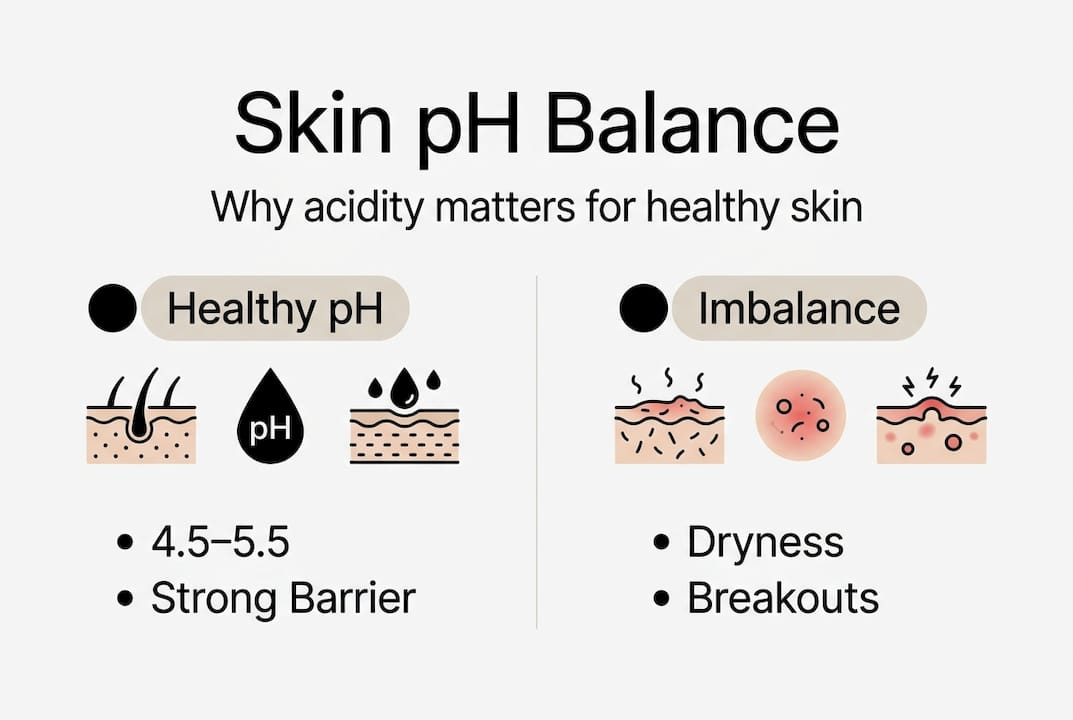
The pH scale measures acidity and alkalinity from 0 to 14, with 7 being neutral. Numbers below 7 are acidic, while numbers above 7 are alkaline. Healthy skin maintains a slightly acidic pH between 4.5 and 5.5, creating what dermatologists call the acid mantle. This thin, protective film covers your skin’s surface, acting as your first line of defense against environmental aggressors.
Your acid mantle does remarkable work. It neutralizes alkaline threats, inhibits bacterial growth, and seals in moisture while keeping irritants out. When this barrier functions properly, your skin looks plump, feels comfortable, and resists common problems like sensitivity and breakouts. The slightly acidic environment also helps beneficial bacteria thrive while discouraging harmful microorganisms that cause acne and infections.
Disrupting your skin’s pH triggers a cascade of problems. Your barrier weakens, allowing moisture to escape and irritants to penetrate more easily. You might notice:
- Persistent dryness and flaking despite using moisturizer
- Increased sensitivity to products that previously worked fine
- Redness and inflammation that appears without obvious cause
- More frequent breakouts as bacteria proliferate
- Premature signs of aging from compromised barrier function
Your skin tries to restore its natural pH after disruption, but constant assault from harsh products overwhelms this recovery mechanism. Each time you use an alkaline cleanser or astringent toner, you force your skin to work harder to rebalance itself. This exhausting cycle leaves your barrier perpetually weakened, making every skincare concern harder to address. Following a basic skincare workflow that respects pH helps your skin maintain its protective functions naturally.
How skincare products affect your skin’s pH
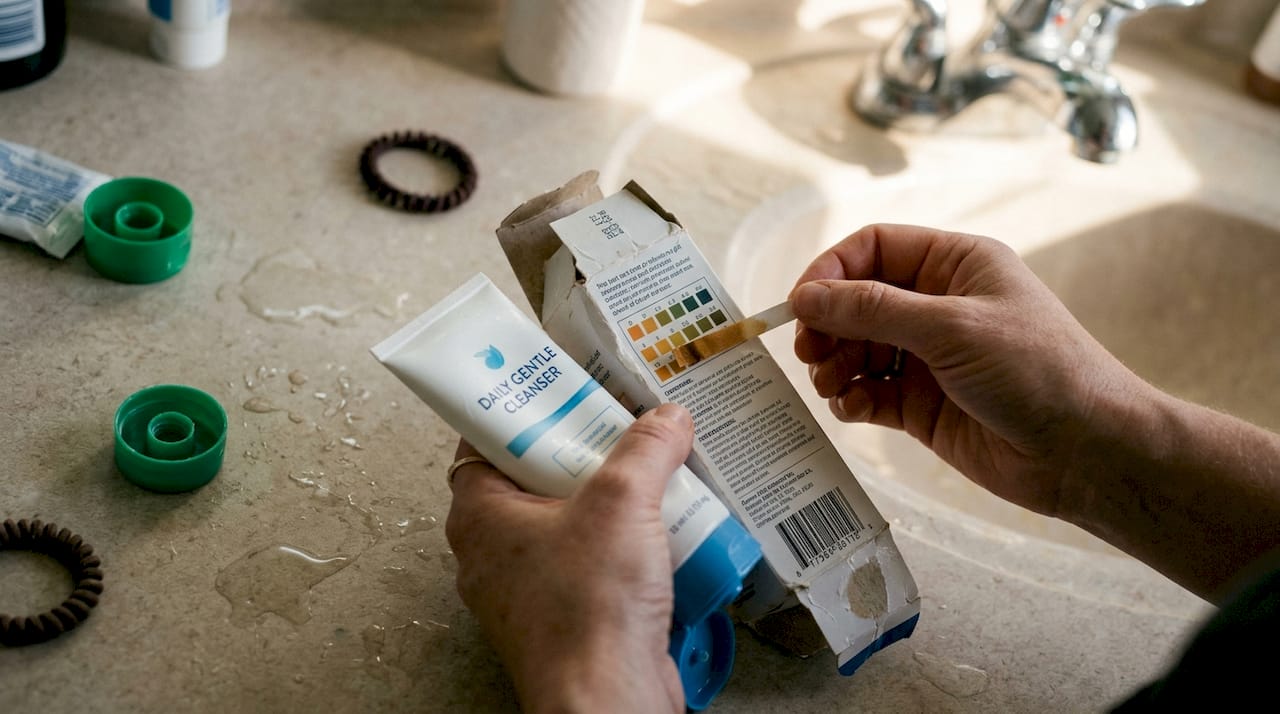
Cleansers pose the biggest pH threat in most routines. Traditional bar soaps typically have a pH between 9 and 10, far above your skin’s natural range. Even some liquid cleansers formulated for faces reach pH levels of 7 or 8. Harsh cleansers with high pH strip the acid mantle, leaving skin vulnerable and tight. That squeaky clean feeling many people associate with effective cleansing actually signals barrier damage.
Toners historically made the pH problem worse. Old-school astringent toners contained high concentrations of alcohol and witch hazel, pushing pH levels even higher after cleansing. Modern toners serve a different purpose, often helping restore skin’s natural pH after cleansing. Quality gentle cleansers formulated near skin’s natural pH eliminate the need for corrective toners, though many people still appreciate the role of toners in skincare for added hydration and active ingredient delivery.
Products that preserve your skin’s pH share specific characteristics:
- Formulated between pH 4.5 and 6.5 for facial products
- Free from harsh sulfates like sodium lauryl sulfate
- Contain buffering ingredients that stabilize pH
- Include barrier supporting components like ceramides and fatty acids
- Avoid high concentrations of drying alcohols
Active ingredients like vitamin C, AHAs, and BHAs are intentionally acidic, but their pH serves a therapeutic purpose. These products work at lower pH levels to penetrate skin effectively and deliver results. The key difference is that they’re formulated with buffers and supporting ingredients to prevent excessive irritation while maintaining efficacy.
Pro Tip: Choose cleansers with a pH between 4.5 and 5.5 to clean effectively without disrupting your acid mantle. Check product websites or contact customer service for pH information, as most brands don’t list it on packaging.
How to find and use pH balanced skincare products
Identifying pH balanced products requires detective work since few brands prominently display pH levels. Look for products marketed as “pH balanced,” “low pH,” or “acid balanced.” Korean and Japanese skincare brands often emphasize pH in their formulations and marketing. Some companies list pH ranges on their websites or respond to customer inquiries about specific products.
| Product Type | Typical pH Range | Impact on Skin |
|---|---|---|
| Bar soap | 9 to 10 | Strips acid mantle, causes dryness |
| Conventional cleanser | 7 to 8 | Disrupts barrier, increases sensitivity |
| Low pH cleanser | 4.5 to 6 | Maintains barrier function |
| AHA/BHA exfoliant | 3 to 4 | Effective exfoliation when properly formulated |
| Hydrating toner | 5 to 6 | Supports barrier, prepares skin |
| Moisturizer | 5 to 7 | Maintains hydration and protection |
Structuring a pH friendly routine takes thoughtful product selection and sequencing. Using pH balanced products supports barrier recovery and improves how your skin absorbs beneficial ingredients. Follow these steps:
- Start with a low pH cleanser that removes dirt and makeup without stripping
- Apply hydrating toner if desired to restore optimal pH immediately
- Use active ingredients like vitamin C or exfoliants on clean skin
- Layer serums from thinnest to thickest consistency
- Seal everything with moisturizer to lock in hydration
- Apply sunscreen every morning as your final step
The global skincare routine guide emphasizes that product order matters for pH sensitive formulations. Actives work best on slightly acidic skin, so applying them right after cleansing or toning maximizes their effectiveness. Moisturizers and sunscreens can have slightly higher pH levels without causing problems since they sit on top of your barrier rather than penetrating it.
Pro Tip: Patch test new products for at least three days before incorporating them into your full routine. Monitor for signs of irritation, increased oiliness, or dryness that might indicate pH incompatibility with your skin.
Consistency matters more than perfection. Your skin adapts to the products you use regularly, so switching your entire routine overnight can cause temporary disruption even when moving to better formulated products. Introduce one new item at a time, giving your skin two weeks to adjust before adding another. This measured approach, outlined in the daily skincare guide, helps you identify which products truly benefit your skin versus which ones your skin merely tolerates.
Common misconceptions and troubleshooting pH balance issues
Skincare myths about pH create confusion and lead people to avoid beneficial products. Many believe all acidic products are harsh, but balanced acidity actually protects and strengthens your skin. Understanding what’s true versus what’s marketing helps you make better choices.
Common pH misconceptions include:
- Myth: Acidic products always cause irritation and should be avoided
- Reality: Your skin is naturally acidic, and properly formulated acidic products support barrier function
- Myth: The tighter your skin feels after cleansing, the cleaner it is
- Reality: Tightness signals barrier damage from overly alkaline cleansers
- Myth: You need astringent toners to close pores after cleansing
- Reality: Pores don’t open and close, and harsh toners damage your acid mantle
- Myth: Natural and organic products are automatically pH balanced
- Reality: Natural ingredients can be highly alkaline, and pH requires intentional formulation
Recognizing pH imbalance in your skin helps you course correct before minor issues become major problems. Your skin sends clear signals when products disrupt its natural balance. Watch for persistent dryness that doesn’t improve with moisturizer, since this often indicates barrier damage from alkaline products. Increased sensitivity to products that previously caused no issues suggests your protective acid mantle has weakened.
Breakouts concentrated around your jawline and chin can result from pH disruption encouraging bacterial growth. If you notice more frequent or severe acne after changing cleansers, pH incompatibility might be the cause. Redness and inflammation that appears without exposure to known irritants often traces back to compromised barrier function from pH imbalance.
Avoiding pH disrupting habits protects your progress. Skip hot water, which strips natural oils and raises skin pH temporarily. Limit cleansing to twice daily at most, since over washing never improves skin and always damages your barrier. Resist the urge to use harsh scrubs or multiple exfoliating products simultaneously, as physical and chemical exfoliation both affect pH.
If skin issues persist despite using pH balanced products, consult a dermatologist. Underlying conditions like rosacea, eczema, or fungal infections require professional treatment beyond pH optimization. Your doctor can test your skin’s pH and recommend medical grade products formulated for compromised barriers. The basic skincare workflow tips provide a foundation, but persistent problems need expert evaluation.
Explore pH balanced skincare products at Skin Styles
Now that you understand how pH affects your skin health and product effectiveness, choosing the right products becomes straightforward. Skin Styles curates collections specifically designed to support your skin’s natural balance. Our pH balanced facial cleansers remove impurities without stripping your protective acid mantle, leaving skin clean and comfortable rather than tight and irritated.

Explore our selection of facial creams and gels formulated to work synergistically with your skin’s pH. These products deliver hydration and active ingredients while respecting your barrier function. The Cosrx product collection deserves special attention for pH conscious shoppers, as this Korean brand pioneered low pH cleansing and continues to formulate products that support rather than disrupt skin health. Every product we carry undergoes careful evaluation to ensure it meets the standards your skin deserves.
FAQ
What is pH balance in skincare?
Skin pH balance refers to the optimal acidity level your skin maintains for health and protection. Healthy skin typically has a pH around 4.5 to 5.5, creating an acid mantle that defends against bacteria, retains moisture, and supports barrier function. This slightly acidic environment allows beneficial microorganisms to thrive while discouraging harmful bacteria that cause acne and infections.
How can I tell if my skincare products are disrupting my skin’s pH?
Symptoms include persistent dryness, irritation, redness, or increased breakouts after using specific products. Your skin might feel tight immediately after cleansing or become sensitive to products that previously caused no problems. If these symptoms improve when you stop using a particular product, pH incompatibility likely contributed to the issue.
Are all acidic skincare products bad for my skin?
No, balanced acidity supports your skin barrier and overall health rather than damaging it. Your skin naturally maintains an acidic pH, so properly formulated acidic products work with your biology instead of against it. Only overly alkaline products or extremely harsh acidic formulations without proper buffering tend to disrupt skin pH and cause problems.
How do I maintain pH balance in my skincare routine?
Use pH balanced cleansers formulated between 4.5 and 5.5 to clean without stripping your acid mantle. Avoid harsh soaps and strong alkaline products that force your skin to work overtime restoring its natural balance. Maintain consistent hydration with barrier supporting moisturizers, and follow a structured basic skincare workflow that respects your skin’s natural functions. Introduce new products gradually to avoid overwhelming your barrier.