

Nearly 60 percent of american adults say glowing, healthy skin is one of their top beauty goals. Yet understanding what truly goes into exfoliation often remains a mystery. Why does removing dead skin matter so much for your overall complexion? This guide unpacks the science behind exfoliation, breaks down its benefits, and clears up confusion so you can make confident choices for your skin.
Table of Contents
- What Is Exfoliation? Core Concepts Defined
- Physical Versus Chemical Exfoliation Methods
- Key Benefits and Skin Health Impacts
- Choosing the Right Exfoliation Type
- Common Exfoliation Mistakes to Avoid
Key Takeaways
| Point | Details |
|---|---|
| Exfoliation Importance | Exfoliation removes dead skin cells, promoting skin renewal and a healthier complexion. It also aids in unclogging pores and improving texture. |
| Type Consideration | Choose between physical and chemical exfoliation based on your skin type for optimal results. Chemical methods offer deeper penetration, while physical methods provide immediate results. |
| Frequency Guidelines | Different skin types require varied exfoliation frequencies. Oily skin can exfoliate 2-3 times a week, whereas sensitive skin should limit to once a week or less. |
| Common Mistakes | Avoid over-exfoliation and incorrect product selection to prevent irritation and damage. Patience and gradual adjustments are key to effective skincare. |
What Is Exfoliation? Core Concepts Defined
Exfoliation is a fundamental skincare technique designed to remove dead skin cells from the surface of your skin, ultimately promoting skin renewal and a healthier complexion. According to Wikipedia, this process involves removing dead skin cells through mechanical or chemical methods, such as microdermabrasion or chemical peels.
At its core, exfoliation works by breaking down the connections between surface skin cells, allowing them to shed more efficiently. As research from IJRAR indicates, chemical exfoliants like acids specifically target the bonds holding skin cells together, which triggers the natural shedding process and reveals fresher, regenerated skin underneath.
The primary goals of exfoliation extend beyond simple surface cleaning. By removing dead skin cells, this technique helps:
- Unclog blocked pores
- Improve skin texture and smoothness
- Enhance natural skin cell turnover
- Prepare skin for better product absorption
- Stimulate collagen production
Different skin types require different exfoliation approaches, which means understanding your unique skin needs is crucial for achieving optimal results. For a comprehensive look at best practices, check out our exfoliation best practices guide.
When performed correctly, exfoliation can transform your skincare routine, revealing brighter, more radiant skin that looks and feels healthier. However, moderation is key – over-exfoliating can damage your skin’s protective barrier and lead to irritation.
Physical Versus Chemical Exfoliation Methods
Exfoliation techniques fall into two primary categories: physical and chemical methods, each offering unique approaches to removing dead skin cells. According to Healthiw, these methods differ significantly in how they interact with your skin’s surface and cellular structure.
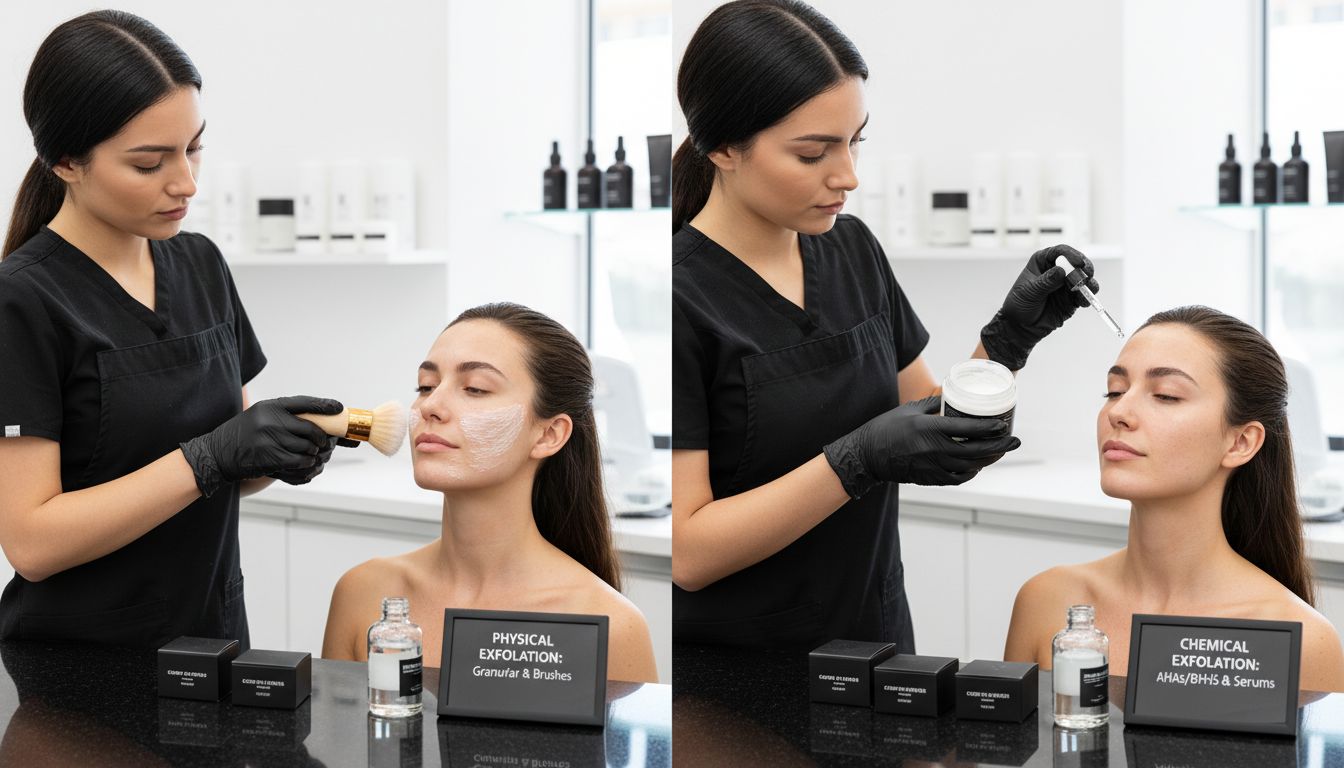
Physical exfoliation involves direct mechanical action, using tools or substances that physically scrub away dead skin cells. This method typically includes:
- Facial scrubs with granular textures
- Exfoliating brushes
- Loofahs
- Microdermabrasion treatments
- Cleansing cloths with textured surfaces
In contrast, chemical exfoliation uses specialized acids to dissolve the bonds between dead skin cells, enabling a deeper and more even removal process. Chemical exfoliants can be further categorized into:
- Alpha hydroxy acids (AHAs)
- Beta hydroxy acids (BHAs)
- Enzymatic exfoliants
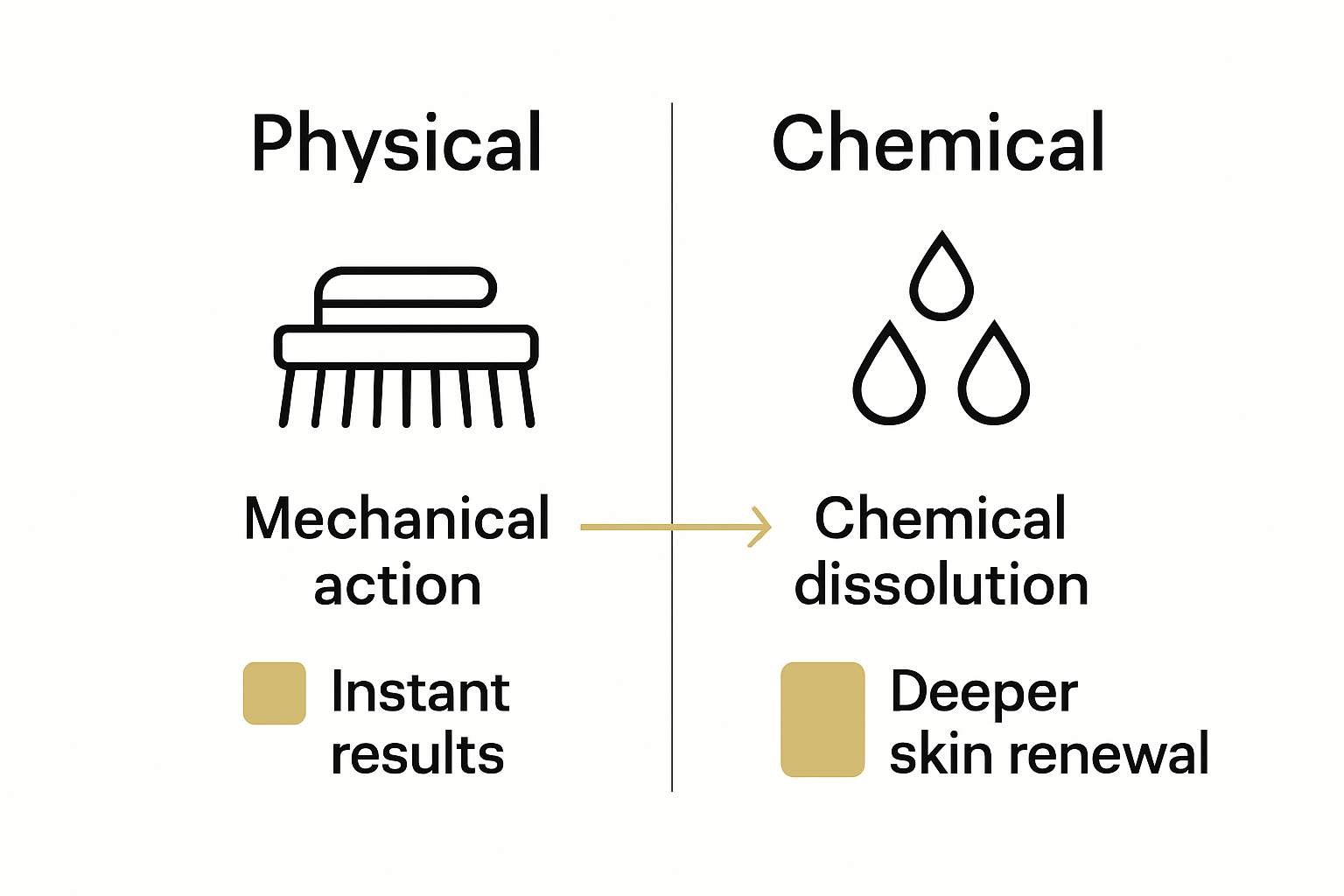
The key difference lies in application and skin interaction. Physical methods provide immediate tactile results but carry a higher risk of skin irritation, especially for sensitive skin types. Chemical exfoliants offer a gentler, more controlled approach that can penetrate deeper into the skin layers.
To determine the best exfoliation method for your skin, consider consulting our exfoliation best practices guide to understand how different techniques might suit your unique skin needs.
Key Benefits and Skin Health Impacts
Exfoliation plays a transformative role in maintaining optimal skin health, offering a wide range of benefits that extend far beyond surface-level cleaning. According to WJBPHS, this skincare technique enhances skin appearance and health by promoting cell renewal, improving texture, unclogging pores, and brightening overall complexion.
Cellular Renewal and Skin Regeneration represent the cornerstone of exfoliation’s remarkable benefits. By systematically removing dead skin cells, this process triggers the body’s natural healing mechanisms. Research from IJNRD highlights that regular exfoliation not only removes dead skin cells but also:
- Reduces acne scars
- Prevents ingrown hairs
- Promotes smoother skin texture
- Enhances natural skin regeneration
- Improves skin’s receptivity to skincare products
Beyond aesthetic improvements, exfoliation supports long-term skin health by:
- Stimulating collagen production
- Balancing natural oil production
- Supporting the skin’s protective barrier
- Minimizing potential inflammation
- Creating a more even skin tone
To maximize these benefits while minimizing potential skin irritation, consider exploring our niacinamide skincare guide, which offers complementary insights into maintaining healthy, radiant skin.
It’s crucial to remember that individual skin types respond differently to exfoliation. What works brilliantly for one person might cause sensitivity for another. Patience, gentle approach, and understanding your unique skin requirements are key to achieving optimal exfoliation results.
Choosing the Right Exfoliation Type
Selecting the most appropriate exfoliation method requires careful consideration of your unique skin characteristics and specific skincare goals. According to Healthiw, different exfoliation techniques offer distinct approaches, with chemical exfoliation providing deeper, longer-lasting results at a molecular level, while physical exfoliation delivers instant mechanical action.
Skin Type Considerations play a crucial role in determining the ideal exfoliation approach. Here’s a comprehensive breakdown of how different skin types might respond:
Sensitive Skin
- Prefer gentle chemical exfoliants
- Avoid harsh physical scrubs
- Use enzymatic or low-concentration AHA products
Oily/Acne-Prone Skin
- Benefit from BHA (salicylic acid) chemical exfoliants
- Can tolerate mild physical exfoliation
- Focus on unclogging pores
Dry/Mature Skin
- Opt for hydrating chemical exfoliants
- Use AHA products like glycolic or lactic acid
- Minimize mechanical friction
Combination Skin
- Use targeted exfoliation for different facial zones
- Mix chemical and physical methods cautiously
- Adjust frequency based on skin response
The frequency of exfoliation is equally important. Most skin types benefit from:
- Oily skin: 2-3 times per week
- Combination skin: 1-2 times per week
- Sensitive skin: Once per week or less
- Dry/mature skin: 1 time per week
To support your exfoliation journey and understand how to care for sensitive skin, explore our guide to choosing cleansers for sensitive skin, which offers additional insights into maintaining a balanced skincare routine.
Remember that skin responses are highly individual. What works perfectly for one person might cause irritation for another. Start slowly, observe your skin’s reactions, and be prepared to adjust your approach as needed.
Common Exfoliation Mistakes to Avoid
Exfoliation is a delicate skincare technique that requires precision and understanding to avoid potential damage. According to IJRAR, over-exfoliation can break the skin’s protective barrier, leading to increased sensitivity, potential infections, and long-term skin health complications.
Top Exfoliation Mistakes that individuals frequently make include:
- Excessive Frequency
- Exfoliating more than recommended for your skin type
- Ignoring your skin’s individual tolerance levels
- Believing more exfoliation equals better results
- Incorrect Pressure and Technique
- Scrubbing too hard during physical exfoliation
- Using abrasive tools that cause micro-tears
- Applying uneven pressure across skin surfaces
- Inappropriate Product Selection
- Choosing exfoliants incompatible with your skin type
- Using products with harsh, aggressive ingredients
- Mixing multiple exfoliating products simultaneously
Warning Signs of Over-Exfoliation:
- Persistent skin redness
- Increased sensitivity
- Dry, tight feeling
- Sudden breakouts
- Shiny but irritated skin texture
To protect your skin and maintain a healthy exfoliation routine, start with minimal frequency and gradually increase based on your skin’s response. Always patch test new products and listen to your skin’s signals.
For those seeking additional insights into maintaining a balanced skincare routine, explore our comprehensive guide on cleansers, which offers complementary advice for supporting your skin’s natural balance.
Remember: skincare is not one-size-fits-all. What works for someone else might not work for you. Patience, observation, and gentle approach are your best tools in creating an effective exfoliation strategy.
Unlock Your Best Skin with the Right Exfoliation Choice
Choosing the perfect exfoliation method can feel overwhelming when balancing sensitive, oily, or dry skin needs. This guide highlights crucial pain points like avoiding irritation, understanding chemical versus physical exfoliation, and achieving smoother, brighter skin without overdoing it. If you want to transform your skincare routine and embrace radiant, healthy skin, it all starts with selecting the right products that complement your unique skin type and goals.

Discover a curated range of gentle yet effective exfoliants and skincare essentials at Skin-Styles.com. Our collection is designed to support your skin’s natural renewal process while protecting its delicate barrier. Explore trusted solutions that enhance product absorption and promote collagen production for lasting glow. Don’t wait to experience the benefits of exfoliating correctly—visit Skin-Styles.com now and start your journey to balanced, refreshed skin. For even more skincare wisdom, check out our helpful exfoliation best practices guide and learn how to care for sensitive skin with our essential tips on cleansers.
Take control of your skincare routine today with tailored exfoliation that truly works for you.
Frequently Asked Questions
What is exfoliation and why is it important for skin health?
Exfoliation is a skincare technique that removes dead skin cells from the surface of the skin, promoting skin renewal and a healthier complexion. It helps unclog pores, improve texture, enhance product absorption, and stimulate collagen production.
What are the main types of exfoliation methods?
The two primary types of exfoliation are physical and chemical. Physical exfoliation uses mechanical means, like scrubs and brushes, while chemical exfoliation uses acids to dissolve the bonds between dead skin cells for deeper cleansing.
How often should I exfoliate my skin?
The frequency of exfoliation depends on your skin type. Oily skin can benefit from exfoliating 2-3 times per week, while combination skin should exfoliate 1-2 times per week. Sensitive and dry/mature skin may only need exfoliation once a week or even less.
What are common mistakes to avoid when exfoliating?
Common mistakes include exfoliating too frequently, using harsh products that aren’t suitable for your skin type, and applying too much pressure during physical exfoliation. Signs of over-exfoliation include redness, sensitivity, and dryness.