

TL;DR:
- True skin barrier repair requires restoring lipids and structural integrity, not just surface hydration.
- Damage from over-exfoliation, harsh cleansers, and environmental stressors weakens the barrier, increasing sensitivity.
- Effective repair involves lipid-rich routines with ceramides, cholesterol, fatty acids, and supportive ingredients.
Most people assume that slathering on any moisturizer is enough to protect their skin. It is not. True barrier repair goes far beyond surface hydration. It involves restoring the structural integrity of your stratum corneum, the outermost layer of your skin, using specific lipids, targeted ingredients, and smarter routines. Barrier repair refers to restoring the stratum corneum’s protective function, often described using the bricks and mortar model. This article breaks down the science, the common mistakes, and the practical steps that make real barrier repair possible.
Table of Contents
- Understanding the skin barrier: Structure and function
- How skin barriers get damaged: Common causes
- Barrier repair in action: Evidence-based strategies
- Special cases: Aging, pediatric, and severely damaged skin
- Why barrier repair is misunderstood: The expert angle
- Explore science-backed barrier repair products
- Frequently asked questions
Key Takeaways
| Point | Details |
|---|---|
| Skin barrier basics | Your skin barrier consists of cells and lipids, acting like bricks and mortar to protect from moisture loss. |
| Damage causes | Over-exfoliation, harsh cleansers, and environmental stress quickly weaken your skin barrier. |
| Repair methods | Effective barrier repair relies on physiological lipid ratios, humectants, and simplified routines. |
| Clinical evidence | Ceramide moisturizers and lipid-rich products significantly improve dryness and barrier function. |
| Special situations | Aging, pediatric, and severely damaged skin require tailored barrier repair strategies and sometimes professional help. |
Understanding the skin barrier: Structure and function
Your skin barrier is not just a surface. It is a sophisticated, multi-layered defense system that sits between your body and the outside world. Think of it as a wall. The bricks are your skin cells, called corneocytes, and the mortar is a mix of lipids, primarily ceramides, cholesterol, and free fatty acids. The skin barrier is composed of corneocytes and lipids, and when this system functions properly, your skin retains moisture, resists irritants, and heals efficiently.
The barrier’s most critical job is preventing transepidermal water loss, or TEWL. TEWL is the passive evaporation of water from your skin into the air. When the barrier is intact, TEWL stays low, and skin feels comfortable. When it is compromised, water escapes faster than it should, leaving skin feeling tight, dry, and reactive.
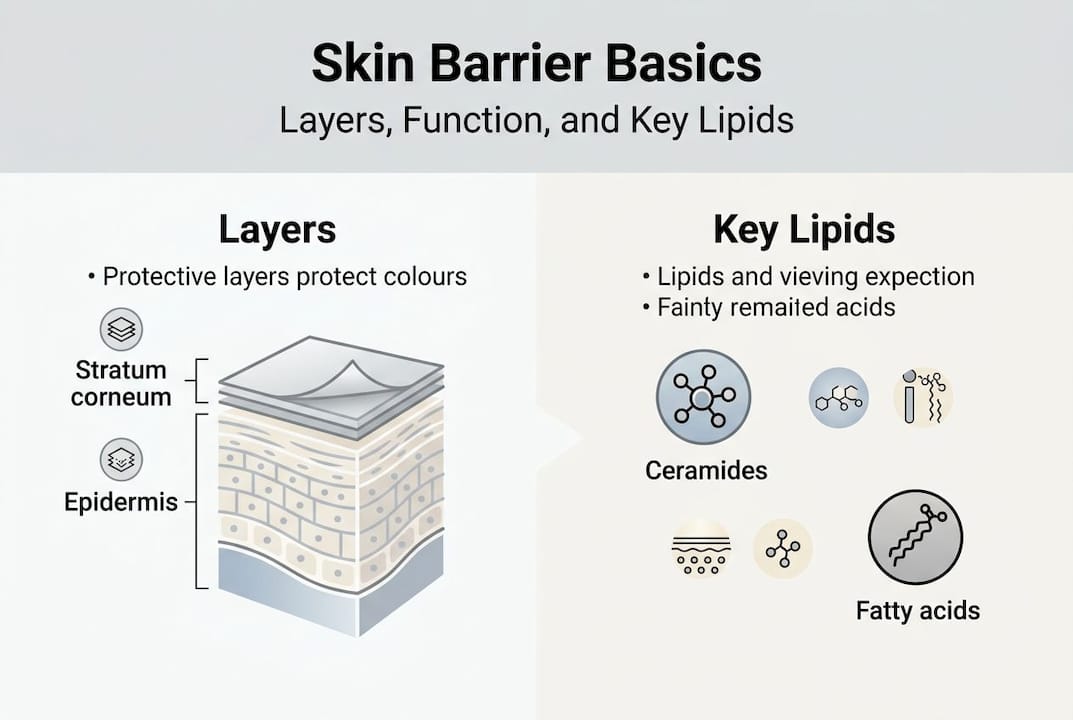
Here is a quick comparison of healthy versus compromised barrier function:
| Feature | Healthy barrier | Compromised barrier |
|---|---|---|
| TEWL levels | Low | High |
| Skin texture | Smooth, plump | Dry, rough, flaky |
| Sensitivity | Minimal | High, reactive |
| Repair speed | Fast | Slow |
| Lipid content | Balanced | Depleted |
Key functions a healthy barrier performs:
- Locks in moisture and prevents excessive TEWL
- Blocks environmental aggressors like pollution and pathogens
- Maintains a slightly acidic pH (around 4.5 to 5.5) to support healthy microbiome balance
- Enables immune defense by acting as a physical shield
- Supports healing through organized cell turnover
Understanding the ceramides guide is essential here, because ceramides alone make up roughly 50% of the lipid content in the stratum corneum. Without them, the mortar crumbles. Skin that feels perpetually dry, no matter how much moisturizer you apply, often has a ceramide deficiency at the root.
How skin barriers get damaged: Common causes
Once you understand the barrier, it becomes clear why so many routines actually work against it. Damage happens quietly, often from habits that feel healthy. Barrier damage comes from over-exfoliation, harsh cleansers, hot water, UV exposure, and low humidity, with signs including dryness, redness, tightness, and increased TEWL.
Here are the top causes of barrier damage, ranked by how commonly they are overlooked:
- Over-exfoliation: Using acids or scrubs too frequently strips lipids before the skin can replenish them. Many people exfoliate daily without realizing it is weakening their barrier over time. Following exfoliation best practices is critical to avoiding this trap.
- Harsh cleansers: Surfactants like sodium lauryl sulfate (SLS) disrupt the acid mantle and emulsify the very lipids holding your barrier together.
- Hot water: Long, hot showers feel relaxing but dissolve the skin’s natural oils rapidly.
- UV radiation: Repeated sun exposure degrades lipid structure and triggers inflammatory responses that weaken barrier cohesion.
- Low humidity environments: Dry air accelerates TEWL, especially during winter months or in air-conditioned spaces.
- Psychological stress: Cortisol spikes have been shown to reduce ceramide synthesis, making your barrier more vulnerable.
Barrier damage is cumulative. You might not notice it after one harsh cleanse or one long shower, but repeated exposure adds up until your skin can no longer self-repair fast enough to keep pace.
The signs that your barrier is compromised are usually obvious once you know what to look for: persistent dryness that does not respond to moisturizer, stinging when applying products you used to tolerate, redness that lingers, and visible flakiness even on combination or oily skin types.

If you have pushed too hard with exfoliants, reviewing exfoliation recovery steps can help you get your skin back on track without making the damage worse.
Barrier repair in action: Evidence-based strategies
Knowing the causes is only useful if you know exactly how to fix the problem. The good news is that the science is clear. Repair strategies include simplifying your routine, pausing actives, using gentle pH-balanced cleansers, humectants, and lipids in a 3:1:1 ratio, plus niacinamide and occlusives.
The physiological lipid ratio that best mimics your skin’s natural composition is ceramides to cholesterol to fatty acids at a 3:1:1 ratio. Products that match this ratio are significantly more effective than those that rely on a single ingredient. And the results are not subtle. Ceramide moisturizers reduce xerosis by 47%, with TEWL reductions of 12 to 13% in one to four weeks and EASI scores dropping 75 to 79% in atopic eczema after two months.
| Ingredient type | Examples | Primary action |
|---|---|---|
| Humectants | Glycerin, hyaluronic acid | Draw water into the skin |
| Lipids | Ceramides, cholesterol, fatty acids | Rebuild barrier structure |
| Occlusives | Petrolatum, squalane | Seal in moisture |
| Anti-inflammatory | Niacinamide, panthenol | Reduce redness and sensitivity |
A practical barrier repair routine looks like this:
- Cleanser: Gentle, pH-balanced, fragrance-free. No foam cleansers with SLS.
- Hydration layer: A humectant serum with glycerin or hyaluronic acid.
- Repair layer: A ceramide-rich moisturizer formulated at the 3:1:1 ratio.
- Seal: An occlusive layer at night (petrolatum, shea butter) to lock everything in.
- SPF (morning): A mineral or broad-spectrum sunscreen to prevent further UV damage.
Pro Tip: Pause your retinol, AHAs, and BHAs for at least two weeks during active barrier repair. These actives accelerate cell turnover, which sounds helpful, but actually interferes with the lipid replenishment process your skin needs most right now.
For deeper reading on the clinical repair evidence behind lipid restoration, the published research on barrier physiology is compelling and surprisingly accessible. Pairing this with a hydration ingredients for repair routine gives you both the science and the practical application. You can also revisit the role of ceramides to understand why lipid choice matters so much.
Special cases: Aging, pediatric, and severely damaged skin
Barrier repair is not a one-size-fits-all process. Age, genetics, and severity all affect how the skin responds. Aging skin has altered fibroblast roles, reduced lipid production, and slower repair, while pediatric keratinocytes are more responsive and severe damage may require professional intervention.
Aging skin:
- Lipid composition shifts significantly, with ceramide levels dropping measurably after age 40.
- The lamellar body lipid profile (LPP) becomes less organized, reducing barrier efficiency.
- Repair timelines are longer. What takes a 25-year-old two weeks may take someone over 60 six to eight weeks.
- Richer, occlusive formulas and ingredients like cholesterol-dominant lipid blends are particularly valuable.
- Supporting nighttime regeneration with the right products matters more as we age. A nighttime skincare for aging routine can significantly amplify daytime barrier repair.
Pediatric skin:
- Children’s keratinocytes are more responsive to topical repair signals, meaning recovery is typically faster.
- However, pediatric skin is also more permeable, making ingredient selection critical. Avoid fragrances, essential oils, and high concentrations of active ingredients.
- Choose fragrance-free, dye-free, and minimally formulated products for babies and young children.
Severely damaged skin:
- Conditions like severe eczema, contact dermatitis, or chronic over-exfoliation injuries often require prescription interventions.
- Topical corticosteroids or barrier-specific prescription creams may be needed alongside OTC repair products.
Pro Tip: If your skin has been red, stinging, and unresponsive to gentle care for more than four weeks, see a dermatologist. Persistent barrier failure can signal an underlying condition that OTC products alone cannot resolve.
Why barrier repair is misunderstood: The expert angle
Here is the uncomfortable truth: most barrier repair conversations in the beauty world focus on being gentle to the point of doing almost nothing. Gentle routines get treated as the finish line when they are actually just the starting point.
The real issue is that most consumers pick one hero ingredient, usually a ceramide or hyaluronic acid, and expect it to do everything. But clinical barrier research shows that lipid restoration works best as a system, with multiple lipid classes working in the correct physiological ratio. A ceramide-only product without cholesterol and fatty acids is incomplete.
Barrier repair is also not a permanent fix. Your skin self-repairs continuously, but modern lifestyles, pollution, stress, and seasonal changes keep disrupting that process. The goal is not to repair once and move on. It is to build a routine that supports ongoing repair. That distinction changes how you approach product selection entirely. Chasing trends around single miracle ingredients will always disappoint. Understanding the system and supporting it consistently is where real, lasting improvement lives.
Explore science-backed barrier repair products
Putting this knowledge into practice is easier when your product choices are built around real barrier science. At Skin Styles, we curate formulations that align with what the research actually supports, not just what the marketing claims.

Our facial creams and gels collection features moisturizers designed with lipid-rich, barrier-supportive formulas for every skin type. If you prefer targeted Korean skincare solutions, the Cosrx collection includes barrier-focused products with proven ingredients like snail mucin and niacinamide. For those managing aging skin concerns alongside barrier repair, our anti-wrinkle products offer formulas that address lipid loss and skin resilience together. Healthy skin starts with a healthy barrier. We can help you build it.
Frequently asked questions
How long does skin barrier repair take?
Barrier repair can take anywhere from a few days to several months depending on damage severity and repair methods. Topical lipids accelerate repair by supporting the skin’s own lipid production triggered when TEWL rises.
What are the signs your skin barrier is damaged?
Key signs include persistent dryness, redness, tightness, and increased skin sensitivity. Damage indicators include dryness, redness, tightness, and elevated TEWL levels after exposure to harsh products or environmental stressors.
Which ingredients work best for barrier repair?
Ceramides, cholesterol, and fatty acids in a 3:1:1 lipid ratio provide the most complete structural support, with niacinamide and humectants like glycerin and hyaluronic acid as important supporting ingredients.
Is barrier repair different for aging or pediatric skin?
Yes. Aging skin needs more lipid support and repairs more slowly, while pediatric skin recovers faster but requires gentler, fragrance-free formulas due to higher permeability.
Should you stop all actives when repairing your barrier?
Yes, temporarily. It is recommended to pause actives and use gentle, pH-balanced products until the barrier shows clear signs of recovery such as reduced redness and reduced sensitivity.