

Many parents worry that letting their baby feed themselves solid foods will lead to choking or nutritional gaps. Research shows baby led weaning is safe and effective when caregivers follow proper guidelines. This guide explains what baby led weaning is, when to start, how it supports healthy eating, and practical steps to implement it confidently.
Table of Contents
- Understanding Baby Led Weaning: Definition And Core Principles
- Developmental Readiness And Timing For Starting BLW
- Nutritional And Health Outcomes Of Baby Led Weaning
- Safety Considerations And Choking Risk Management
- Common Misconceptions About Baby Led Weaning
- Comparing Baby Led Weaning With Traditional Spoon Feeding
- Practical Implementation Tips And Challenges For Caregivers
- Summary And Next Steps For Parents And Caregivers
- Explore Safe Baby Feeding Essentials At Skin Styles
- Frequently Asked Questions About Baby Led Weaning
Key takeaways
| Point | Details |
|---|---|
| Baby led weaning is infant self-feeding starting around 6 months | Infants feed themselves finger foods at their own pace without purees |
| Developmental readiness is essential for safety | Infants must sit unassisted, show interest in food, and grasp objects |
| BLW infants eat 20-30% more fruits and vegetables | Research shows improved dietary diversity in the first year |
| Choking risk is not higher with proper practices | Safety guidelines ensure BLW is as safe as spoon feeding |
| BLW promotes healthy eating habits and family meals | Encourages self-regulation and social learning at mealtimes |
Understanding baby led weaning: definition and core principles
Baby led weaning is an approach where infants feed themselves finger foods starting around 6 months instead of being spoon-fed purees. The method respects infant autonomy by allowing babies to explore food textures, tastes, and amounts at their own pace. Introducing BLW after 6 months aligns with WHO complementary feeding guidelines advising exclusive breastfeeding until 6 months then introduction of solids safely.
The core principles of BLW include several key elements:
- Infant autonomy: Babies choose what and how much to eat from safe options offered
- Developmental readiness: Starting only when infants show physical and behavioral signs of readiness
- Safe food textures: Offering soft, appropriately sized foods that prevent choking hazards
- Family meal inclusion: Babies join family mealtimes and eat similar foods prepared safely
BLW emphasizes the infant’s natural ability to self-regulate intake. Caregivers provide safe food choices but do not force or control how much the baby consumes. This approach differs fundamentally from traditional spoon feeding where caregivers determine portion sizes and feeding pace.
The method supports natural developmental progression. Babies develop hand-eye coordination, fine motor skills, and oral motor abilities through self-feeding practice. Family mealtimes become shared experiences where infants observe and learn eating behaviors from caregivers and siblings.
Developmental readiness and timing for starting BLW
Starting baby led weaning at the right time is crucial for safety and success. Infants must demonstrate specific developmental milestones before they can safely self-feed solid foods. Introducing BLW after 6 months aligns with WHO complementary feeding guidelines recommending exclusive breastfeeding until this age.
Key readiness signs include:
- Sitting upright unassisted with stable trunk control for at least one minute
- Good head and neck control without wobbling or needing support
- Reaching for and grasping objects with purposeful hand movements
- Showing clear interest in family foods by watching others eat and reaching for food
- Loss of tongue thrust reflex that automatically pushes food out of the mouth
Starting before 6 months or without these readiness signs increases choking risk and feeding difficulties. Younger infants lack the motor coordination and oral skills needed to safely manipulate food. Their digestive systems may not be ready to process solid foods effectively.
Developmental milestones ensure infants have the required physical abilities for safe self-feeding. Sitting upright prevents food from entering airways incorrectly. Hand coordination allows babies to grasp food and bring it to their mouths. Interest in food indicates neurological and behavioral readiness to explore new textures.
Some babies show readiness closer to 7 months rather than 6 months. Individual developmental timelines vary. Caregivers should wait until all readiness signs are present rather than starting based solely on age. Consulting pediatricians helps confirm appropriate timing for each infant’s unique development.
Nutritional and health outcomes of baby led weaning
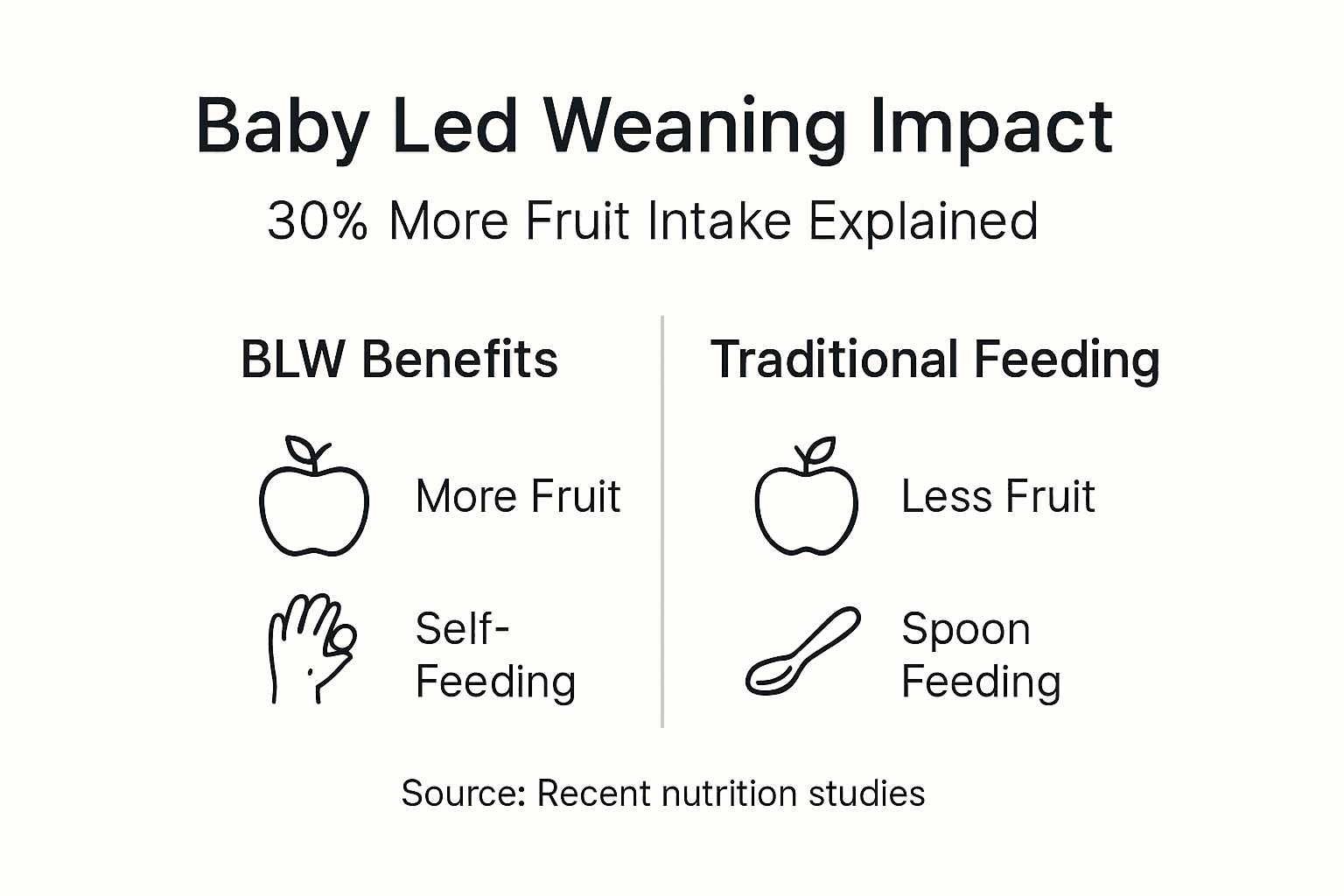
Baby led weaning supports positive nutritional outcomes when caregivers offer diverse, nutrient-rich foods. Studies show infants practicing BLW consume similar or higher amounts of fruits and vegetables compared to traditional spoon feeding, supporting positive dietary diversity early on. Research indicates BLW infants consume 20 to 30% more fruits and vegetables in their first year than spoon-fed peers.
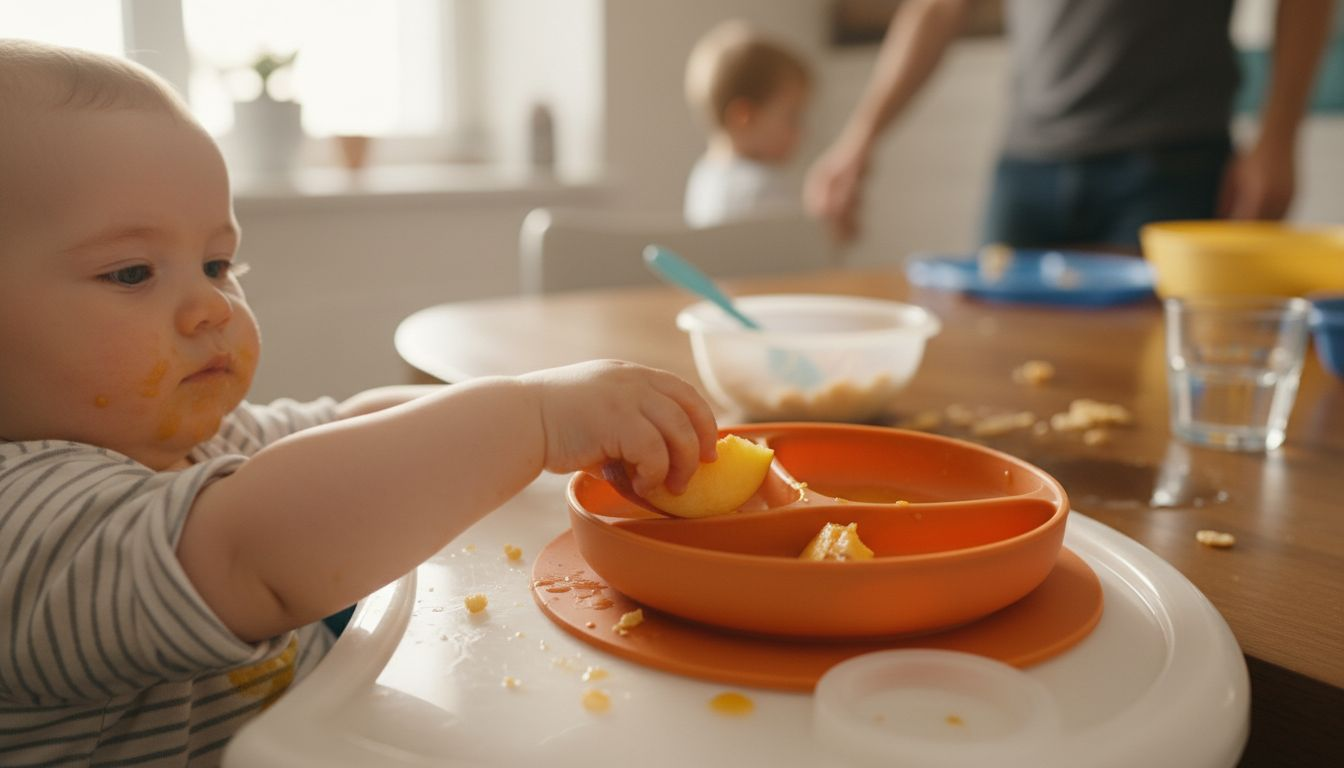
BLW infants consume up to 30% more fruits and vegetables in their first year.
The nutritional benefits of BLW include:
- Increased exposure to diverse food textures, flavors, and colors from the start
- No increased risk of iron deficiency when iron-rich foods are offered regularly
- Support for healthy weight trajectories through infant-led intake regulation
- Development of oral motor skills essential for chewing and swallowing
Concerns about iron deficiency are common among parents considering BLW. Research shows that when caregivers consistently offer iron-rich foods like meat, fortified cereals, beans, and leafy greens, BLW infants meet their iron needs. The key is intentional food selection rather than the feeding method itself.
BLW promotes self-regulation of food intake. Babies stop eating when satisfied rather than consuming predetermined portions. This natural regulation supports healthy weight development and reduces risks of overfeeding. Infants learn to recognize internal hunger and fullness cues from the beginning.
The method also supports oral motor development. Babies practice chewing, tongue movement, and jaw coordination with various food textures. These skills are foundational for speech development and future eating abilities. Early exposure to diverse textures prevents texture aversions that sometimes develop with prolonged puree feeding.
Safety considerations and choking risk management
Safety is the top concern for parents considering baby led weaning. Choking risks with BLW are not higher than traditional feeding when caregivers follow safety guidelines such as offering appropriate food textures and supervising closely. Proper preparation and supervision create a safe feeding environment.
Essential safety practices include:
- Constant supervision during all meals and snacks without distractions
- Offering only soft foods cut into appropriate stick shapes or flat pieces
- Avoiding high-risk foods like whole grapes, nuts, popcorn, raw carrots, and hard candies
- Ensuring the infant sits upright in a proper high chair, never reclined or lying down
- Learning infant CPR and choking response procedures before starting BLW
Food preparation is critical for safety. Soft foods should be easily mashed between fingers or against the roof of the mouth. Stick shapes about the size of an adult finger allow babies to grasp food with their fists while leaving enough protruding to bite. Flat pieces like steamed vegetable strips work well for developing pincer grasp.
Pro Tip: Always have the infant sitting upright in a high chair during meals for safety. Never offer food in car seats, strollers, or while the baby is moving around.
Gagging is a normal, protective reflex that prevents choking. Babies may gag as they learn to move food around their mouths. Gagging involves coughing, watery eyes, and forward tongue movement that brings food forward. Choking is silent, with the infant unable to cough or make sounds. Understanding this difference helps caregivers respond appropriately.
Supervising baby feeding closely can cut choking risk significantly when combined with proper food preparation. Caregivers should stay within arm’s reach during meals, avoid distractions like phones, and watch for signs of difficulty. Creating a calm, focused feeding environment supports safety and positive mealtime experiences.
Common misconceptions about baby led weaning
Several myths about baby led weaning create unnecessary anxiety for parents. Research shows no increased choking risk when safety guidelines are followed during BLW. Addressing these misconceptions with evidence helps families make informed decisions.
Myth: BLW increases choking risk significantly. Fact: Studies demonstrate that choking incidents occur at similar rates with BLW and traditional spoon feeding when proper safety practices are followed. The key is offering appropriate food textures and maintaining supervision.
Myth: BLW causes iron deficiency in infants. Fact: Iron intake remains adequate when caregivers intentionally offer iron-rich foods regularly. The feeding method does not determine iron status; food choices do. Meat, fortified cereals, beans, and dark leafy greens provide necessary iron.
Myth: BLW means no caregiver involvement or guidance. Fact: Caregivers actively guide BLW by selecting and preparing safe foods, supervising meals, modeling eating behaviors, and creating positive mealtime environments. The infant leads the pace and amount, but caregivers structure the experience.
Common misunderstandings include:
- Believing BLW is a free-for-all approach without structure or rules
- Thinking babies will not eat enough or will starve themselves
- Assuming BLW requires special expensive equipment or complicated preparation
- Worrying that mess indicates the method is not working properly
BLW is a structured approach with clear safety guidelines and principles. Babies are biologically driven to eat and will consume adequate amounts when offered appropriate foods regularly. The method works with basic equipment like a simple high chair and regular dishes. Mess is a normal part of learning and decreases as motor skills improve.
These clarifications help parents feel confident about choosing BLW. Understanding the evidence-based safety and nutritional outcomes reduces anxiety and supports successful implementation.
Comparing baby led weaning with traditional spoon feeding
Baby led weaning and traditional spoon feeding represent different approaches to introducing solid foods. Each method has distinct characteristics that affect infant development, nutrition, and family dynamics. Understanding these differences helps caregivers choose the approach that fits their family best.
| Aspect | Baby Led Weaning | Traditional Spoon Feeding |
|---|---|---|
| Feeding control | Infant self-feeds and controls intake | Caregiver controls portions and pace |
| Food textures | Finger foods from the start | Purees progressing to textures |
| Motor skill development | Early development of hand-eye coordination and self-feeding | Later development as textures advance |
| Family meal participation | Infant joins family meals immediately | Often fed separately until textures advance |
| Mess level | Higher initially as babies learn | Lower with caregiver-controlled feeding |
BLW encourages infant autonomy and self-regulation from the beginning. Babies develop motor skills earlier through repeated practice grasping and manipulating food. Family mealtimes become inclusive social experiences where infants observe and learn eating behaviors. The approach requires tolerance for mess and patience during the learning process.
Traditional spoon feeding offers caregivers more control over portion sizes and nutrient delivery. It can be less messy initially and may feel more comfortable for caregivers worried about choking. However, it may limit infant exploration and delay development of self-feeding skills. Transitioning from purees to textures requires additional steps.
Benefits of BLW include:
- Earlier oral motor skill development for chewing and swallowing
- Promotion of healthy eating habits through self-regulation
- Exposure to diverse textures and flavors from the start
- Natural integration into family mealtimes
Benefits of traditional feeding include:
- Easier nutrient tracking and portion control
- Less initial mess and cleanup
- Potentially faster feeding sessions
- Familiar method for many caregivers
Neither method is inherently superior. Both can support healthy infant nutrition and development when implemented thoughtfully. Some families combine approaches, offering both finger foods and some purees during the transition period. The best choice depends on individual family preferences, infant readiness, and caregiver comfort levels.
Practical implementation tips and challenges for caregivers
Starting baby led weaning successfully requires preparation and patience. Following a clear process helps caregivers implement BLW safely and confidently. BLW essentials support self-feeding success when combined with proper techniques.
Step-by-step implementation:
- Confirm your infant shows all developmental readiness signs before starting
- Prepare the feeding area with a high chair, bib, and floor protection
- Start with one meal per day, gradually increasing as the baby shows interest
- Offer 2 to 3 different soft finger foods at each meal for variety
- Include at least one iron-rich food daily to support nutritional needs
- Sit with your baby during meals and eat similar foods to model behaviors
- Allow the baby to explore food freely without rushing or pressuring
- Clean up calmly and positively, treating mess as part of learning
Common challenges include managing the inevitable mess and maintaining patience during slow initial progress. Placing a splash mat under the high chair simplifies cleanup. Using baby-safe dishes that suction to the table reduces spills. Accepting that mess indicates learning rather than failure helps caregivers stay positive.
Pro Tip: Use baby-friendly utensils and feeding sets designed for self-feeding to support skill development and reduce frustration.
Integrating BLW into family meals provides social learning opportunities. Babies observe how family members eat, hold utensils, and interact during meals. Eating similar foods prepared safely helps infants feel included. This social aspect supports language development and positive mealtime associations.
Initial frustration is normal as babies learn new skills. Food intake may seem minimal at first while babies explore textures and practice motor movements. Breast milk or formula remains the primary nutrition source until 12 months. Solid foods complement rather than replace milk feeding during this learning period.
Strategies for overcoming difficulties:
- Stay consistent with meal timing and environment to build routine
- Offer familiar foods alongside new options to encourage exploration
- Avoid showing frustration or anxiety about mess or slow eating
- Remember that food exposure and skill development matter more than amounts consumed initially
- Connect with other BLW families for support and encouragement
Summary and next steps for parents and caregivers
Baby led weaning offers a safe, effective approach to introducing solid foods when implemented with proper knowledge and care. The method promotes infant autonomy, supports healthy eating habits, and integrates babies into family mealtimes naturally. Success requires attention to developmental readiness, food safety, and consistent supervision.
Key points to remember:
- BLW starts around 6 months when infants show clear developmental readiness signs
- Safety practices including proper food preparation and supervision prevent choking risks
- Nutritional outcomes are positive when caregivers offer diverse, nutrient-rich foods regularly
- The method supports motor skill development and self-regulation of food intake
Caregivers should consult healthcare professionals for personalized guidance, especially when infants have special needs, developmental delays, or medical conditions. Pediatricians and feeding specialists provide individualized recommendations based on each infant’s unique circumstances.
Starting BLW with accurate information and realistic expectations sets families up for success. Understanding that learning takes time, mess is normal, and progress happens gradually helps caregivers remain patient and positive. Paying attention to infant cues about hunger, fullness, and readiness guides the process naturally.
Explore safe baby feeding essentials at Skin Styles
Implementing baby led weaning successfully becomes easier with the right tools. Safe, baby-friendly feeding products support self-feeding practice while reducing mess and frustration. Skin Styles offers BPA-free silicone feeding sets designed specifically for infants learning to feed themselves.

Our 8-piece silicone baby feeding set includes suction plates, bowls, and utensils that stay in place during meals. The soft silicone material is gentle on developing gums and easy to clean. These products simplify mealtimes and help babies develop feeding skills confidently.
Explore our multi-purpose baby feeding sets guide for detailed tips on using feeding products effectively. Our blog provides practical advice that complements this guide, helping you apply BLW principles at home. Visit Skin Styles to discover feeding essentials that support your baby’s developmental journey.
Frequently asked questions about baby led weaning
What age should I start baby led weaning?
Start baby led weaning around 6 months when your infant shows all developmental readiness signs including sitting unassisted, good head control, reaching for food, and interest in family meals. Some babies may not be ready until closer to 7 months, so individual development matters more than exact age.
How can I reduce choking risks during BLW?
Reduce choking risks by offering only soft foods cut into safe shapes, supervising constantly during meals, ensuring the baby sits upright in a high chair, and avoiding high-risk foods like whole grapes, nuts, or raw vegetables. Learning infant CPR before starting provides additional safety confidence.
Does BLW ensure my baby gets enough iron?
Yes, when you intentionally offer iron-rich foods regularly such as meat, fortified cereals, beans, and dark leafy greens. The feeding method itself does not cause iron deficiency; consistent inclusion of iron-rich options ensures adequate intake throughout the first year.
Can I combine BLW with spoon feeding?
Yes, many families successfully combine baby led weaning with some spoon feeding, offering both finger foods and purees during meals. This flexible approach works well for families who want elements of both methods while supporting infant autonomy and skill development.
How do I handle the mess from BLW?
Manage mess by using splash mats under the high chair, choosing suction dishes that stay in place, dressing the baby in easy-clean bibs or minimal clothing, and accepting that mess is a normal part of learning. Cleanup becomes easier as motor skills improve over time.