

TL;DR:
- Children’s skin varies significantly at each development stage requiring tailored routines and products.
- Using fragrance-free, hypoallergenic, mineral-based products minimizes irritation and supports healthy skin.
- Simplicity in skincare, focusing on gentle cleansing, moisturizing, and sun protection, is most effective.
Children’s skin is not just smaller adult skin. It’s a completely different organ at a different stage of development, and treating it like adult skin can cause real problems. From dry, flaky patches on a newborn to the first breakouts of a tween, every stage of childhood brings its own skin challenges. Infant skin is notably delicate, and without the right routine, irritation and dryness can become recurring issues. This guide walks you through exactly what to do at every age, which products to use, and which common mistakes to skip entirely.
Table of Contents
- Understanding children’s skin: Why routines matter
- Preparation: What you need before starting a child skincare routine
- Step-by-step skincare for every age group
- Troubleshooting and avoiding common mistakes
- Tracking results: How to tell if your child’s routine is working
- Why simple routines succeed—and complicated ones often fail
- Nurture healthy skin with trusted essentials
- Frequently asked questions
Key Takeaways
| Point | Details |
|---|---|
| Keep routines simple | A gentle, minimal routine prevents irritation and supports healthy skin for all ages. |
| Choose safe products | Always select fragrance-free, hypoallergenic, and age-appropriate skincare products for children. |
| Sun protection is essential | Mineral-based sunscreen is safest for children older than 6 months. |
| Moisturize after bathing | Apply moisturizer within three minutes after bath to lock in hydration and reduce risk of dryness or eczema. |
| Watch for signs of irritation | Stop using any product if redness or rash appears, and consult a healthcare provider if problems persist. |
Understanding children’s skin: Why routines matter
Children’s skin changes dramatically from birth through the teen years. Understanding those changes helps you choose the right products and avoid the ones that can cause harm.
At birth, a baby’s skin barrier is still maturing. Infant skin is 20-30% thinner than adult skin and absorbs ingredients more readily, which means even gentle products can have a bigger impact than expected. That’s why less really is more for young children. The fewer ingredients you introduce, the lower the chance of a reaction.
As children grow into toddlers and school-age kids, their skin becomes more resilient, but it still lacks the full lipid (fat) barrier that adult skin has. This makes it more prone to dryness, especially in cold weather or after frequent bathing. You’ll also notice that children in this age group are more exposed to sun, outdoor allergens, and sweat, all of which affect skin health.
By the time kids reach their tween and teen years, hormonal changes trigger oil production, which can lead to clogged pores and acne. This is also the age when peer pressure and social media start influencing product choices, often in ways that aren’t skin-friendly.
Here’s a quick comparison of how skin needs shift by age group:
| Age group | Skin characteristics | Key concerns |
|---|---|---|
| 0-12 months | Very thin, highly absorbent | Dryness, diaper rash, sensitivity |
| 1-5 years | Developing barrier, still sensitive | Eczema, irritation, sun exposure |
| 6-10 years | More resilient but still delicate | Dryness, sun damage, minor irritation |
| 11+ years | Oil production increases | Acne, clogged pores, uneven texture |
“The skin is the body’s largest organ, and in children, it’s still learning how to protect itself. Giving it gentle support through the right routine is one of the best things a parent can do.”
Learning the family skincare basics early makes the whole process easier. You can also explore skincare must-haves for all ages to see what products are worth keeping in your bathroom cabinet.
With the importance established, let’s break down what you’ll need before you start.
Preparation: What you need before starting a child skincare routine
Before you apply anything to your child’s skin, you need to know what’s safe and what to look for on a label. The skincare aisle can feel overwhelming, but the rules for children are actually simple.
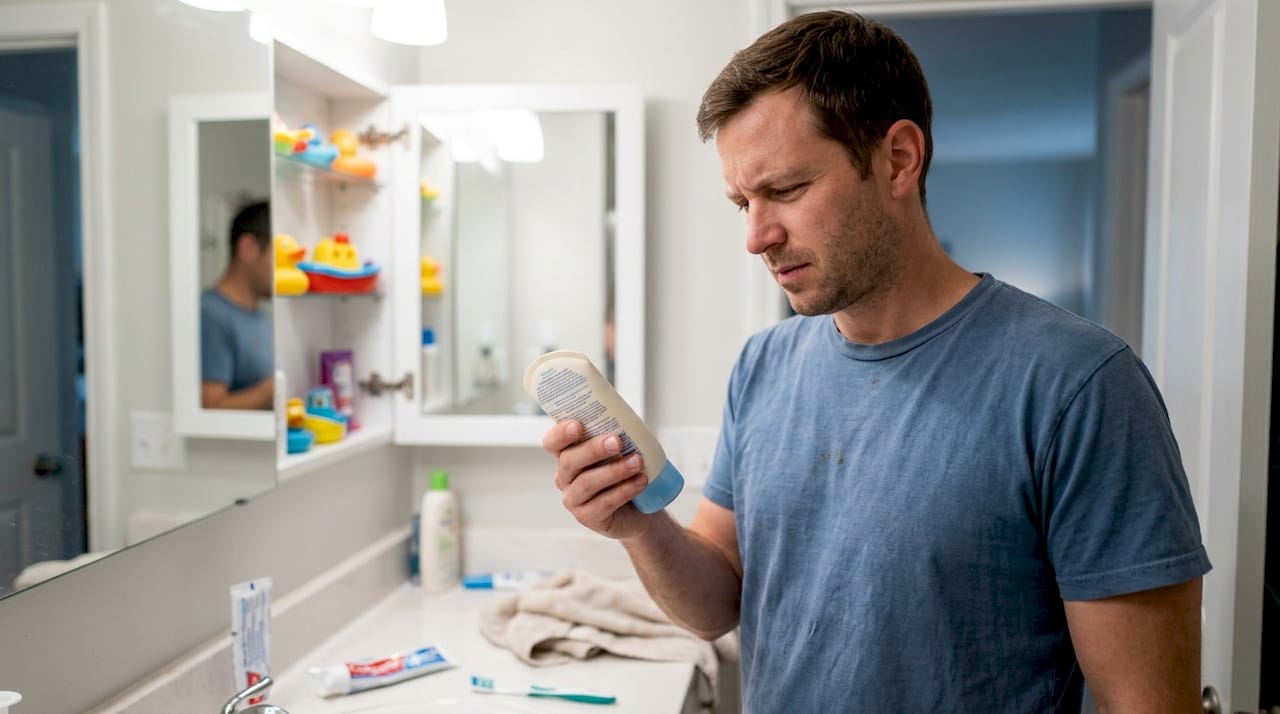
The most important principle: fragrance-free, hypoallergenic, non-comedogenic products are best for children at every age. Fragrance is one of the most common causes of skin irritation in kids, even in products marketed as “natural” or “gentle.”
Here’s what every parent should have on hand:
- Gentle cleanser: A mild, soap-free formula that won’t strip natural oils
- Fragrance-free moisturizer: Cream or ointment texture works better than lotion for dry skin
- Mineral sunscreen: SPF 30 or higher with zinc oxide or titanium dioxide as active ingredients
- Diaper cream (for infants): Zinc oxide-based formulas create a physical barrier against moisture
- Gentle lip balm (for older kids): Unscented and dye-free
When reading labels, watch for these red flags: alcohol (drying), synthetic fragrance, parabens in large concentrations, and chemical sunscreen filters like oxybenzone, which are not recommended for young children.
Mineral sunscreen deserves special mention. Unlike chemical sunscreens that absorb into the skin, mineral formulas sit on top and physically block UV rays. They’re less likely to cause reactions and are considered the safer choice for sensitive young skin. You can find detailed guidance on products for all ages to help you build your child’s skincare kit.
| Product | What to look for | What to avoid |
|---|---|---|
| Cleanser | Soap-free, fragrance-free | Sulfates, added fragrance |
| Moisturizer | Ceramides, shea butter, glycerin | Alcohol, synthetic fragrance |
| Sunscreen | Zinc oxide, titanium dioxide, SPF 30+ | Oxybenzone, chemical filters |
Pro Tip: Always do a patch test before using a new product. Apply a small amount to the inner arm and wait 24 hours before using it on the face or body.
With the right products on hand, you’re ready to begin the routine, tailored for your child’s age.
Step-by-step skincare for every age group
Routines don’t need to be complicated. In fact, the simpler they are, the more likely you and your child will actually stick to them.
Infants (0-12 months)
Bathe newborns 2-3 times per week using lukewarm water and a fragrance-free cleanser. More frequent bathing strips natural oils and leads to dryness. After the bath, pat skin dry gently and apply a fragrance-free moisturizer while skin is still slightly damp to lock in hydration.
- Fill the tub with a few inches of lukewarm water (not hot)
- Use a soft cloth and a drop of fragrance-free baby cleanser
- Rinse thoroughly and pat dry with a soft towel
- Apply fragrance-free moisturizer within three minutes of drying
- Use zinc oxide diaper cream at each diaper change
Toddlers and young children (1-10 years)
Cleanse gently once or twice a day and moisturize daily. For children over 6 months, apply SPF 30 or higher mineral sunscreen every morning before outdoor activity. Reapply every two hours if they’re swimming or sweating.
- Morning: rinse face with water, apply moisturizer, then sunscreen
- Evening: gentle cleanse to remove dirt and sunscreen, apply moisturizer
- After swimming or heavy outdoor play: reapply sunscreen and rinse off chlorine
Tweens and teens (8 and up)
Introduce acne products sparingly and only when needed. Start with a gentle cleanser and moisturizer, then add a low-strength salicylic acid or benzoyl peroxide product only if breakouts appear. Never skip sunscreen. Avoid retinoids, strong acids, or multi-step influencer routines at this age.
- Morning: gentle cleanser, lightweight moisturizer, mineral sunscreen
- Evening: gentle cleanser, targeted spot treatment if needed, moisturizer
Pro Tip: For tweens just starting to care about their skin, let them pick their own cleanser from a short list of safe options. Ownership builds consistency.
You can find a more detailed routine step-by-step guide and learn more about mineral sunscreen for kids to make confident product choices.
Now you know the steps, but what are the pitfalls and how can you troubleshoot common issues?
Troubleshooting and avoiding common mistakes
Even well-meaning parents make mistakes that can irritate a child’s skin. Here are the most common ones and how to fix them.
Mistake 1: Over-washing. Bathing too frequently, especially with soap, disrupts the skin barrier and causes dryness. Stick to the recommended frequency for your child’s age.
Mistake 2: Using fragranced products. Many “baby” and “kids” products still contain fragrance. Always read the ingredient list, not just the front label.
Mistake 3: Skipping moisturizer. Moisturizer isn’t just for dry skin. Applied consistently, it strengthens the skin barrier over time. In fact, early moisturizer use from birth can reduce eczema risk in babies with a family history of the condition.
Mistake 4: Ignoring sunscreen. Many parents apply sunscreen only at the beach. But UV exposure happens year-round, even on cloudy days.
Mistake 5: Trying trendy products on young skin. Vitamin C serums, retinol, and exfoliating acids are not appropriate for children under 12 and can cause serious irritation.
Here’s how to spot a reaction early:
- Redness or flushing after applying a product
- Itching, hives, or a bumpy rash
- Dry, flaky patches that appear after starting a new product
- Swelling around the eyes or mouth (seek medical attention immediately)
“If your child’s skin reacts to a product, stop using it right away. Most mild reactions clear within 24-48 hours. If redness or itching persists, consult your pediatrician or a dermatologist.”
For guidance on building a family-approved skincare kit that avoids these common traps, it helps to start with a vetted product list rather than browsing the full skincare aisle.
Consistent, gentle care pays off. Here’s what you should expect to see and feel with a well-executed routine.
Tracking results: How to tell if your child’s routine is working
A good routine doesn’t deliver overnight results, but you should start to notice positive changes within two to four weeks of consistent use.
Improved skin health shows up as less dryness, fewer irritations, and consistent protection from sun and environment. Here’s what to look for:
- Skin feels soft and smooth rather than tight or flaky
- Fewer red patches or dry spots, especially after bathing
- No new rashes or reactions to current products
- Sunscreen is applied daily without skipping
- Your child tolerates the routine without discomfort
If you’re not seeing improvement after four weeks, consider these adjustments:
- Switch to a thicker moisturizer (cream or ointment instead of lotion)
- Check if the cleanser contains any hidden fragrance or sulfates
- Reduce bathing frequency by one day per week
- Rule out environmental triggers like hard water, laundry detergent, or seasonal allergens
Building a positive routine also means making it feel normal, not medicinal. Let younger children pick a towel in their favorite color. Let older kids apply their own sunscreen. Small moments of ownership go a long way in making skincare a habit rather than a chore.
For additional guidance on protecting sensitive skin at every stage, you’ll find practical tips that go beyond the basics and address real-life scenarios.
Why simple routines succeed—and complicated ones often fail
Here’s something the skincare industry doesn’t want you to hear: more products almost never means better results for kids. It usually means more risk.
The average TikTok routine for tweens features six products but often lacks sunscreen, which is the one product with actual evidence behind it. That’s a perfect example of how trend-driven routines miss the point entirely.
We’ve seen parents come in with bags full of serums, toners, and “brightening” products for their eight-year-olds, genuinely believing they’re helping. The reality is that each additional product is another opportunity for irritation, allergic reaction, or barrier disruption.
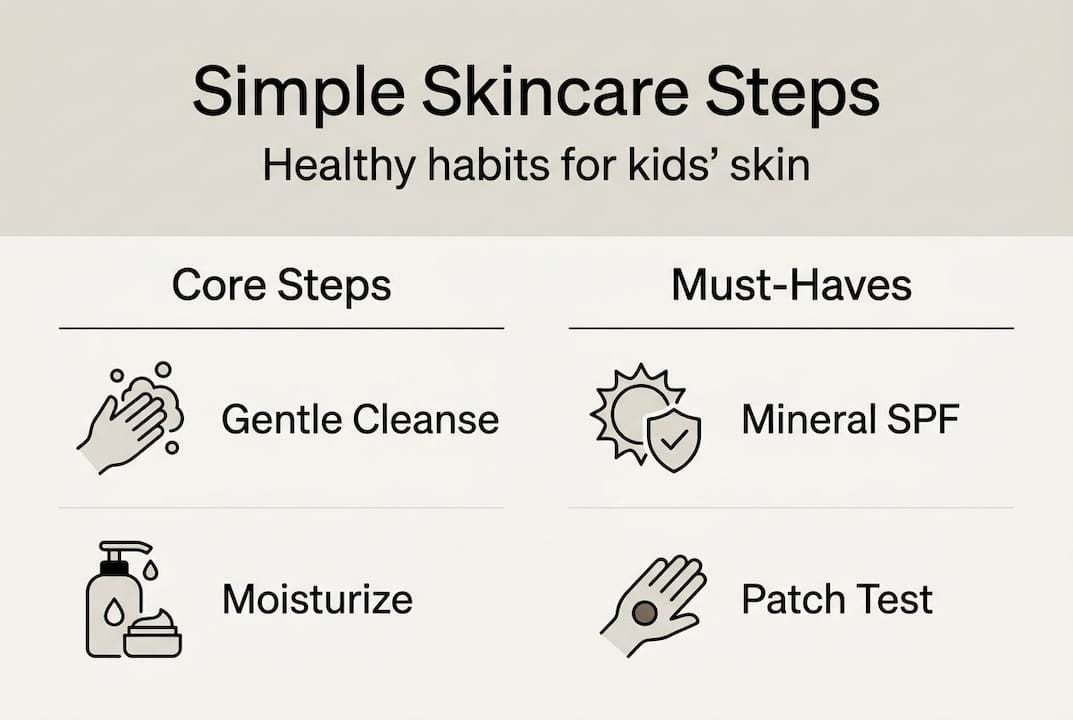
Simplicity works because children’s skin, when not disrupted, is remarkably good at regulating itself. Your job as a parent isn’t to optimize it. It’s to protect it. A cleanser, a moisturizer, and a sunscreen will do more for your child’s long-term skin health than any trending routine. Learning to balance skincare steps is a skill that benefits the whole family, not just adults.
Nurture healthy skin with trusted essentials
Building a safe, effective routine for your child starts with having the right products within reach. At Skin-Styles.com, we carry a carefully selected range of gentle, family-friendly skincare options that take the guesswork out of the process.

For daily hydration, browse our gentle facial creams that work beautifully on sensitive young skin. If you’re looking for trusted brand formulations, the Cosrx gentle products collection offers mild, effective options that are popular with parents and kids alike. We also carry baby feeding essentials for families with little ones, because healthy habits start from the very beginning.
Frequently asked questions
How often should I bathe my newborn?
Bathe newborns 2-3 times per week with lukewarm water and pat dry gently. Daily bathing removes natural oils and increases the risk of dryness and irritation.
What is the safest sunscreen for kids?
Mineral sunscreen is best for children’s sensitive skin. Look for zinc oxide or titanium dioxide as the active ingredient, with SPF 30 or higher, for children over 6 months old.
Can I use my adult moisturizer on my child?
You should use fragrance-free, hypoallergenic products labeled safe for children, since adult moisturizers often contain fragrances, alcohols, or active ingredients that can irritate young skin.
When should a child start using acne products?
Tweens and teens can use mild acne products sparingly when breakouts appear, but strong actives like retinoids or high-strength acids should only be used under a dermatologist’s guidance.
How can I tell if a skincare product irritates my child?
Watch for redness, itching, hives, or new dry patches after starting a product. Stop use at the first sign of irritation and consult your pediatrician if symptoms persist beyond 48 hours.