

Most parents spend hours researching car seats and cribs, then grab the first teething toy they see at checkout. That quick decision matters more than you might think. Not all teething products are built the same, and the difference between a well-designed teething spoon and a generic chew toy can mean the difference between real relief and a frustrated, still-fussy baby. Teething spoons are one of the most underrated tools in a parent’s kit, offering both soothing comfort and a head start on self-feeding skills. This guide walks you through what they are, why they work, and how to pick and use them safely.
Table of Contents
- What are teething spoons and how do they work?
- Benefits of teething spoons over traditional teethers
- What to look for: materials, safety, and features
- Expert insights: what pediatricians and parents are saying
- How to use teething spoons safely and effectively
- Upgrade your baby’s comfort and safety
- Frequently asked questions
Key Takeaways
| Point | Details |
|---|---|
| Safer teething option | Teething spoons offer gum relief with high safety when used properly. |
| Checks for quality | Look for BPA-free, food-grade materials and avoid those with unsafe fillings. |
| Supervision is essential | Always supervise babies using teething spoons to prevent misuse or choking. |
| Dual purpose | Teething spoons can ease pain and help your baby transition to self-feeding. |
What are teething spoons and how do they work?
Teething spoons are small, baby-sized utensils designed specifically for babies who are cutting their first teeth, typically between 4 and 7 months of age. Unlike a standard spoon, they are built to be chewed on, not just used for eating. The shape, texture, and material all work together to massage sore gums while also introducing babies to the concept of a spoon before solid foods begin.
Here is how teething spoons compare to other common options:
| Product | Dual feeding use | Chillable | Dishwasher-safe | No filling risk |
|---|---|---|---|---|
| Teething spoon | Yes | Yes | Yes | Yes |
| Silicone teether ring | No | Yes | Usually | Yes |
| Gel-filled teether | No | Yes | No | No |
| Wooden teether | No | No | No | Yes |
The key advantage is versatility. A teething spoon does double duty, and that matters when you are already juggling a dozen baby products. Most quality options are dishwasher-safe and freezer-safe for cooling relief, made from food-grade silicone and completely BPA-free.
What makes them stand out from traditional silicone teethers is the spoon shape itself. Babies learn to associate the spoon with feeding, which makes the transition to solid foods smoother. You are not just soothing gums today. You are building a skill for tomorrow.
Parents often worry about safety in baby utensils, and rightly so. When choosing safe baby utensils, the material is the first thing to check. Food-grade silicone is soft, flexible, and free from harmful chemicals, making it the gold standard for teething products.
“Not all teething aids are created equal. The shape, texture, and material of a teething spoon can make a real difference in how much relief your baby actually gets.”
Benefits of teething spoons over traditional teethers
So why choose a teething spoon over a classic ring teether or a chilled washcloth? The answer comes down to a few practical advantages that add up fast.
Key benefits at a glance:
- Doubles as a first spoon, supporting the transition to solid foods
- Textured surface massages gums directly and consistently
- No liquid filling that can leak or burst
- No hard plastic that can crack or splinter
- Easy to chill in the refrigerator for extra soothing relief
- Dishwasher-safe for quick, hygienic cleaning between uses
- Compact and easy to pack in a diaper bag
One thing parents sometimes overlook is hygiene. Chew toys that sit on the floor, get tossed in a bag, or have hard-to-reach crevices can harbor bacteria. A smooth silicone spoon that goes straight into the dishwasher is simply easier to keep clean.
Pro Tip: Chill the teething spoon in the refrigerator for 15 to 20 minutes before use. Cold temperatures help reduce gum inflammation and give faster relief. Never freeze it solid, as extreme cold can damage delicate gum tissue.
It is also worth noting that teething pain relief experts caution parents to avoid liquid-filled teethers and to supervise all teething sessions to prevent choking. A teething spoon eliminates the liquid-fill risk entirely, which is one less thing to worry about.
For parents who care about what touches their baby’s skin and mouth, pairing teething tools with eco-safe babyware and safe baby skincare products creates a consistent, low-toxin environment for your little one.
What to look for: materials, safety, and features
Choosing any baby accessory means doing a little homework. Here is a practical breakdown of what to check before you buy.
| Feature | What to look for | What to avoid |
|---|---|---|
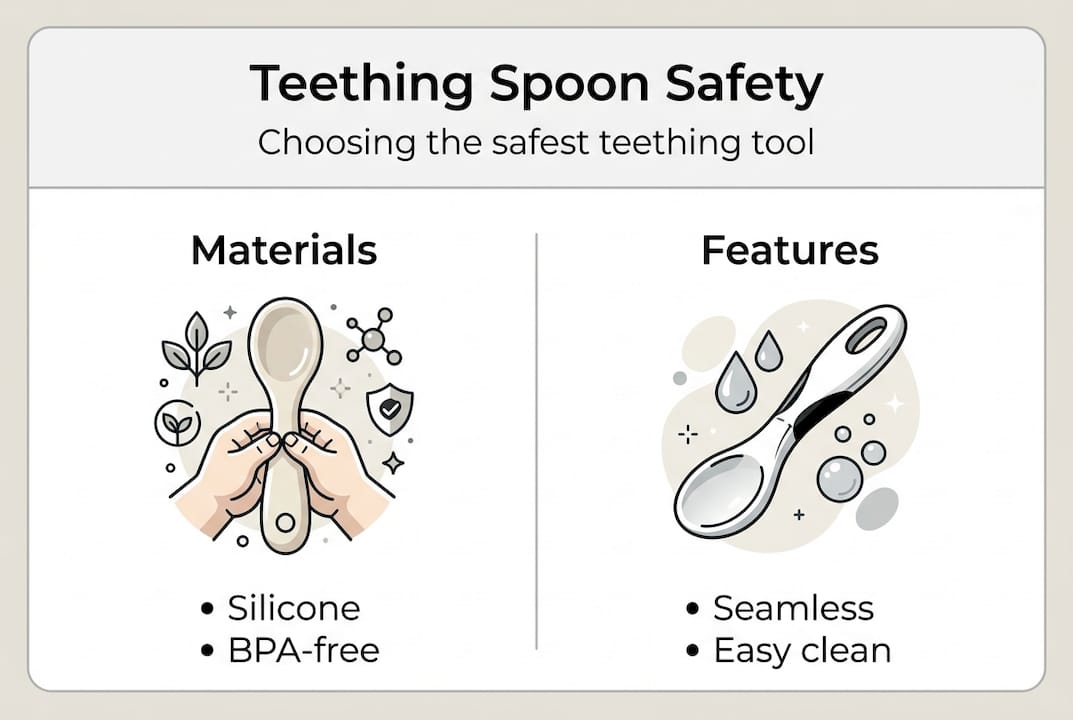
| Material | Food-grade silicone, BPA-free | Hard plastic, rubber with fillers |
| Cleaning | Dishwasher-safe | Products with deep crevices |
| Texture | Soft ridges or bumps | Sharp edges or rigid surfaces |
| Size | Age-appropriate, easy to grip | Too large or too small for baby’s mouth |
| Certifications | FDA-compliant, CE marked | No safety markings at all |
How to evaluate a teething spoon before buying:
- Check the label for “food-grade silicone” and “BPA-free” language. Both should be clearly stated.
- Look for third-party safety certifications, such as FDA compliance or CE marking for international products.
- Squeeze the spoon. It should be soft and flexible, not stiff or brittle.
- Inspect for seams or crevices where bacteria could hide.
- Confirm it is dishwasher-safe and freezer-safe for cooling relief.
- Read recent parent reviews for real-world feedback on durability and ease of use.
Pro Tip: Avoid teething spoons that come with gel inserts or liquid-filled chambers. While they seem like a bonus, liquid-filled teethers pose risks if punctured, and they are harder to sanitize properly.
When choosing baby utensils, always prioritize simplicity. A single-piece, seamless silicone spoon with no moving parts is the safest and easiest to maintain. You can also explore eco-friendly feeding options if sustainability is a priority for your family.
Expert insights: what pediatricians and parents are saying
Pediatricians are generally supportive of teething spoons as a safe, low-risk option for mild teething discomfort. The key word there is mild. Teething spoons work well for the everyday fussiness and gum soreness that comes with new teeth pushing through. They are not a substitute for medical care.
“While teething spoons can ease mild discomfort, they do not address systemic issues like fever. If your baby has a high fever, rash, or persistent symptoms, consult your pediatrician.”
What parents report in practice is encouraging. Many note that babies who use teething spoons regularly show less resistance when transitioning to solid foods, likely because the spoon shape is already familiar. Others appreciate that the spoon keeps babies occupied during meal prep without the mess of a full feeding session.
Signs that a teething spoon is working well:
- Baby chews calmly and seems soothed
- Drooling continues but crying decreases
- Baby accepts the spoon during feeding time too
- No gagging or distress during use
For ongoing safe baby care, pediatricians also recommend keeping the baby’s gums clean and watching for any signs of infection around erupting teeth. A teething spoon is one piece of a broader care routine, not the whole picture.
How to use teething spoons safely and effectively
Knowing you have a good product is only half the job. Using it correctly is what actually keeps your baby safe and comfortable.
Step-by-step guide for safe use:
- Sterilize before first use. Boil the spoon for 3 to 5 minutes or run it through a full dishwasher cycle before your baby uses it for the first time.
- Chill, do not freeze. Place the spoon in the refrigerator for 15 to 20 minutes. Freezing it solid can make it too hard and may hurt sensitive gums.
- Supervise every session. Never leave a baby alone with a teething spoon. Watch for any signs of gagging or distress.
- Inspect before each use. Check for cracks, tears, or discoloration. Discard any spoon that shows signs of wear.
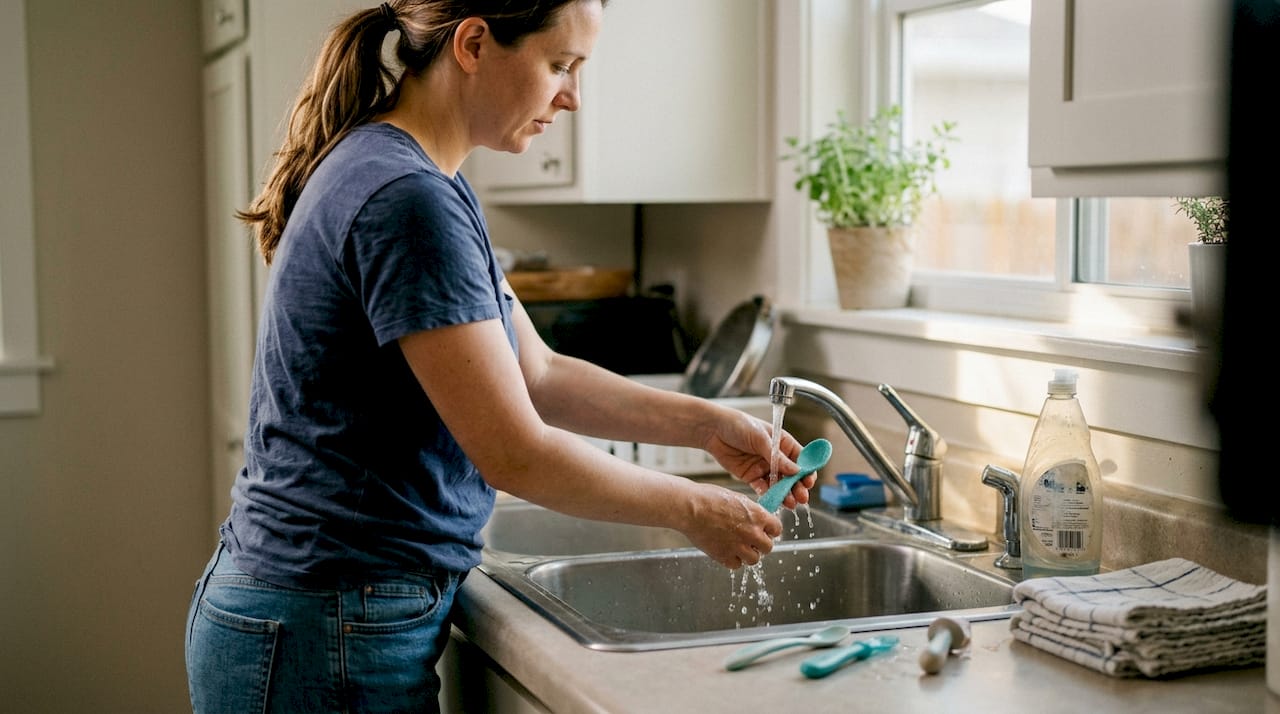
- Clean after every use. Wash with warm soapy water or run through the dishwasher. Do not let residue build up.
- Know when to stop. If your baby seems to be using the spoon as a pacifier rather than a teether, redirect to a more appropriate soothing tool.
Pro Tip: Keep two teething spoons in rotation. While one is being chilled, the other is ready to use. This simple swap means your baby always has a cool spoon available without any waiting.
If symptoms go beyond normal teething fussiness, such as a fever above 100.4°F, unusual rash, or prolonged crying, stop relying on the teething spoon and call your pediatrician. As teething safety guidelines make clear, teething tools are for comfort, not treatment. You can also find more guidance on maintaining eco-friendly utensils to keep your baby’s feeding tools in top shape.
Upgrade your baby’s comfort and safety
Finding the right teething tools does not have to be overwhelming. At Skin Styles, we have made it easy to get everything your baby needs in one place, with products designed around safety, simplicity, and real parent needs.

Our 8-piece silicone feeding set is BPA-free, built for self-feeding transitions, and easy to clean, making it a natural companion to any teething spoon routine. The set includes suction plates, bowls, and a bib, giving you a complete feeding setup that grows with your baby. While you are browsing, check out our gentle facial cleansers for keeping your baby’s sensitive skin clean and healthy. Everything we carry is chosen with the same care you bring to every decision for your little one.
Frequently asked questions
Are teething spoons safe for all babies?
Teething spoons made from food-grade, BPA-free silicone are generally safe for most babies, but always supervise use and redirect if your baby tries to use the spoon as a pacifier rather than a teether.
How do teething spoons help with pain?
The soft, textured surface massages sore gums directly, and chilling the spoon in the refrigerator adds a cooling effect. Most quality options are freezer-safe for cooling relief, which helps reduce gum inflammation quickly.
Can teething spoons replace other pain relief methods?
Teething spoons are effective for mild discomfort but are not a medical treatment. If your baby has a fever or persistent symptoms, consult your pediatrician rather than relying on a teething spoon alone.
How should I clean teething spoons?
Wash the spoon with warm soapy water after every use, or place it in the dishwasher. Most silicone teething spoons are dishwasher-safe and designed for frequent, thorough cleaning without degrading the material.