

Finding the right emollient for sensitive skin can feel confusing when so many products promise deep absorption. Many American and European families still believe that effectiveness depends on how far a cream sinks in, yet research shows that surface protection is key for healthy, hydrated skin. Whether you are caring for a child or seeking relief for your own delicate skin, this guide clears up misconceptions and helps you choose ingredients that truly soothe and shield every skin type.
Table of Contents
- Emollients Defined And Common Misconceptions
- Types Of Emollients And Key Ingredients
- How Emollients Support Skin Barrier
- Benefits For Sensitive And Children’s Skin
- Risks, Allergies, And Usage Mistakes
- Emollients Versus Other Moisturizers
Key Takeaways
| Point | Details |
|---|---|
| Emollients create a protective barrier | These skincare agents reduce moisture loss by forming a layer on the skin’s surface, which is essential for hydration. |
| Types of emollients matter | Choosing between synthetic and natural emollients impacts texture and absorption; select based on skin type and desired effects. |
| Support for sensitive skin | Emollients are crucial for children and sensitive skin, helping to minimize irritation and preventing chronic conditions like eczema. |
| Understand usage risks | Awareness of potential allergies and the importance of patch testing can help prevent adverse reactions when using emollients. |
Emollients Defined and Common Misconceptions
Emollients are specialized skincare agents designed to soften and smooth skin surfaces by creating a protective barrier. Unlike complex medical treatments, these agents work primarily by persisting on the skin’s exterior, providing a protective layer that reduces moisture loss and enhances skin texture.
Typically oil-based and characterized by high molecular weight, emollients function differently from other skincare ingredients. They do not require deep skin penetration but instead create an external protective shield. European regulations classify emollients under cosmetic products, highlighting their role in maintaining skin health without being considered medical treatments.
Common misconceptions about emollients often stem from misunderstanding their mechanism of action. Many people incorrectly assume that for a product to be effective, it must absorb deeply into the skin. However, emollients work best when they remain on the skin’s surface, creating a barrier that prevents transepidermal water loss and maintains skin hydration. Their effectiveness is not diminished by their superficial presence but is actually enhanced by it.
Pro tip: When selecting an emollient, look for products with high molecular weight oils that create a consistent, smooth protective layer on your skin rather than those promising deep absorption.
Types of Emollients and Key Ingredients
Emollients encompass a diverse range of ingredients, broadly categorized into two primary types: synthetic and natural. Natural emollients include triglyceride-based oils such as jojoba, rosehip, and coconut oils, each offering unique skin-nourishing properties. These oils vary in molecular weight and saturation levels, which directly influence their stability and skin absorption characteristics.
Synthetic emollients, typically composed of esters, provide distinct advantages in skincare formulations. Ingredients like dimethicone, isododecane, and mineral oil offer lighter textures and enhanced spreadability compared to natural alternatives. These synthetic options are particularly valuable in creating products with smooth application and consistent performance across different skin types.
The selection of emollients involves careful consideration of their chemical composition and desired skin effects. Waxes and butters like shea butter and beeswax provide additional occlusive properties, creating a protective barrier that helps lock in moisture and protect sensitive skin from environmental stressors. Understanding the unique characteristics of each emollient type allows skincare formulators to create targeted solutions for specific skin concerns.
Pro tip: When choosing an emollient, consider your specific skin type and desired outcome by examining the molecular weight, origin, and specific properties of the ingredients.
Here’s how key emollient types and ingredients compare:
| Emollient Type | Common Ingredients | Texture | Main Benefit |
|---|---|---|---|
| Natural Oils | Jojoba, coconut, rosehip | Rich, nourishing | Deep conditioning, soothing |
| Synthetic Esters | Dimethicone, mineral oil | Lightweight | Quick absorption, smooth feel |
| Waxes & Butters | Beeswax, shea butter | Thick, occlusive | Long-lasting moisture block |
How Emollients Support Skin Barrier
The skin barrier represents a critical defense mechanism that protects our body from external environmental stressors, and emollients play a fundamental role in maintaining its integrity. Moisturizing strategies are essential for preserving skin health, with emollients acting as a protective shield that helps prevent moisture loss and reduce potential damage from external irritants.
Emollients function by creating a sophisticated protective layer on the skin’s surface, which helps seal in natural moisture and prevent transepidermal water loss. This barrier mechanism is particularly crucial for individuals with sensitive skin, as it helps reduce inflammation, minimize irritation, and support the skin’s natural healing processes. The lipid-rich composition of emollients mimics the skin’s own protective structures, allowing for seamless integration and enhanced barrier function.

The effectiveness of emollients in supporting the skin barrier extends beyond simple hydration. These ingredients work to restore and reinforce the lipid matrix between skin cells, essentially patching microscopic gaps that can develop due to environmental stress, aging, or skin conditions. By filling these gaps and providing a smooth, protective coating, emollients help restore the skin’s natural resilience and protect against potential damage from pollutants, allergens, and other external threats.
Pro tip: Apply emollients to slightly damp skin to maximize moisture retention and enhance the skin barrier’s protective capabilities.
Benefits for Sensitive and Children’s Skin
Emollients offer critical protection for sensitive and children’s skin, providing a gentle yet effective approach to maintaining skin health during the most vulnerable developmental stages. These specialized skincare products are uniquely formulated to support the delicate skin barrier of infants and individuals with heightened skin sensitivity, addressing multiple potential challenges simultaneously.
Research demonstrates significant benefits of early emollient intervention, particularly in preventing chronic skin conditions like atopic dermatitis. Daily application of carefully selected emollients can help reduce inflammation, minimize irritation, and potentially modulate immune system responses in young skin. The non-irritant ingredients are specifically designed to enhance skin barrier function, creating a protective shield against environmental stressors that could trigger sensitivities or allergic reactions.
Children with sensitive skin require particularly nuanced skincare approaches, and emollients provide a comprehensive solution. Clinical studies indicate that consistent emollient use can significantly reduce the risk of eczema development and help manage existing skin conditions. By maintaining optimal hydration and supporting the skin’s natural protective mechanisms, these products offer a proactive strategy for maintaining skin health throughout childhood and beyond.
Pro tip: Choose fragrance-free, hypoallergenic emollients specifically designed for sensitive skin to minimize potential irritation and maximize protective benefits.
Risks, Allergies, and Usage Mistakes
Adverse event reporting for emollients reveals complex safety considerations that consumers must understand before incorporating these products into their skincare routine. While emollients are generally considered safe, individual skin responses can vary significantly, making careful product selection and application critical for preventing potential complications.
The primary risks associated with emollients stem from ingredient sensitivities and improper usage. Some individuals may experience skin irritation, allergic reactions, or unexpected dermatological responses due to specific formulation components. Certain emollient combinations can potentially increase the risk of skin infections or exacerbate existing dermatitis if not applied correctly, underscoring the importance of personalized skincare approaches.
Common usage mistakes include overapplication, selecting inappropriate formulations for specific skin types, and failing to perform patch tests before widespread use. Individuals with sensitive skin or pre-existing conditions should be particularly cautious, consulting healthcare professionals to identify potential allergens and develop tailored skincare strategies. Understanding the nuanced interactions between emollients and individual skin characteristics is essential for minimizing potential adverse reactions.
Pro tip: Always conduct a small patch test on a discrete area of skin and wait 24 hours to check for any adverse reactions before applying an emollient to larger skin surfaces.
Emollients Versus Other Moisturizers
Emollients represent a specialized subset within the broader moisturizer category, offering unique skin-softening properties that distinguish them from traditional hydrating products. While moisturizers encompass a wide range of ingredients designed to improve skin hydration, emollients specifically focus on filling microscopic gaps in the skin’s outer layer, creating a smoother and more resilient surface.
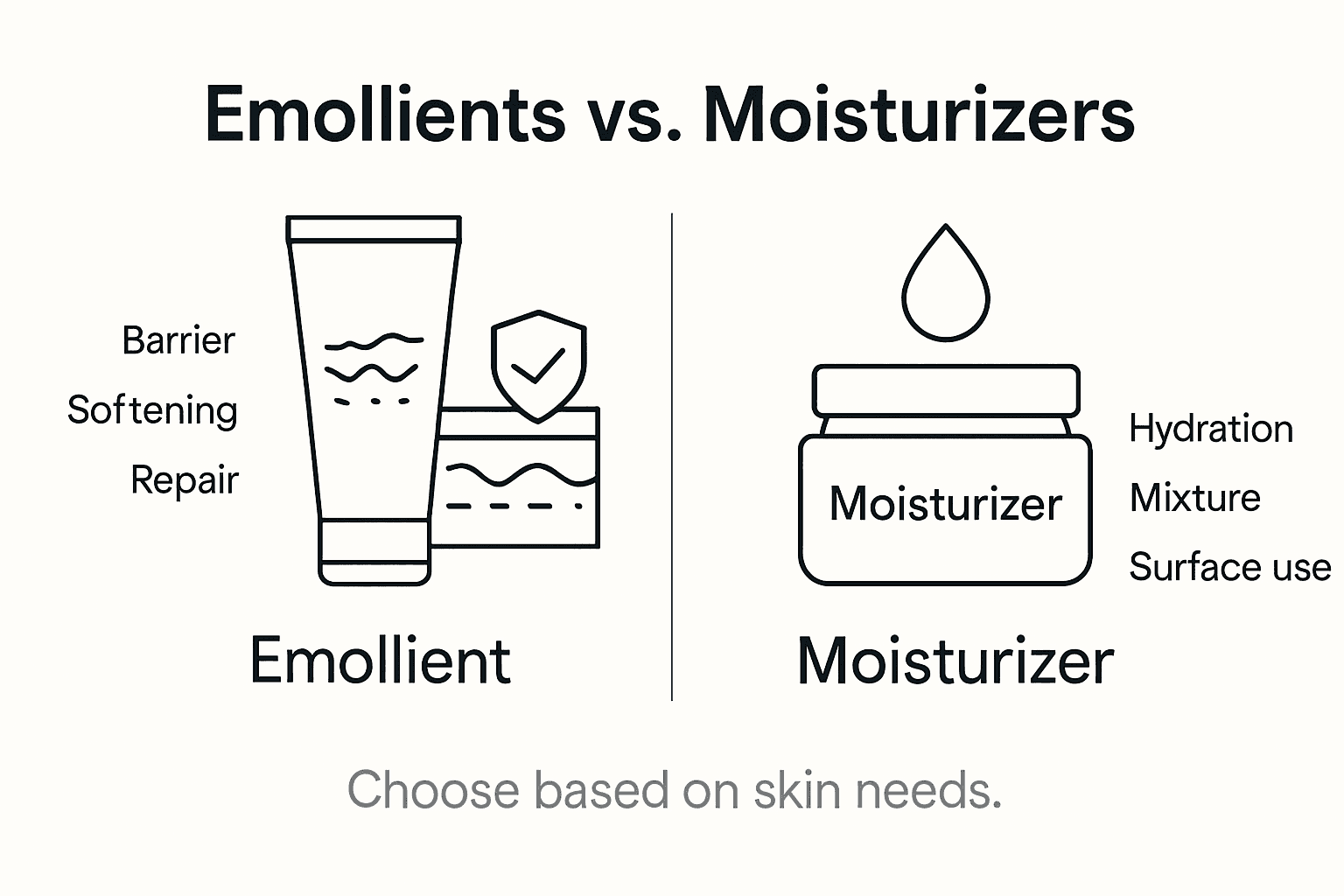
Traditional moisturizers typically combine multiple ingredient types, including humectants that attract water, occlusives that prevent moisture loss, and emollients that smooth skin texture. The key difference lies in their mechanism of action: emollients work by directly interacting with the skin’s lipid structure, whereas other moisturizing components primarily address surface-level hydration. This nuanced approach makes emollients particularly effective for individuals with dry, sensitive, or compromised skin barriers.
The choice between emollients and other moisturizers depends on individual skin needs, with factors like skin type, environmental conditions, and specific dermatological concerns playing crucial roles. Lotions, creams, and ointments vary in their oil and water content, affecting how deeply they penetrate and how they interact with the skin’s natural protective mechanisms. Understanding these distinctions allows for more targeted and effective skincare strategies that address specific hydration and skin texture requirements.
Compare emollients and other moisturizers by their main effects:
| Feature | Emollients | Traditional Moisturizers |
|---|---|---|
| Main Function | Fill gaps, smooth skin texture | Attract and retain moisture |
| Barrier Support | Strong, lipid-rich layer | Moderate, varies by product |
| Target User | Dry, sensitive, damaged skin | Normal or mildly dry skin |
| Example Forms | Ointments, balms, creams | Lotions, gels, light creams |
Pro tip: Select emollient-based moisturizers for deeper skin repair and traditional moisturizers for surface-level hydration, depending on your specific skin concerns and condition.
Discover Effective Emollient Solutions for Sensitive Skin Relief
Sensitive skin demands gentle care and trustworthy products that reinforce the skin barrier while minimizing irritation. This article highlights how emollients create a protective shield on the skin’s surface to lock in moisture and soothe inflammation. If you struggle with dry, irritated, or sensitive skin, choosing the right emollient is critical to restore comfort and prevent flare-ups.
Explore our collection of specially formulated moisturizers and creams that support your skin’s natural defense.

Take control of your sensitive skin today by selecting emollient-rich products made for delicate skin types. Visit Skin-Styles.com now to browse options that protect, hydrate, and nourish. Don’t wait — your skin’s health and comfort deserve the best care available.
Frequently Asked Questions
What are emollients and how do they work?
Emollients are specialized skincare agents that soften and smooth the skin by creating a protective barrier on its surface, helping to reduce moisture loss and enhance skin texture.
Are emollients safe for sensitive skin?
Yes, emollients are generally safe for sensitive skin. They are formulated to provide a gentle approach to maintaining skin health while supporting the delicate skin barrier.
How should I apply emollients for maximum effectiveness?
To maximize effectiveness, apply emollients to slightly damp skin after bathing or washing to help retain moisture and enhance the skin barrier’s protective capabilities.
How do emollients differ from other moisturizers?
Emollients specifically focus on filling gaps in the skin’s outer layer to smooth texture and enhance resilience, while other moisturizers may include humectants to attract water and occlusives to prevent moisture loss.