

More than 50 million American adults struggle with sensitive skin symptoms, from sudden redness to persistent itching. This challenge affects daily routines and can make even simple skincare decisions feel complicated. Understanding your unique skin sensitivities is the first step toward real relief. This guide shares practical strategies and science-backed tips to help you identify triggers, choose gentle products, and achieve healthier skin with lasting comfort.
Table of Contents
- Step 1: Identify Triggers And Assess Skin Sensitivities
- Step 2: Select Gentle Cleansers And Hydrating Products
- Step 3: Incorporate Soothing And Protective Ingredients
- Step 4: Test Products For Irritation And Monitor Progress
- Step 5: Adjust Routines Based On Ongoing Skin Feedback
Quick Summary
| Key Point | Explanation |
|---|---|
| 1. Maintain a skin diary | Track all products and environmental factors that contact your skin to identify triggers and reactions. |
| 2. Choose gentle, hydrating products | Opt for dermatologist-recommended products that are fragrance-free and designed for sensitive skin to minimize irritation. |
| 3. Incorporate soothing ingredients | Use calming and barrier-repairing ingredients like aloe vera and ceramides to protect and hydrate sensitive skin. |
| 4. Conduct patch tests | Always test new products on a small area to monitor for irritation before regular use to ensure skin compatibility. |
| 5. Adjust routine based on feedback | Regularly evaluate how your skin responds and modify products or routines to maintain healthy skin over time. |
Step 1: Identify triggers and assess skin sensitivities
Understanding your skin’s unique sensitivities requires a methodical approach that combines observation, tracking, and careful analysis. Allergic skin reactions can emerge from numerous environmental and personal factors, making it crucial to develop a comprehensive tracking system for identifying potential irritants.
Start by creating a detailed skin diary where you document everything that comes into contact with your skin, including skincare products, fabrics, household cleaning agents, cosmetics, and environmental conditions. Note specific reactions like redness, itching, burning, or unusual texture changes. Pay close attention to timing and intensity of these reactions, as some sensitivities might not manifest immediately. Watch for patterns related to seasonal changes, stress levels, diet, and specific product ingredients. Consider consulting a dermatologist who can perform patch testing to identify specific allergens or sensitivities that might not be immediately apparent through self observation.
Consistent monitoring and systematic documentation will help you build a comprehensive understanding of your skin’s unique triggers and sensitivities. By tracking these details meticulously, you can develop a personalized approach to managing and protecting your sensitive skin.
Pro tip: Photograph your skin weekly in consistent lighting to track subtle changes and create a visual record that can help identify potential triggers more effectively.
Here’s a summary of common sensitive skin triggers and signs to monitor:
| Trigger Type | Example Sources | Common Skin Reactions |
|---|---|---|
| Environmental | Pollen, pollution, weather changes | Redness, itching, flare-ups |
| Product Ingredients | Fragrances, sulfates, alcohol | Burning, stinging, rash |
| Lifestyle Factors | Stress, lack of sleep, diet changes | Dryness, sensitivity, breakouts |
| Fabrics & Materials | Wool, synthetic fibers | Irritation, roughness, itching |
Step 2: Select gentle cleansers and hydrating products
Choosing the right skincare products is crucial for managing sensitive skin, requiring a strategic approach that prioritizes gentleness and hydration. When selecting cleansers and moisturizers, your primary goal is finding formulations that clean and nourish without causing irritation or disrupting your skin’s delicate balance.
Start by looking for dermatologist-recommended facial cleansers specifically designed for sensitive skin, focusing on fragrance-free and hypoallergenic options. Ingredients like ceramides, glycerin, and hyaluronic acid are excellent for maintaining moisture without overwhelming your skin. Avoid products containing alcohol, sulfates, or harsh synthetic fragrances that can trigger inflammation. Look for terms like ‘gentle,’ ‘for sensitive skin,’ or ‘non-comedogenic’ on product labels. When testing new products, always perform a patch test on a small area of skin and wait 24 to 48 hours to check for any adverse reactions.

Building a skincare routine for sensitive skin is about understanding your unique needs and responding with carefully selected products that support your skin’s natural protective barrier. Opt for minimal ingredient lists and products specifically formulated to be kind to reactive skin types.
Pro tip: Always introduce new skincare products one at a time, with at least two weeks between additions, to accurately track how your skin responds to each individual formulation.
Step 3: Incorporate soothing and protective ingredients
Navigating the world of skincare ingredients for sensitive skin requires a thoughtful approach that prioritizes healing and protection. Your goal is to build a skincare arsenal that strengthens your skin’s natural defenses while minimizing potential irritation.
Protective ingredients like squalane and glycerin play a critical role in maintaining your skin’s moisture balance and creating a resilient barrier against environmental stressors. Focus on ingredients known for their calming properties such as aloe vera, chamomile, panthenol, and niacinamide. These components work synergistically to reduce inflammation, support skin healing, and provide a protective shield. Look for serums and moisturizers containing ceramides which help restore and maintain the skin’s protective barrier. Antioxidants like green tea extract and vitamin E can also help neutralize free radicals and prevent additional skin damage.
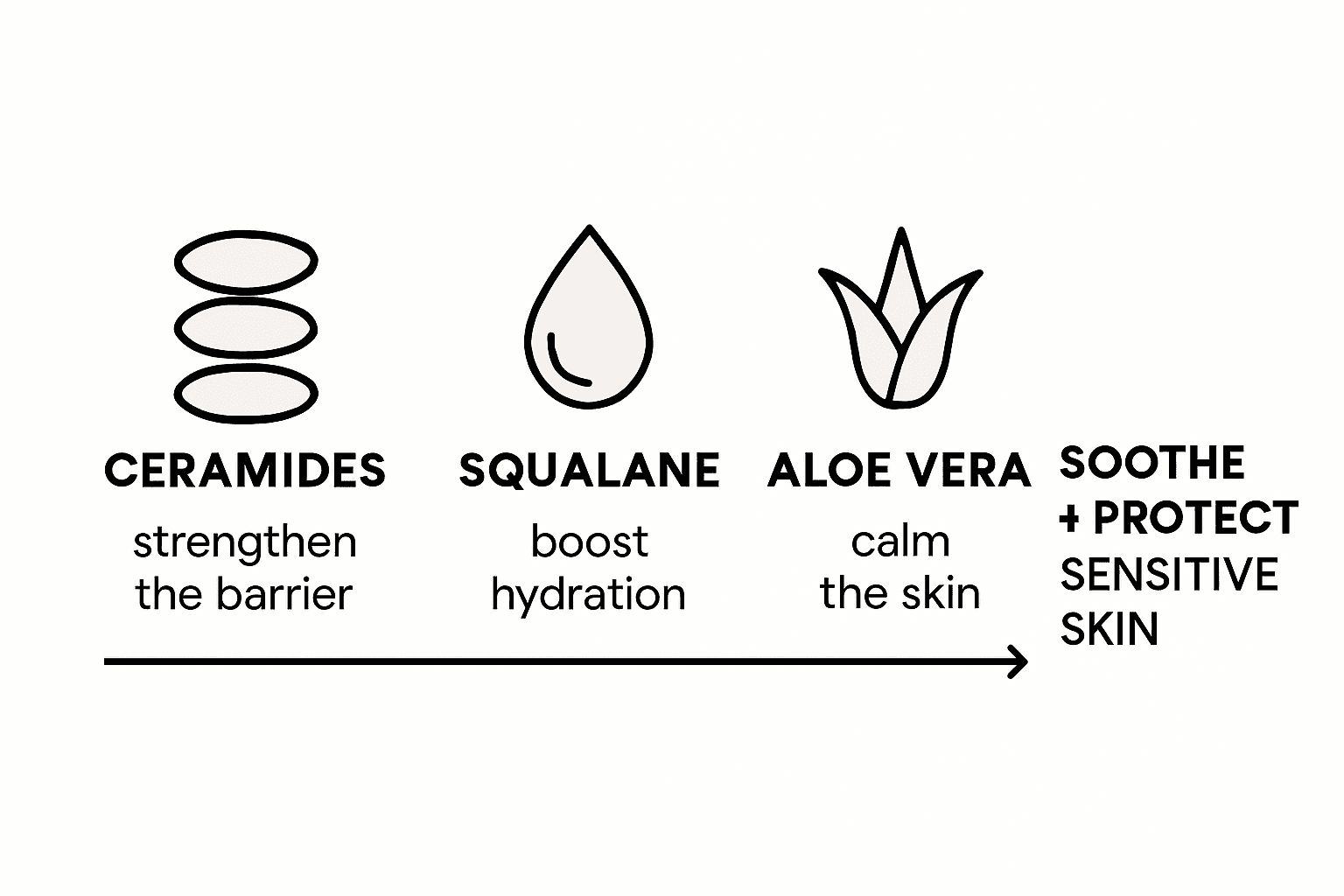
Remember that sensitive skin requires a minimalist approach. Introduce new ingredients gradually and in low concentrations, allowing your skin time to adjust and respond. Patch testing remains crucial to ensure your skin tolerates each new product without triggering adverse reactions.
Pro tip: Create a simple ingredient tracking journal to document how your skin responds to different protective ingredients, helping you build a personalized skincare strategy.
The following table compares popular ingredients for sensitive skin:
| Ingredient | Main Benefit | Sensitivity Level |
|---|---|---|
| Ceramides | Strengthens barrier | Very gentle |
| Glycerin | Deep hydration | Low irritation risk |
| Aloe Vera | Calms inflammation | Extremely gentle |
| Niacinamide | Reduces redness | Gentle and balancing |
| Squalane | Locks in moisture | Hypoallergenic |
Step 4: Test products for irritation and monitor progress
Successfully managing sensitive skin requires a systematic and patient approach to product testing. Your primary objective is to carefully introduce new skincare products while minimizing the risk of adverse reactions.
Patch testing is a critical diagnostic approach for identifying potential skin irritants and allergic reactions before incorporating them into your regular skincare routine. Begin by selecting a small inconspicuous area like the inside of your wrist or behind your ear. Apply a tiny amount of the new product and wait 24 to 48 hours, monitoring for any signs of redness, itching, burning, or swelling. If no reaction occurs, gradually test the product on a larger area of skin, always observing your skin’s response. Document your findings in a dedicated skincare journal, noting the product, application date, and any observed changes. Pay special attention to how your skin feels immediately after application and in the subsequent days.
Consistent monitoring is key to understanding your skin’s unique sensitivities. Some reactions might be delayed or subtle, so patience and careful observation are essential. If you experience any discomfort or unexpected changes, discontinue the product immediately and consult a dermatologist for professional guidance.
Pro tip: Take clear, well-lit photographs of your skin before starting a new product and at regular intervals to create a visual record of your skin’s response and progress.
Step 5: Adjust routines based on ongoing skin feedback
Managing sensitive skin is an ongoing journey of understanding and adaptation. Your skincare routine should be dynamic, responding to the subtle changes and unique signals your skin communicates over time.
Continuous evaluation of your skincare management strategies is crucial for maintaining healthy and balanced skin. Pay attention to how your skin responds to different products, environmental conditions, and lifestyle factors. Look for indicators such as changes in texture, hydration levels, sensitivity, and overall appearance. If you notice increased redness, dryness, breakouts, or persistent irritation, it might be time to modify your current routine. This could mean reducing the frequency of certain products, switching to gentler formulations, or eliminating ingredients that trigger reactions. Consider seasonal changes that might affect your skin sensitivity, such as increased dryness during winter or heightened oiliness during summer.
Remember that skin is not static your skin’s needs will evolve with age, hormonal changes, stress levels, and environmental shifts. Be flexible and willing to experiment while maintaining a careful, measured approach. Consult with a dermatologist if you encounter persistent skin challenges or significant changes in your skin’s condition.
Pro tip: Create a seasonal skincare transition plan that anticipates and proactively addresses potential changes in your skin’s behavior throughout the year.
Upgrade Your Sensitive Skin Care Routine with Expert-Approved Products
Managing sensitive skin can feel overwhelming when you’re trying to avoid irritation while maintaining healthy hydration and protection. This guide highlights the key challenge of finding gentle, effective skincare solutions that soothe without causing flare-ups or discomfort. If you often struggle with redness, dryness, or unexpected reactions your skin needs specially formulated products that respect its delicate balance.
Discover a curated selection of Facial Cleansers crafted for sensitive skin to gently remove impurities without stripping moisture. Complement your routine with nourishing Facial Serums featuring calming ingredients like ceramides and niacinamide to restore your skin’s barrier and reduce redness. Trust products from trusted brands like those in the SKIN 1004 collection, known for mindful formulations that prioritize skin health.

Take control of your sensitive skin care today by exploring these expert-recommended selections at Skin-Styles.com. Shop now to start building a personalized routine that calms irritation and brings out your skin’s natural glow. Your skin deserves gentle care that truly works—don’t wait to treat it right.
Frequently Asked Questions
How can I identify triggers for my sensitive skin?
To identify triggers for sensitive skin, start by keeping a detailed skin diary. Document everything that contacts your skin, such as products and environmental factors, along with any reactions over a few weeks.
What ingredients should I look for in gentle cleansers for sensitive skin?
Look for gentle cleansers that are fragrance-free and hypoallergenic, containing ingredients like ceramides and glycerin. Always perform a patch test on a small area of skin before incorporating new products into your routine.
How do I incorporate soothing ingredients into my skincare routine?
Incorporate soothing ingredients like aloe vera and niacinamide slowly, in low concentrations. Monitor your skin’s response consistently to ensure it remains calm without irritation.
What is the best way to test new skincare products for irritation?
Use patch testing by applying a small amount of the product to a discreet area, like your wrist, and wait for 24 to 48 hours. If no adverse reaction occurs, gradually apply the product to a larger area while observing your skin’s reaction over the following days.
How should I adjust my skincare routine based on my skin’s feedback?
Consistently evaluate and adjust your skincare routine in response to changes in sensitivity, texture, and hydration levels. If you notice increased irritation or dryness, consider reducing the frequency of certain products or switching to gentler formulations.