

Most people are surprised to learn that the average American uses at least two different moisturizers each year yet still struggles with dryness or irritation. Finding a moisturizer that works for your unique skin type can feel confusing with so many options on store shelves worldwide. This guide breaks down key steps for choosing products that match your skin’s needs, helping you make informed decisions for a healthier, more balanced complexion.
Table of Contents
- Step 1: Assess Your Skin Type and Needs
- Step 2: Identify Key Moisturizing Ingredients
- Step 3: Check Product Texture and Formulation
- Step 4: Review Labels for Allergens and Sensitivities
- Step 5: Test and Evaluate Moisturizer Performance
Quick Summary
| Key Point | Explanation |
|---|---|
| 1. Identify your skin type | Determine if your skin is normal, dry, oily, or combination to select the right moisturizer. |
| 2. Look for key ingredients | Choose moisturizers with humectants, emollients, and occlusives tailored to your skin concerns for optimal hydration. |
| 3. Test product texture | Assess the texture and absorption of moisturizers to ensure compatibility with your skin type and needs. |
| 4. Check for allergens | Review product labels for potential allergens to avoid irritation and choose safe options for sensitive skin. |
| 5. Evaluate performance over time | Track the effectiveness of moisturizers through patch tests and a performance journal to assess improvements in skin quality. |
Step 1: Assess Your Skin Type and Needs
Identifying your unique skin type is the foundation for selecting the perfect moisturizer. Understanding the nuances of your skin will help you choose a product that hydrates effectively without causing irritation or breakouts.
Skin types generally fall into four primary categories: normal, dry, oily, and combination. Each type requires a different approach to moisturization. To determine your skin type, perform a simple at-home assessment. After washing your face, wait one hour without applying any products. Normal skin will feel balanced, dry skin will feel tight or flaky, oily skin will appear shiny, and combination skin will show different characteristics in different facial zones.
Understanding the importance of skin hydration is crucial for maintaining healthy skin. Different moisturizer formulations cater to specific skin needs. Dry skin typically requires thicker creams with rich emollients, while oily skin benefits from lightweight, water-based gels. Sensitive skin might need hypoallergenic options with minimal ingredients.
Pro tip: Consider consulting a dermatologist for a professional skin analysis if you are uncertain about your exact skin type or have persistent skin concerns.
Step 2: Identify Key Moisturizing Ingredients
Understanding the core ingredients in moisturizers is crucial for finding a product that will effectively nourish and protect your skin. Different ingredients serve unique purposes in maintaining skin hydration and health.
Moisturizers typically contain three primary types of active ingredients: humectants, emollients, and occlusives. Moisturizing ingredients work together to create a comprehensive hydration strategy for your skin. Humectants like glycerin and hyaluronic acid attract moisture to the skin’s surface, drawing water from the deeper layers and the surrounding environment. Emollients such as ceramides and natural oils help soften skin by filling in gaps between skin cells, creating a smooth and supple texture. Occlusives like petrolatum and lanolin create a protective barrier that prevents moisture loss, effectively sealing in hydration.
When selecting a moisturizer, look for ingredients that match your specific skin concerns. Dry skin benefits from rich, oil-based formulations with ingredients like shea butter and squalane. Oily or acne prone skin should seek lightweight, non comedogenic options with ingredients like niacinamide and lightweight plant-based oils. Sensitive skin requires gentle, fragrance-free formulations with soothing components like aloe vera and chamomile.
Pro tip: Always patch test new moisturizers on a small area of skin to ensure compatibility and prevent potential allergic reactions.
Here’s a quick comparison of moisturizer ingredient types and their primary skin benefits:
| Ingredient Type | Key Function | Ideal Skin Type |
|---|---|---|
| Humectant | Draws moisture to skin | All, especially dehydrated skin |
| Emollient | Softens and smooths skin | Dry or rough skin |
| Occlusive | Prevents moisture loss | Very dry or mature skin |
Step 3: Check Product Texture and Formulation
Selecting the right moisturizer involves more than just reading the label. Understanding the product’s texture and formulation can make a significant difference in your skincare routine.
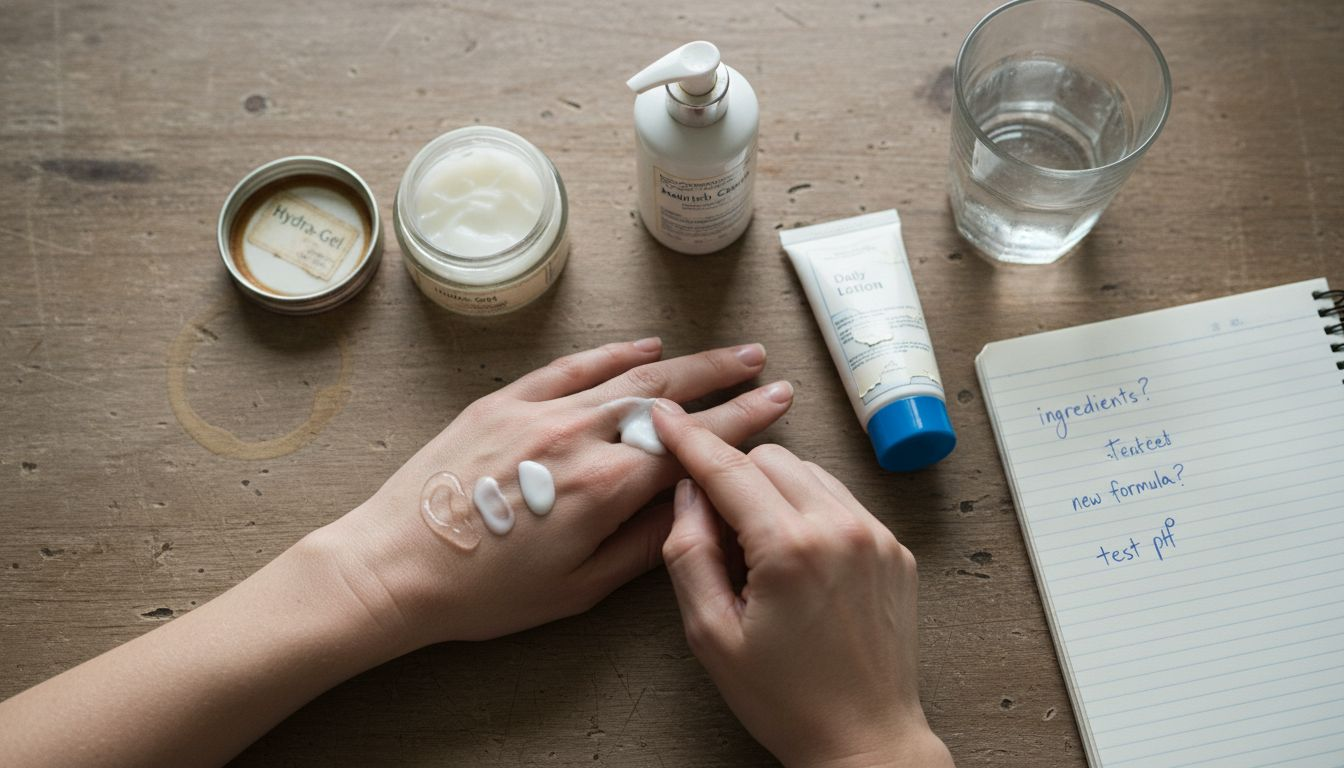
Physicochemical properties of moisturizing creams play a crucial role in determining how effectively the product will work for your skin. Moisturizer textures range from lightweight gels to rich creams, each designed to address different skin needs. Oil-in-water formulations tend to be lighter and absorb quickly, making them ideal for oily or combination skin. Water-in-oil formulations are typically thicker and provide more intense hydration, perfect for dry or mature skin types.
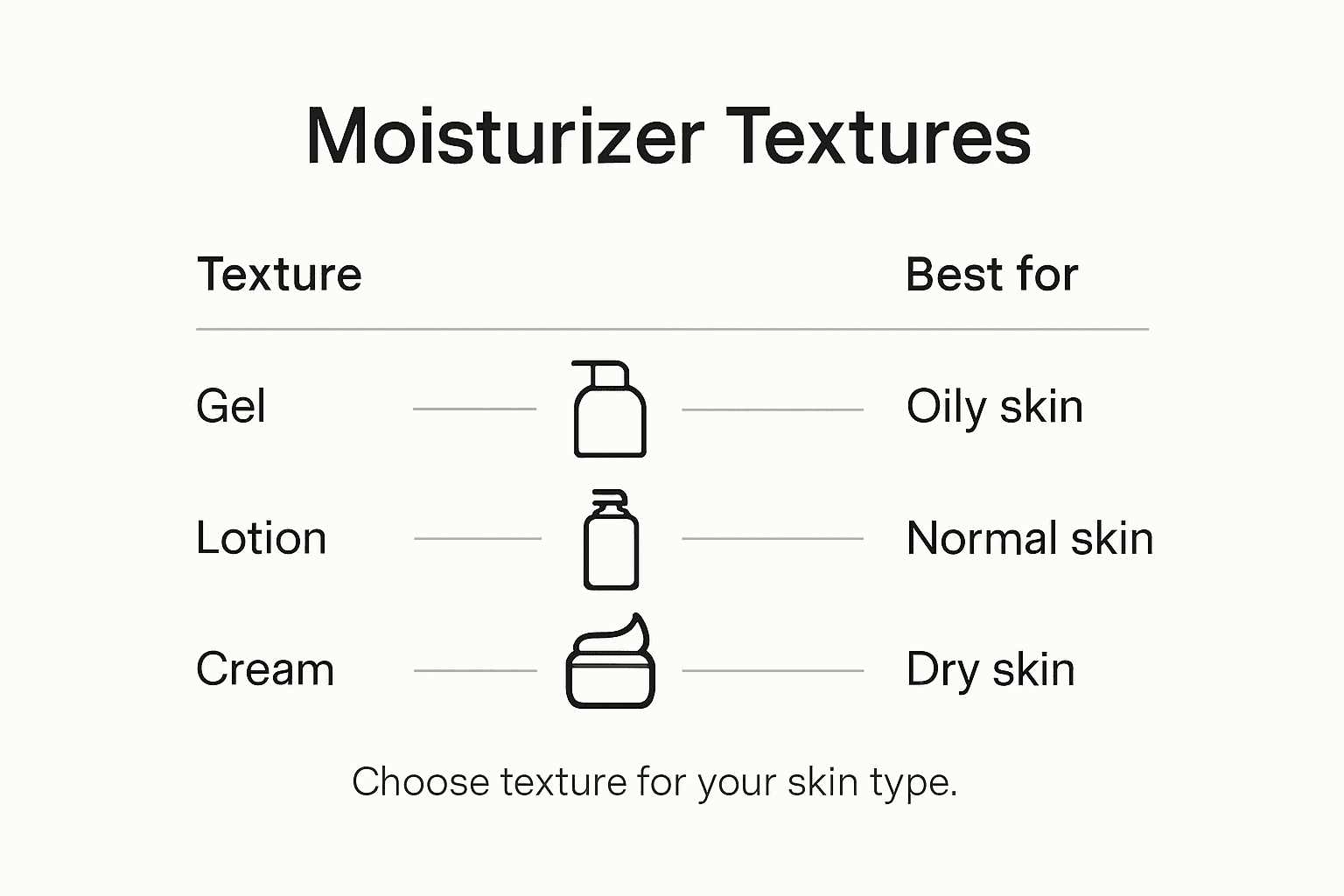
When examining a moisturizer, pay attention to its consistency and how it feels when applied. A good moisturizer should spread easily, absorb quickly, and leave your skin feeling comfortable without being greasy. Consider factors like viscosity, spreadability, and how the product interacts with your specific skin type. For instance, sensitive skin might require a gentler formulation with fewer ingredients, while acne-prone skin benefits from non-comedogenic and lightweight textures.
Pro tip: Test moisturizer samples on your inner wrist or jawline to assess texture and potential skin reactions before committing to a full-size product.
Below is a summary of common moisturizer textures and their best-suited skin types:
| Texture | Absorption Rate | Best For |
|---|---|---|
| Gel | Fast | Oily or acne-prone skin |
| Lotion | Moderate | Normal or combination skin |
| Cream | Slow | Dry or mature skin |
Step 4: Review Labels for Allergens and Sensitivities
Protecting your skin starts with understanding what ingredients you are putting on it. Learning to decode product labels is crucial for preventing potential allergic reactions and skin irritations.
FDA guidelines for cosmetic labeling require detailed ingredient disclosures to help consumers make informed choices. Pay close attention to the ingredient list, which is typically organized from highest to lowest concentration. Common allergens to watch for include fragrances, essential oils, botanical extracts, preservatives like parabens, and specific chemical compounds such as methylisothiazolinone. If you have sensitive skin, look for labels that explicitly state “hypoallergenic,” “fragrance-free,” or “for sensitive skin.”
Be especially vigilant if you have a history of skin allergies or known sensitivities. Ingredients like alcohol, sulfates, and certain plant extracts can trigger reactions in some individuals. When in doubt, seek out products with minimal ingredients and avoid complex formulations with numerous chemical components. Some moisturizers include potential irritants that might not be immediately obvious, so a careful and systematic review of the entire label is essential.
Pro tip: Keep a running list of ingredients that have previously caused skin reactions to help you quickly identify potential problematic products.
Step 5: Test and Evaluate Moisturizer Performance
Choosing the right moisturizer requires more than reading labels. You need a strategic approach to understand how a product truly performs on your unique skin.
Advanced assessment techniques for skin hydration involve evaluating multiple performance indicators. Start by conducting a patch test on a small area of skin, typically behind your ear or on your inner wrist. Apply a small amount of the moisturizer and observe its absorption, texture, and skin reaction over 24 to 48 hours. Look for signs of comfort, hydration, and absence of irritation.
Consider creating a performance evaluation journal to track your moisturizer’s effectiveness. Note factors like skin softness, moisture retention, how long the hydration lasts, and any changes in skin texture or appearance. Pay attention to how your skin feels throughout the day, especially in different environmental conditions such as indoor heating, air conditioning, or varying humidity levels. Watch for improvements in skin elasticity, reduction of dry patches, and overall skin comfort.
Pro tip: Take clear, well-lit photos of your skin before starting a new moisturizer and at weekly intervals to objectively track visible changes in skin quality.
Discover Your Ideal Moisturizer with Skin Styles Today
Finding the perfect moisturizer can feel overwhelming with all the labels, ingredients, and textures to consider. This article highlights how crucial it is to identify your skin type, understand moisturizing ingredients like humectants and occlusives, and test product performance carefully. If you want to avoid irritation and make fast confident choices, access to quality products tailored to your skin needs is key.
Explore our extensive collection of Facial Creams & Gels – Skin Styles to find formulations designed specifically for dry, oily, sensitive, or combination skin. Whether you prefer lightweight gels or rich creams, our curated selection helps you nourish and protect your skin effectively.

Take control of your skincare routine now by visiting Skin Styles to shop trusted brands and expert-approved products. Don’t wait to experience how the right moisturizer can transform your skin’s hydration and comfort. Start your personalized skincare journey and feel the difference today.
Frequently Asked Questions
How can I determine my skin type to choose the right moisturizer?
Identifying your skin type involves a simple at-home test. After washing your face, wait an hour without applying any products, then observe how your skin feels: normal skin feels balanced, dry skin feels tight, oily skin appears shiny, and combination skin shows mixed characteristics.
What ingredients should I look for in a moisturizer for dry skin?
For dry skin, seek moisturizers with rich emollients such as shea butter and squalane. Choose products that are oil-based to provide the intense hydration needed to restore moisture effectively.
How do I check for allergens in moisturizer ingredients?
Always review the ingredient list, focusing on components that may trigger reactions, like fragrances and certain preservatives. If you have sensitive skin, look for labels that say “hypoallergenic” or “fragrance-free” to minimize the risk.
What product texture is best for oily or acne-prone skin?
Oily or acne-prone skin typically benefits from lightweight, non-comedogenic textures like gels. Opt for gel formulations that absorb quickly and don’t clog pores to maintain hydration without adding excess oil.
How can I effectively test a new moisturizer before committing?
Conduct a patch test by applying a small amount of the moisturizer on your inner wrist or behind your ear. Monitor for any irritation or allergic reactions over 24 to 48 hours to ensure the product is suitable for your skin.
What should I track when evaluating my moisturizer’s performance?
Keep a performance evaluation journal to note factors like skin softness, hydration duration, and any visible changes in texture. Assess your skin’s comfort throughout the day, especially under varying environmental conditions, to ensure the moisturizer meets your needs.