

Finding the perfect skincare routine often feels like navigating a sea of myths and generic advice, especially when nearly 65 percent of American women admit to using products not suited for their skin type. Understanding why personalization matters can help you avoid common pitfalls that leave skin irritated or underwhelmed. This guide breaks down customized skincare routines, exposing misconceptions and explaining how targeted strategies deliver real, visible results tailored to your unique needs.
Table of Contents
- Defining Customized Skincare Routine And Myths
- Skin Types, Concerns, And Routine Variations
- How Personalized Routine Improves Effectiveness
- Risks Of Generic Skincare Approaches
- Common Mistakes In Customizing Skincare
Key Takeaways
| Point | Details |
|---|---|
| Customized Skincare Importance | A personalized skincare routine addresses unique skin needs based on genetic, environmental, and lifestyle factors. |
| Understanding Skin Types | Identify your skin type to select targeted products that effectively meet your specific physiological needs. |
| Myth of Unique Products | A truly customized routine does not require entirely unique products; the focus should be on selecting suitable ingredients for your skin’s concerns. |
| Risks of Generic Approaches | Generic skincare products can lead to adverse reactions and increased sensitivity, highlighting the need for personalized solutions. |
Defining Customized Skincare Routine and Myths
A customized skincare routine represents a strategic approach to personal skincare that transcends traditional one-size-fits-all solutions. Unlike generic product recommendations, these personalized plans are meticulously designed to address your unique skin characteristics, targeting individual skin needs based on genetic, environmental, and lifestyle factors.
Customized skincare recognizes that skin is complex and dynamic. Every individual’s skin has distinct requirements influenced by factors like genetics, hormonal changes, stress levels, diet, and environmental exposure. This means what works brilliantly for your best friend might not deliver identical results for you. A routine tailored to your specific skin type - whether oily, dry, combination, or sensitive - ensures that each product serves a precise purpose in supporting your skin’s health and appearance.
However, several persistent myths surround personalized skincare that require careful deconstruction. One common misconception is that a truly customized routine demands entirely unique products for every single step. In reality, many effective skincare ingredients work universally across different skin types. The key is understanding your skin’s specific sensitivities, concerns, and goals, then selecting products strategically aligned with those needs.
Pro tip: Start your customization journey by conducting a comprehensive skin assessment, noting texture, hydration levels, sensitivity, and specific concerns like acne or hyperpigmentation before building your personalized routine.
Skin Types, Concerns, and Routine Variations
Understanding your skin type is fundamental to developing an effective skincare routine. Identifying specific skin characteristics allows you to select targeted products that address unique physiological needs. Skin types range from oily and dry to combination, sensitive, and normal, each requiring a nuanced approach to product selection and application.
Oily skin types typically benefit from lightweight, non-comedogenic formulations that help regulate sebum production. Ingredients like salicylic acid and niacinamide can help control excess oil and minimize pore appearance. Conversely, dry skin demands rich, hydrating products containing ingredients such as hyaluronic acid, ceramides, and natural oils that restore moisture and strengthen the skin’s protective barrier. Combination skin presents a unique challenge, often requiring a strategic mix of products that address both oily and dry areas simultaneously.
Beyond skin type, individual skin concerns play a critical role in customizing your routine. Concerns like acne, aging, hyperpigmentation, and sensitivity demand specialized ingredients and treatment approaches. For instance, someone battling acne might prioritize products with zinc or benzoyl peroxide, while an individual focused on anti-aging might seek out retinol, vitamin C, and peptide-rich formulations. The goal is not to overwhelm your skin with multiple products, but to create a thoughtful, targeted strategy that supports your skin’s health and appearance.
Pro tip: Conduct a weekly skin assessment to track how your skin responds to different products and adjust your routine accordingly, paying close attention to changes in texture, hydration, and overall skin health.
Here’s a comparison of common skin types, their characteristics, and optimal routine strategies:
| Skin Type | Key Characteristics | Recommended Strategies |
|---|---|---|
| Oily | Shiny, large pores | Use gel cleansers, control sebum |
| Dry | Flaky, tight feeling | Apply rich moisturizers, gentle wash |
| Combination | Oily T-zone, dry cheeks | Target areas with tailored products |
| Sensitive | Easily irritated, redness | Choose fragrance-free, soothing agents |
How Personalized Routine Improves Effectiveness
A personalized skincare routine transforms your approach from generic treatment to precision care, targeting your skin’s unique characteristics and evolving needs. Daily skincare practices become exponentially more effective when tailored to your specific biological and environmental factors. This targeted strategy allows for strategic ingredient selection that addresses your individual skin concerns with unprecedented accuracy.

The effectiveness of a customized routine stems from its ability to address multiple dimensions of skin health simultaneously. By understanding your skin’s specific requirements, you can select ingredients that work synergistically to enhance absorption, maximize benefits, and minimize potential irritation. For example, someone with sensitive, acne-prone skin might combine gentle exfoliants with soothing botanicals, while an individual dealing with early signs of aging could prioritize antioxidants and peptides that support collagen production and cellular repair.
Moreover, personalization extends beyond product selection to include application techniques, frequency of use, and seasonal adjustments. Your skin’s needs fluctuate with factors like hormonal changes, stress levels, diet, and environmental conditions. A truly personalized routine adapts to these shifts, providing targeted intervention that responds dynamically to your skin’s changing state. This adaptive approach ensures that your skincare routine remains consistently optimized, delivering more reliable and noticeable results compared to a static, one-size-fits-all strategy.
Pro tip: Create a detailed skin journal documenting product responses, environmental factors, and skin changes to help you continuously refine and personalize your skincare approach.
Risks of Generic Skincare Approaches
Generic skincare approaches present significant challenges that can compromise your skin’s health and appearance. Skin barrier complications arise when one-size-fits-all products fail to address individual skin sensitivities and unique physiological needs. These standardized solutions often overlook the complex interplay between genetic factors, environmental influences, and personal health conditions that significantly impact skin performance.
The most critical risks of generic skincare include potential ingredient mismatches that can trigger adverse reactions. Some individuals might experience increased skin irritation, unexpected breakouts, or allergic responses when using products not specifically aligned with their skin’s characteristics. Dry skin types may find themselves further dehydrated by harsh cleansers, while oily skin can become more prone to inflammation when using inappropriate formulations that disrupt natural oil production and skin barrier function.
Financial and emotional costs compound these risks. Consumers frequently invest substantial money in products promising universal solutions, only to discover minimal or negative results. This trial-and-error approach not only wastes resources but can also lead to frustration and diminished confidence. The cumulative effect of using misaligned skincare products can range from minor skin texture issues to more serious concerns like persistent acne, accelerated aging, or increased sensitivity that requires extensive corrective treatments.
Pro tip: Perform a comprehensive skin assessment every six months, documenting changes in skin texture, hydration levels, and product effectiveness to help you make more informed skincare decisions.
This table summarizes critical risks and impacts of generic skincare approaches:
| Risk Type | Description | Possible Consequence |
|---|---|---|
| Ingredient Mismatch | Unsuitable formulas for skin type | Irritation, breakouts, dryness |
| Overspending | Investment in ineffective products | Financial loss, frustration |
| Skin Barrier Disruption | Barrier weakened by harsh ingredients | Increased sensitivity, damage |
Common Mistakes in Customizing Skincare
Customizing a skincare routine requires nuanced understanding and strategic planning. Skincare routine errors often stem from oversimplified approaches that fail to recognize the complexity of individual skin needs. Consumers frequently make critical mistakes that can compromise their skin’s health and undermine their desired outcomes.
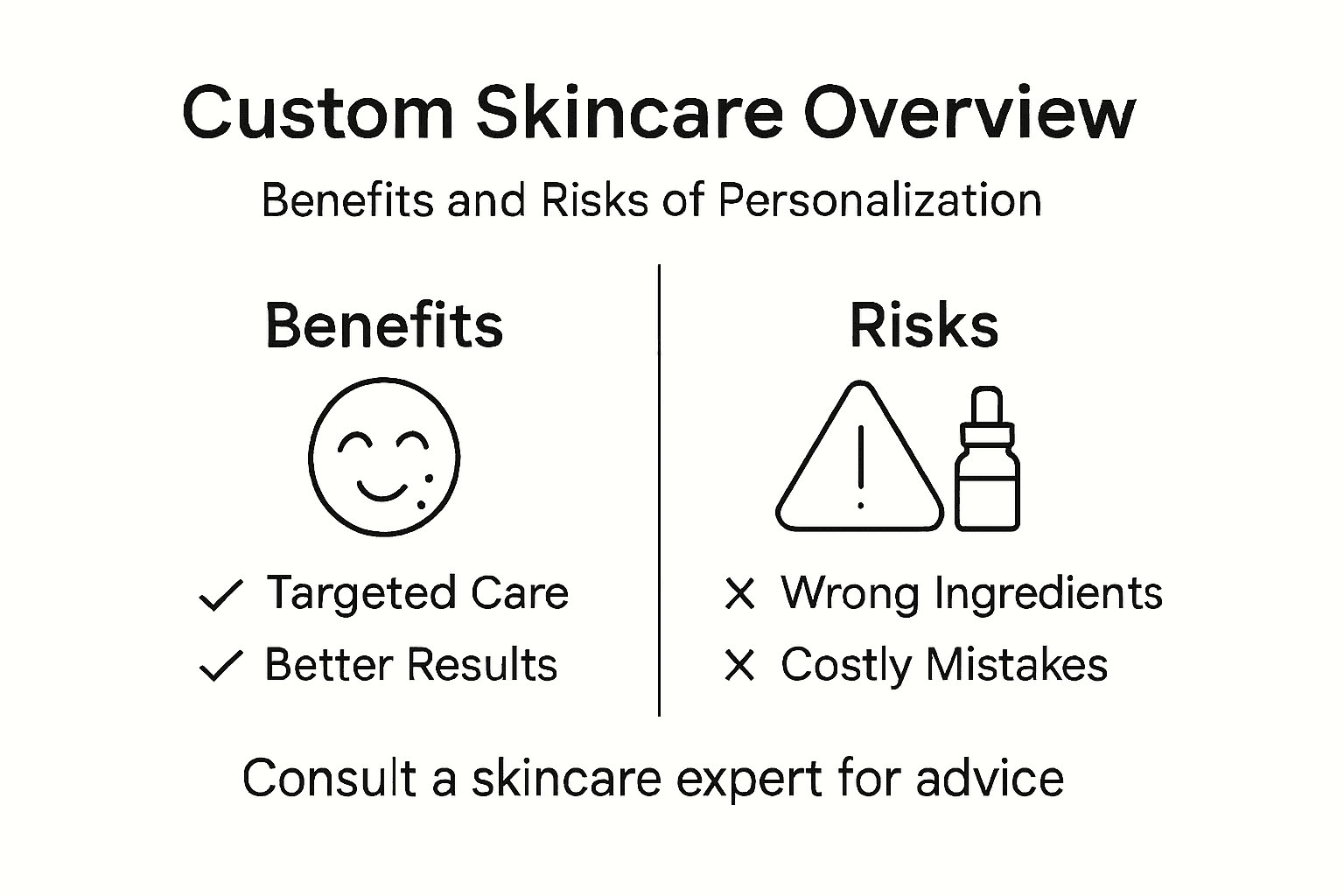
One of the most prevalent errors is ingredient mismanagement. Many individuals overload their routines with active ingredients, believing that more products equate to better results. In reality, this approach can trigger significant skin irritation, disrupt the natural barrier function, and cause inflammation. Different ingredients interact uniquely, and without proper knowledge, users might combine incompatible compounds that neutralize each other’s effectiveness or create adverse chemical reactions.
Another substantial mistake involves neglecting the dynamic nature of skin health. Skin is not static; it changes with factors like hormonal cycles, seasonal variations, stress levels, and aging. Failing to adapt your skincare routine accordingly means using products that may no longer suit your current skin condition. This rigidity can lead to persistent skin issues, reduced product efficacy, and potential long-term damage. Professional guidance becomes crucial in navigating these complex interactions and understanding when and how to modify your approach.
Pro tip: Maintain a detailed skin journal tracking product reactions, environmental conditions, and skin changes to help you make informed, strategic adjustments to your personalized skincare routine.
Unlock Your Skin’s Potential With a Customized Routine
Many struggle with generic skincare that fails to address unique challenges like sensitivity, dryness, or aging. This article highlights the importance of a personalized skincare routine that targets your exact skin type and concerns, ensuring effective results instead of frustration. By understanding your skin’s changing needs and selecting the right ingredients, you can avoid common pitfalls such as irritation or wasted products.
Discover how you can transform your daily regimen with targeted solutions from Facial Creams & Gels – Skin Styles and powerful options from Facial Serums – Skin Styles.

Take control of your skincare journey today with personalized products designed to nourish and restore your skin’s natural balance. Visit Skin-Styles.com now and create the routine your skin truly deserves.
Frequently Asked Questions
What is a customized skincare routine?
A customized skincare routine is a personalized approach to skincare that is tailored to your specific skin type, concerns, and environmental factors. It involves selecting products that address your unique skin needs, rather than relying on generic solutions.
Why is it important to understand my skin type before customizing a skincare routine?
Understanding your skin type is crucial as it helps you select products that effectively address your specific physiological needs. Each skin type—oily, dry, combination, or sensitive—requires different formulations to ensure optimal health and appearance.
How can I assess my skin to create a personalized skincare routine?
You can begin by conducting a comprehensive skin assessment that includes evaluating your skin’s texture, hydration levels, sensitivities, and specific concerns such as acne or hyperpigmentation. This information will guide your selection of products.
What are the risks of using a generic skincare routine?
Using a generic skincare routine can lead to ingredient mismatches that may cause irritation, breakouts, or dryness. Additionally, it may waste financial resources due to ineffective products and can compromise your skin’s health by not addressing individual needs.