

Choking causes nearly 1 in every 14 unintentional deaths in infants under one year. Despite this alarming statistic, many caregivers underestimate the ongoing need for vigilant feeding supervision throughout the first year. Understanding why supervision matters and how to implement it effectively can dramatically reduce risk while supporting your baby’s nutrition and development. This guide explains the science behind feeding supervision and provides practical steps to keep your infant safe during every meal.
Table of Contents
- Physiological And Safety Reasons To Supervise Baby Feeding
- Nutritional And Developmental Benefits Of Feeding Supervision
- Common Misconceptions About Supervising Baby Feeding
- Practical Guidelines And Best Practices For Supervising Baby Feeding
- Bridging Understanding To Care: Implementing Supervision In Daily Feeding Routines
- Conclusion: Ensuring Safety And Nutrition Through Vigilant Supervision
- Discover Safe Feeding Solutions For Your Baby
- Frequently Asked Questions
Key Takeaways
| Point | Details | |-------|---------|| | Supervision reduces choking risk by 50% | Immediate caregiver intervention during supervised feeding prevents severe injury or death. | | Immature swallowing coordination persists until 12 months | Infant neuromuscular control and airway reflexes develop gradually throughout the first year. | | Feeding supervision supports nutrition and bonding | Proper pacing and engagement improve digestion, intake completion, and emotional security. | | Common myths underestimate ongoing risks | Many caregivers reduce supervision prematurely after introducing solids or when babies sit independently. | | Safe routines require proper positioning and calm environments | Upright positioning, distraction-free settings, and pacing prevent accidents and support healthy eating. |
Physiological and Safety Reasons to Supervise Baby Feeding
Your baby’s swallowing system is a work in progress. Infants have underdeveloped neuromuscular control, leading to higher risk of aspiration during feeding. The coordination required to safely move food from mouth to stomach while protecting the airway takes months to mature.
Several biological vulnerabilities make supervision essential:
- Airway protective reflexes remain incomplete until around 12 months
- Tongue thrust and gag reflexes are still developing
- Coordination between swallowing and breathing is inconsistent
- Limited ability to clear food from the airway independently
These developmental realities mean choking and aspiration risks remain elevated without constant caregiver presence. When you supervise feeding, you can respond within seconds to signs of distress. Research shows supervised feedings reduce choking incidents by 50% compared to unsupervised meals.

Your presence allows immediate intervention if your baby shows coughing, gagging, or breathing difficulty. Even a few seconds of delay can mean the difference between a minor scare and a life-threatening emergency. Understanding baby feeding safety tips helps you recognize when to act.
Pro Tip: Keep emergency contact numbers visible in your feeding area and review infant choking response techniques regularly so you can act confidently if needed.
Nutritional and Developmental Benefits of Feeding Supervision
Supervision does more than prevent accidents. Your active presence during feeding supports optimal nutrition and healthy development in multiple ways.
When you monitor your baby’s feeding pace, you help regulate digestion. Rushed feeding can overwhelm an immature digestive system, leading to discomfort, gas, or reflux. Proper pacing allows adequate chewing and saliva mixing, preparing food for easier stomach processing.
Supervision also improves feeding completion. Babies who receive engaged attention during meals tend to consume more consistent amounts, ensuring adequate calorie and nutrient intake. You can notice when your baby shows fullness cues or needs encouragement to continue eating.
The emotional benefits matter just as much:
- Eye contact and warm interaction build trust and security
- Responsive feeding teaches your baby to recognize hunger and fullness signals
- Shared mealtimes create positive food associations
- Your calm presence reduces feeding anxiety for both of you
These early feeding experiences shape long-term eating behaviors. Children who experience responsive, supervised feeding tend to develop healthier relationships with food and better self-regulation skills. Implementing baby feeding tips for healthy habits strengthens these developmental advantages.
Pro Tip: Use feeding time as bonding time by putting away phones and making genuine eye contact with your baby. This strengthens your relationship while keeping you fully attentive to safety.
Common Misconceptions About Supervising Baby Feeding
Several myths lead caregivers to reduce supervision prematurely, increasing risk unnecessarily.
-
Myth: Babies can safely feed alone once solids start. Reality: Choking risk remains highest during the first 12 months, even after introducing solid foods. Swallowing coordination continues developing throughout this period.
-
Myth: Choking risk ends after 6 months. Reality: Six-month-olds have better head control, but their swallowing reflexes and airway protection remain immature. Risk persists until neuromuscular systems fully develop.
-
Myth: Fast eaters need less supervision. Reality: Babies who eat quickly actually need more careful monitoring. Rapid feeding increases choking risk because it overwhelms immature swallowing coordination.
-
Myth: Supervision only prevents choking. Reality: As discussed earlier, supervision supports nutrition, digestion, and emotional development alongside safety.
-
Myth: Sitting independently means no supervision needed. Reality: Physical milestones like sitting don’t indicate mature swallowing reflexes. These develop on different timelines.
Understanding these misconceptions helps you maintain appropriate vigilance. Avoiding baby feeding safety misconceptions protects your infant throughout the vulnerable first year.
Practical Guidelines and Best Practices for Supervising Baby Feeding
Effective supervision requires specific techniques and environmental setup. These evidence-based practices maximize safety while supporting positive feeding experiences.
Positioning and Environment:
- Always position your baby upright at a 90-degree angle during feeding
- Ensure your baby’s head is slightly forward, never tilted back
- Use appropriate seating that provides good trunk support
- Create a calm, quiet feeding space free from TV, toys, or other distractions
Active Supervision Steps:
- Maintain constant visual contact with your baby throughout the meal
- Watch for signs of distress like coughing, gagging, or breathing changes
- Control feeding pace by offering small amounts and waiting for complete swallowing
- Never force food or rush through meals
- Stay within arm’s reach to respond immediately if needed
Research confirms that interventions such as repositioning and pacing during feeding reduce choking incidence by 50%. These simple adjustments make a dramatic difference in safety outcomes.
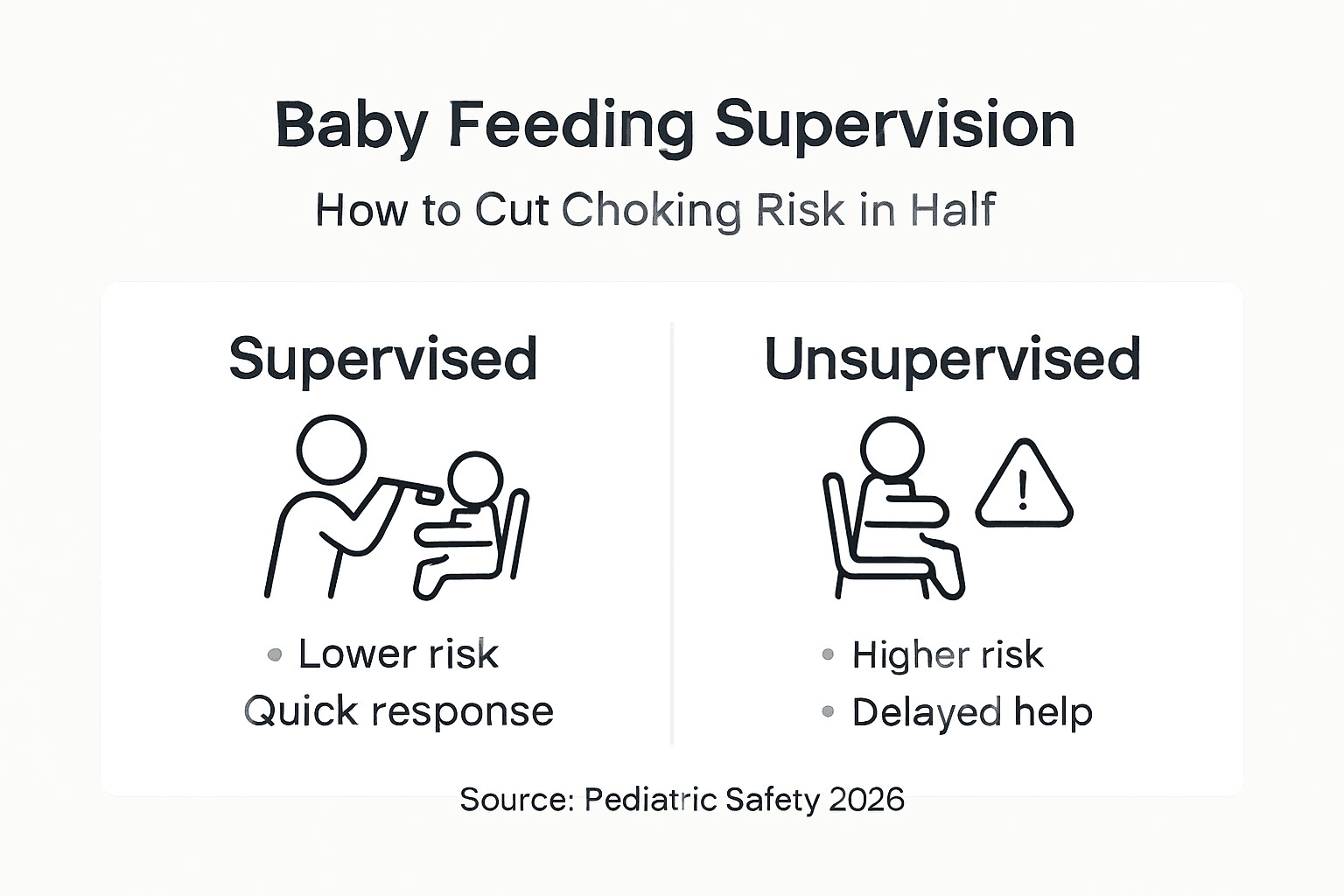
Supervised vs. Unsupervised Feeding Comparison:
| Factor | Supervised Feeding | Unsupervised Feeding |
|---|---|---|
| Choking Risk | 50% lower with immediate intervention | Significantly elevated without caregiver response |
| Nutritional Intake | More consistent with pacing and engagement | Often incomplete or rushed |
| Digestive Comfort | Better with controlled pace | Higher risk of discomfort from rushed eating |
| Emotional Development | Supports bonding and food security | Misses critical interaction opportunities |
| Emergency Response | Immediate life-saving intervention possible | Delayed recognition leads to severe outcomes |
Establishing a baby feeding routine guide helps integrate these practices into daily life. Using safe equipment also matters. Learn about choosing baby utensils safely and maintaining proper feeding set hygiene guide to reduce additional risks.
Pro Tip: Prepare for emergencies by keeping your phone nearby with emergency contacts programmed and reviewing infant CPR techniques quarterly. Stay calm and attentive, but avoid hovering anxiously, which can stress both you and your baby.
Bridging Understanding to Care: Implementing Supervision in Daily Feeding Routines
Knowing why supervision matters is one thing. Making it work in your daily life requires thoughtful integration.
Balance is essential. While supervision is critical, you also want to encourage your baby’s growing independence. Allow your baby to explore self-feeding with finger foods under your close watch. This builds motor skills and confidence while you remain ready to intervene if needed.
Adjust your supervision approach as your baby develops:
- Continue full supervision until at least 12 months, even as skills improve
- Watch for developmental milestones but don’t reduce vigilance based on physical abilities alone
- Use supervision time to detect early feeding difficulties like persistent gagging or food refusal
- Maintain structured feeding times to prevent caregiver distraction and establish healthy routines
Your emotional state affects your baby’s feeding experience. Stay calm and confident during meals. If you feel anxious, your baby may pick up on this tension and become distressed. Trust your preparation and knowledge to supervise effectively without hovering nervously.
Creating consistent routines reduces stress for both of you. When feeding happens at predictable times in familiar settings, you can focus attention more easily. Regular feeding routines for success support both safety and your baby’s sense of security.
Remember that supervision doesn’t mean perfection. You’re learning alongside your baby. Each feeding session provides opportunities to observe, adjust, and strengthen your caregiving skills.
Conclusion: Ensuring Safety and Nutrition Through Vigilant Supervision
Supervision during baby feeding is not optional. It’s a critical safety measure that prevents choking while supporting nutrition, digestion, and emotional development. Understanding your infant’s developmental vulnerabilities helps you tailor supervision to their specific needs throughout the first year.
The risks remain real until swallowing coordination matures, typically around 12 months or later. Myths about reduced risk after six months or when babies sit independently can lead to dangerous complacency. Armed with accurate knowledge and practical techniques, you can confidently supervise feeding and respond effectively to any challenges.
Your vigilant presence during meals protects your baby’s well-being and lays the foundation for healthy eating habits that last a lifetime.
Discover Safe Feeding Solutions for Your Baby
Now that you understand the importance of supervised feeding, explore tools designed to support your efforts. Quality feeding equipment makes supervision easier and more effective.
Our silicone baby feeding set features BPA-free materials, suction bases that prevent spills, and designs that encourage safe self-feeding under your watchful eye.

Proper equipment hygiene is equally important. Review our feeding set hygiene guide to learn cleaning best practices that protect your baby from foodborne illness while maintaining product longevity. Combining the right tools with informed supervision creates the safest possible feeding environment for your growing infant.
Frequently Asked Questions
Why is supervising baby feeding important?
Supervision prevents choking by allowing immediate response to feeding difficulties. It also supports proper nutrition through pacing and engagement, aids digestion by controlling feeding speed, and strengthens emotional bonding through eye contact and interaction. These combined benefits make supervision essential for infant well-being.
When can I reduce supervision during my baby’s feeding?
Continue full supervision until swallowing and airway reflexes mature, typically around 12 months or later. Gradual reduction should only begin when your baby demonstrates clear developmental readiness, consistently handles various food textures safely, and you feel confident in their abilities. Never leave infants under 12 months alone during feeding.
What are signs of choking I should watch for during feeding?
Key warning signs include sudden coughing or gagging, difficulty breathing or wheezing, clutching at the throat, inability to cry or make sounds, and skin color changes to blue or pale. Silent choking, where your baby cannot cough or make noise, requires immediate emergency response. Recognizing these signs allows life-saving intervention.
How can I balance supervision without stressing my baby or myself?
Create calm, distraction-free feeding sessions in a consistent location at regular times. Engage warmly with smiles and gentle conversation rather than hovering anxiously. Establish routines that build your confidence and your baby’s sense of security. Remember that attentive presence differs from nervous hovering. Your calm, prepared approach keeps both of you relaxed while maintaining safety.