

Every parent faces uncertainty when their baby moves from milk to solid foods, wondering how new textures might shape eating habits and development. Texture is more than just a feeling in your baby’s mouth—it helps build critical skills like chewing, swallowing, and motor coordination. Recognizing how textures progress and influence feeding milestones can make mealtimes smoother and support your infant’s healthy growth. This article reveals how food textures impact your baby’s journey from first spoonful to confident family meals.
Table of Contents
- Defining Texture In Baby Feeding
- Stages Of Food Texture Introduction
- Texture And Developmental Milestones
- Safety Considerations For Changing Textures
- Common Mistakes When Introducing Texture
Key Takeaways
| Point | Details |
|---|---|
| Importance of Texture | Introducing varied textures helps develop a baby’s oral processing skills and lifelong food preferences. |
| Progression Stages | Follow a logical texture progression from smooth purees to chopped family foods to support development and prevent feeding difficulties. |
| Motor Skill Connection | Texture introduction aligns with motor skill milestones; observe your baby’s readiness before advancing textures. |
| Safety First | Be aware of choking hazards associated with different textures and ensure hygienic food preparation practices. |
Defining Texture in Baby Feeding
Texture in baby feeding refers to the physical structure and consistency of food—how soft, firm, smooth, lumpy, or chunky it feels in your baby’s mouth. It’s not just about taste. Texture shapes how your infant learns to eat, swallow, and eventually develop healthy food preferences.
When babies transition from milk to solid foods, they encounter textures completely different from what they’ve known. Smooth purees feel nothing like soft mashed foods with tiny pieces. Your baby’s mouth, tongue, and swallowing abilities must adapt to each new texture stage.
Why Texture Matters So Much
Texture plays a central role in what researchers call Food Oral Processing (FOP) skills. This refers to how your baby’s mouth physically handles food. Food oral processing develops through texture exposure, directly influencing your baby’s eating habits and food preferences for years to come.
As your baby progresses through feeding stages, appropriate textures build confidence. They teach coordination between tongue movement, jaw strength, and swallowing timing. Without proper texture progression, babies sometimes develop feeding difficulties or become picky eaters.
The Texture Progression Path
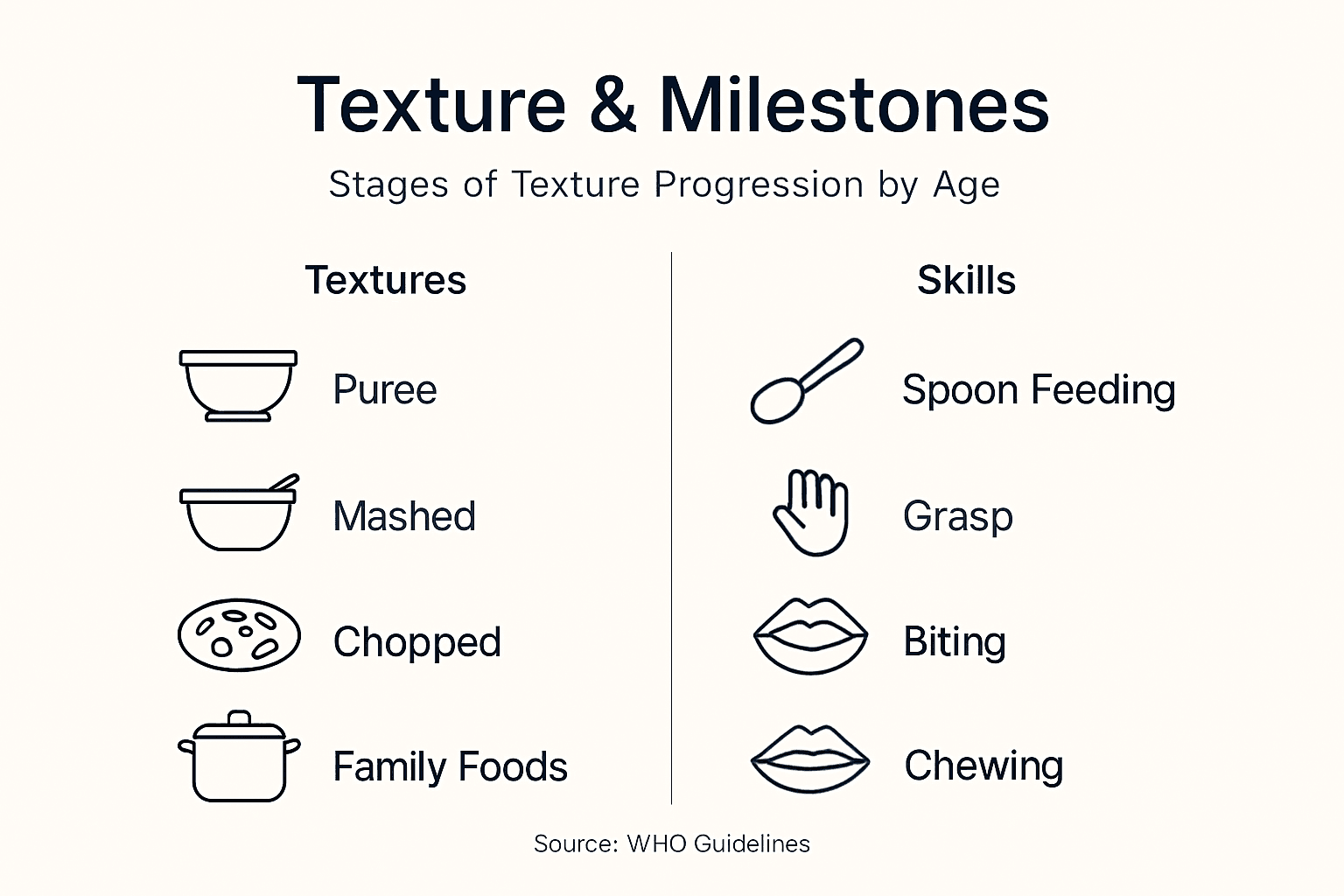
Textures progress in a logical sequence that matches your baby’s developing abilities:
- Smooth purees (4-6 months): Completely smooth, no lumps or pieces
- Thicker purees (6-8 months): Slightly thicker consistency with a few soft lumps
- Mashed foods (8-10 months): Soft pieces mixed with thicker texture
- Minced textures (10-12 months): Tiny soft pieces in a sauce or base
- Chopped family foods (12+ months): Age-appropriate pieces from regular meals
Each stage introduces new challenges for your baby’s developing mouth. The progression allows skills to build naturally without overwhelming or frustrating your infant.
What Age-Appropriate Textures Look Like
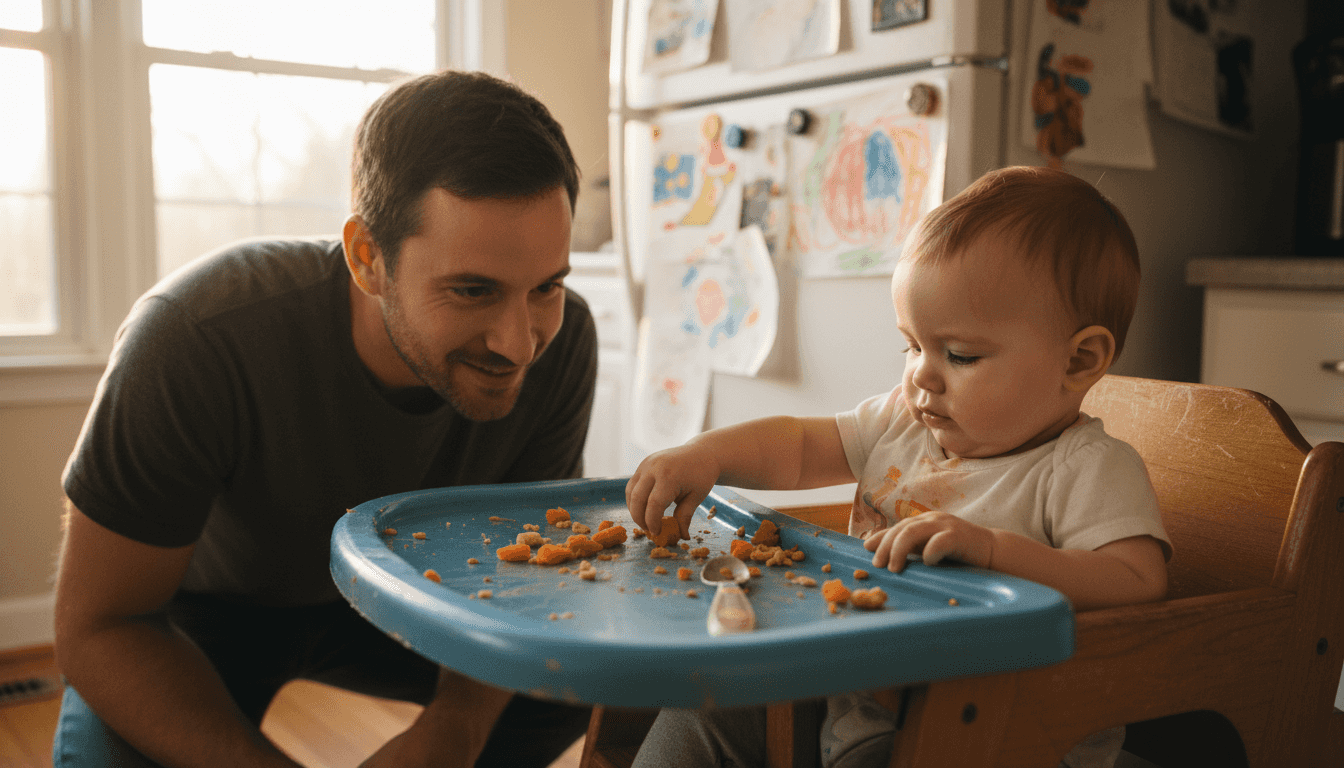
According to WHO complementary feeding guidelines, textures should match your baby’s developmental stage and ability to manage food safely. At 6 months, your baby cannot chew or process lumpy foods. By 12 months, most babies handle soft finger foods and minced textures.
Textures work together with your baby’s emerging motor skills. Your infant’s ability to grasp finger foods develops around 8-9 months. Offering appropriate textures at the right time supports this natural progression.
Key Texture Characteristics to Know
Understanding texture properties helps you recognize age-appropriate foods:
- Consistency: Thin, thick, or creamy versus chunky
- Firmness: Soft enough to mash between tongue and roof of mouth
- Particle size: From smooth to tiny soft pieces to visible chunks
- Moisture level: Foods need adequate liquid for safe swallowing
When selecting baby utensils for self-feeding, choosing feeding tools that match texture progression helps your baby practice independence safely.
Texture acceptance directly shapes your child’s willingness to try new foods and develop diverse eating habits throughout childhood.
Pro tip: Introduce new textures one at a time over 3-5 days, watching for allergic reactions or discomfort, so you can clearly identify which specific texture your baby handles well.
Stages of Food Texture Introduction
Introducing textures follows a structured timeline tied directly to your baby’s physical development. Each stage builds on the previous one, creating a natural progression from liquid nutrition to family meals. Understanding these stages helps you introduce foods at exactly the right moment for your baby’s abilities.
Your baby cannot handle all textures at once. Starting too early with chunky foods can cause choking or feeding anxiety. Starting too late can delay important skill development. The sweet spot happens when texture progression matches your infant’s developing mouth strength and coordination.
Stage One: The Smooth Puree Phase (4-6 Months)
This stage marks your baby’s first encounter with solid foods. Smooth purees are completely liquid-free and lump-free, flowing easily from spoon to mouth. Your baby’s tongue instinctively pushes food backward for swallowing at this age.
Textures at this stage include:
- Single-ingredient purees like iron-fortified rice cereal
- Smooth vegetable purees without any texture variation
- Fruit purees that are completely uniform in consistency
- Breast milk or formula added to thin foods further
Your baby is learning the mechanics of spoon-feeding. The focus is on accepting the spoon, understanding food comes from outside the breast or bottle, and practicing the swallowing motion with different flavors.
Stage Two: Thicker Purees with Soft Lumps (6-8 Months)
Around 6 months, your baby develops stronger jaw muscles and better tongue control. This stage introduces thicker textures with very soft, small lumps. The lumps are so soft they dissolve easily with gum pressure.
At this stage, your baby begins early chewing movements and spoon-feeding skills. The texture change teaches your infant to handle slightly more complex food structures without overwhelming developing abilities.
Textures progress to:
- Mashed fruits and vegetables with tiny, soft pieces
- Yogurt or custard with small fruit pieces
- Thicker porridges with subtle texture variation
- Combination foods blending different vegetable textures
Stage Three: Minced and Chopped Foods (8-12 Months)
Between 8-10 months, your baby develops a pincer grasp and the ability to bite down with controlled force. This stage introduces foods with visible soft pieces your baby can handle independently or with your help.
Your baby now practices finger foods alongside spoon-fed meals. Soft finger foods like banana pieces, well-cooked vegetables, and shredded chicken develop independence and coordination. Your infant learns to self-feed while still using spoons.
Appropriate textures include:
- Minced meats mixed with soft vegetables
- Chopped soft fruits cut into pea-sized pieces
- Scrambled eggs with soft texture variation
- Well-cooked pasta cut into small pieces
- Soft breads or crackers that dissolve easily
Stage Four: Family Foods (12+ Months)
By 12 months, most babies handle family meals with minor texture adjustments. According to WHO complementary feeding recommendations, toddlers can eat most foods families consume when cut appropriately and cooked until soft.
Your toddler now chews independently and swallows solid foods without difficulty. Family meals become the norm rather than special baby foods. Texture variety increases significantly as your child explores regular foods.
Textures now include:
- Regular family meals cut into small, bite-sized pieces
- Slightly thicker sauces and gravies
- Foods with varied textures in single meals
- Minimally processed whole foods
Rushing texture progression causes feeding anxiety; delaying it can limit your child’s willingness to accept new foods and textures later.
Pro tip: Watch your baby’s mouth movements and gag reflex when introducing new textures—if your baby struggles or refuses, stay at the current texture stage for another week before advancing.
Texture and Developmental Milestones
Texture introduction doesn’t happen in isolation. It connects directly to your baby’s physical, cognitive, and motor skill development. When you introduce textures at the right time, you’re actually supporting multiple developmental areas simultaneously.
Your baby’s ability to handle different textures depends on specific milestones they’ve already achieved. Without these underlying skills, texture progression creates frustration rather than progress. Understanding this connection helps you time introductions perfectly.
Motor Skills and Texture Readiness
Gross motor development directly impacts feeding success. Around 4-6 months, babies develop enough neck and trunk control to sit supported during feeding. They can stabilize their head and follow food with their eyes. These skills make spoon-feeding safe and possible.
By 8-10 months, babies develop the pincer grasp—the ability to pick up small objects between thumb and fingers. This milestone opens the door to finger foods. Without this skill, soft finger foods simply fall from your baby’s hands onto the floor.
Research shows that early introduction of food pieces supports better motor development. Babies who experience appropriate texture progression before 8 months show stronger gross motor skills by their first birthday. Late introduction after 10 months correlates with delayed motor outcomes.
Oral Motor Milestones
Your baby’s mouth develops specific abilities tied to texture handling:
- 4-6 months: Tongue-thrust reflex diminishes; sucking reflex still strong
- 6-8 months: Jaw begins rhythmic chewing movements; tongue gains mobility
- 8-10 months: Controlled bite emerges; ability to mash food with gums
- 10-12 months: Coordinated chewing develops; improved swallowing control
- 12+ months: Independent chewing and swallowing of varied textures
Each texture stage matches these emerging oral motor abilities perfectly.
Here is a summary of how food texture stages connect to developmental milestones:
| Texture Stage | Age Range | Related Motor Skill | Oral Ability |
|---|---|---|---|
| Smooth purees | 4-6 months | Supported sitting and head control | Tongue thrust fades, basic swallowing |
| Thicker purees | 6-8 months | Developing jaw movement | Early chewing, greater tongue control |
| Minced/chopped foods | 8-12 months | Pincer grasp, self-feeding | Controlled bite, gum mashing |
| Family foods | 12+ months | Independent grasp, utensil use | Coordinated chewing and swallowing |
Taste and Texture Acceptance Development
Developmental feeding milestones include taste preferences and texture acceptance. Your baby learns to accept or reject foods based on experience, not instinct. Early positive experiences with varied textures create lifelong willingness to try new foods.
Babies exposed to a range of textures between 6-12 months develop more flexible food preferences later. They’re less likely to become picky eaters as toddlers. This period establishes taste preferences and eating confidence for years to come.
Language and Cognitive Development
Texture exploration supports speech development too. The mouth movements required for eating different textures strengthen muscles used for talking. Chewing practice with varied textures builds the oral motor control needed for clear speech.
Cognitive skills emerge as babies learn cause-and-effect through feeding. Dropping finger foods teaches about gravity. Self-feeding with utensils develops problem-solving. Texture variety stimulates curiosity and exploration.
Individual Variation in Milestone Timing
Not all babies reach milestones on identical schedules. Some babies develop motor skills faster; others move at a slower pace. Both are completely normal. Your baby’s readiness matters more than calendar age.
Watch your individual baby rather than following strict age guidelines. If your 7-month-old shows interest in finger foods and has developed appropriate motor skills, gentle introduction is appropriate. If your 9-month-old still struggles with pincer grasp, stay with spoon-fed thicker purees.
Texture progression that matches your baby’s actual developmental abilities prevents feeding stress and builds confidence in both parent and child.
Pro tip: Track your baby’s emerging motor skills—when your infant begins coordinated reaching and raking grasp movements, it signals readiness to begin transitioning toward minced textures and finger foods.
Safety Considerations for Changing Textures
Texture progression introduces new risks that smooth purees don’t pose. Choking hazards increase as food pieces become visible and varied. Food preparation hygiene becomes even more critical when handling multiple ingredients. Understanding these safety factors prevents incidents and builds confidence in your feeding journey.
Your baby’s developing swallowing ability doesn’t mature all at once. Introducing unsafe textures before your infant develops the coordination to handle them creates real danger. Safety isn’t about fear—it’s about informed, careful introduction aligned with your baby’s abilities.
Choking Hazards to Avoid
Certain foods and textures pose choking risks regardless of your baby’s age. According to WHO food safety guidelines for complementary feeding, textures must match developmental stage while avoiding choking hazards entirely.
Common choking hazards include:
- Whole grapes, cherry tomatoes, or berries (cut lengthwise into quarters)
- Hard, raw vegetables like carrots or apple pieces (must be soft-cooked)
- Whole nuts, seeds, or popcorn (never appropriate under 4 years)
- Chunks of cheese or meat larger than pea-sized
- Sticky foods like peanut butter by the spoonful (thin with water or milk)
- Hard candy, marshmallows, or gummy candies
- Hot dogs cut into rounds (cut lengthwise first, then into quarters)
These remain hazards even as your child grows. Safety doesn’t change just because texture stages advance.
Food Preparation and Hygiene Standards
Clean preparation prevents foodborne illness that impacts developing immune systems. Wash hands thoroughly before feeding and after diaper changes. Use clean utensils, bowls, and feeding surfaces every single time.
Store prepared foods correctly. Homemade purees last 48 hours in the refrigerator or 3 months in the freezer. Commercial baby foods have expiration dates for important reasons. Once opened, use within the recommended timeframe and follow storage instructions precisely.
European Commission standards ensure infant foods meet strict safety criteria for composition and contaminant avoidance. These standards exist because infants cannot fight off foodborne pathogens as effectively as older children.
Signs Your Baby Struggles With Current Texture
Watch for warning signs that texture progression moved too fast:
- Gagging frequently during meals (some gagging is normal; excessive isn’t)
- Refusing to swallow; holding food in mouth for extended periods
- Coughing or choking sounds during or after swallowing
- Loss of appetite or increased meal refusal
- Difficulty coordinating breathing and swallowing
- Visible distress or fear around mealtimes
If you notice these signs, pause texture progression. Return to the previous texture stage and wait 1-2 weeks before trying again.
Responsive Feeding During Transitions
Responsive feeding means watching your baby throughout meals, not just putting food in front and walking away. Sit at your baby’s level where you can observe swallowing clearly. Notice whether your infant appears comfortable or stressed.
Let your baby set the pace. If your baby wants more, offer more. If your baby turns away or shows discomfort, stop immediately. Your baby’s signals matter more than finishing what’s on the plate.
Texture safety depends equally on appropriate food choice, hygienic preparation, and careful observation during each meal.
Pro tip: When introducing a new texture, offer just one small spoonful at the start of a meal when your baby is alert and calm, watching closely for any signs of difficulty before proceeding.
Common Mistakes When Introducing Texture
Most parents make at least one texture introduction mistake. These aren’t failures—they’re learning opportunities. Knowing what commonly goes wrong helps you avoid unnecessary frustration and keeps your baby’s feeding journey on track.
Texture mistakes often stem from good intentions but misunderstanding what your baby actually needs at each stage. Some parents rush texture progression because they think their baby should be “ready.” Others delay too long, creating unnecessary dependency on smooth foods. Finding the right balance matters more than following rigid rules.
Starting Too Early or Too Fast
One of the biggest mistakes is introducing textures before your baby shows readiness signs. Babies cannot chew effectively at 4 months. Offering lumpy foods before your infant develops the oral motor skills to handle them leads to gagging, frustration, and feeding anxiety.
Texture progression should span weeks, not days. When you introduce a new texture, stick with it for 5-7 days before advancing further. This allows your baby’s mouth to adapt and gives you time to watch for any signs of struggle.
Starting solids around 6 months and progressing textures gradually prevents feeding problems. Rushing this timeline creates unnecessary difficulty for both you and your baby.
Diluting Foods Excessively
Some parents add too much water or milk to foods, thinking thinner textures are always safer. This reduces nutritional density significantly. Your baby misses important calories, iron, and protein when foods become too watery.
Thicker purees and appropriately textured foods provide better nutrition. Your baby needs these calories and nutrients for growth and brain development. Dilution defeats the purpose of introducing solid foods at all.
Common Nutrition Mistakes
Avoid these nutrition-related errors:
- Offering excessive breast milk or formula instead of progressing to solid foods
- Introducing fruit juices too early or in large quantities
- Adding sugar, honey, or salt to homemade purees
- Relying on processed finger foods with added sodium and preservatives
- Stopping nutritious foods temporarily when your baby gets sick
- Offering empty-calorie snacks like plain baby biscuits without nutrition
These choices undermine the nutritional benefits solid foods provide during critical growth periods.
Compare common parent mistakes in introducing textures and their nutritional impact:
| Mistake | Nutrition Impact | Feeding Consequence |
|---|---|---|
| Starting too early | Poor swallowing, risk of gagging | Feeding anxiety, refusal |
| Excessive dilution | Lower calories and nutrients | Slow growth, lower energy |
| Ignoring readiness signs | Missed skill development | Delayed self-feeding, frustration |
| Skipping ingredient testing | Allergen confusion | Difficult reaction tracking |
Ignoring Developmental Readiness Signs
Your baby sends clear signals about readiness. Some parents miss these cues and either push ahead or hold back unnecessarily. True readiness includes sitting upright with minimal support, loss of the tongue-thrust reflex, and interest in watching others eat.
Watch your baby, not the calendar. A 5-month-old showing all readiness signs might be ready before a 6-month-old who shows none. Conversely, an 8-month-old who still gags severely on textured foods needs more time at the previous stage.
Skipping Single-Ingredient Testing
Introducing multiple ingredients simultaneously makes it impossible to identify allergic reactions. Start with single-ingredient purees for 3-5 days before combining foods. This approach takes longer but prevents confusion if your baby reacts negatively.
Texture mistakes rarely cause lasting harm, but consistency in approach prevents the frustration that makes mealtimes stressful for everyone.
Pro tip: Keep a simple feeding log noting what texture you introduced, how your baby responded, and any signs of difficulty—this record helps you spot patterns and communicate accurately with your pediatrician if concerns arise.
Support Your Baby’s Feeding Journey With the Right Tools and Care
Introducing new food textures can be both exciting and challenging for parents striving to help their baby develop healthy eating habits safely and confidently. This article highlights how progressing through smooth purees to chopped family foods is essential for developing critical skills like chewing, swallowing, and self-feeding. Yet, managing this progression requires patience, attention, and the right support to avoid frustrations like gagging, choking hazards, or feeding anxiety.
At Skin-Styles.com, we understand these challenges and offer carefully designed children’s feeding sets that perfectly complement each texture stage. Our ergonomic spoons, small bowls, and training utensils help your baby practice safe, effective self-feeding while you maintain hygienic preparation standards and responsive feeding routines. Give your little one the confidence and comfort they need to master texture progression with supportive tools backed by quality and care.

Explore our range of baby feeding products designed specifically to nurture developmental milestones safely and comfortably. Start building your baby’s lifelong healthy eating habits today by visiting Skin-Styles.com and finding the perfect feeding essentials that grow alongside your child.
Frequently Asked Questions
What is the role of texture in baby feeding?
Texture in baby feeding refers to the physical structure and consistency of food. It affects how babies learn to eat, swallow, and develop healthy food preferences.
How should I introduce new textures to my baby?
Introduce new textures slowly, one at a time over 3-5 days. This allows your baby to adapt without overwhelming them and helps identify any reactions to specific textures.
What are the stages of texture progression in baby feeding?
The typical stages are: 1) Smooth purees (4-6 months), 2) Thicker purees with soft lumps (6-8 months), 3) Mashed foods (8-10 months), 4) Minced textures (10-12 months), and 5) Chopped family foods (12 months and older).
How can I ensure my baby is ready for more complex textures?
Watch for developmental signs such as improved head and neck control, the ability to sit supported, and the development of the pincer grasp. Ensure they can handle the current texture before moving on to more complex options.