

TL;DR:
- Building a consistent, dermatologist-approved acne-care routine involves gentle cleansing, targeted treatments, moisturizing, and daily SPF protection. Patience and proper product layering are essential, with most results appearing within 4 to 6 weeks of consistent use. Simplicity, patience, and avoiding over-treatment are key to achieving and maintaining clear skin over the long term.
You’ve tried three different cleansers, two spot treatments, and a handful of serums that promised to fix your skin overnight. Yet your breakouts keep coming back. If that sounds familiar, you’re not alone, and the problem usually isn’t the products you’re choosing. It’s the process. Building a real acne-care workflow means knowing which steps to take, in what order, and sticking with them long enough to see real change. This guide lays out a dermatologist-approved routine that actually works for people aged 15 to 35.
Table of Contents
- What you need for an effective acne-care workflow
- Step-by-step: The daily acne-care routine
- Troubleshooting: Common mistakes and how to fix them
- Customizing and maintaining your routine for long-term clear skin
- Why simplicity and patience beat complex skincare fads
- Ready to upgrade your acne-care routine?
- Frequently asked questions
Key Takeaways
| Point | Details |
|---|---|
| Consistency is crucial | Following a simple routine twice daily leads to better, longer-lasting results. |
| Balance actives with hydration | Moisturizing and SPF are just as important as targeted treatments, even for oily or acne-prone skin. |
| Avoid over-complication | Focusing on essential steps prevents irritation and keeps skin healthy. |
| Be patient | Visible improvements usually appear after 4-6 weeks of regular care. |
What you need for an effective acne-care workflow
Once you know the big picture goal, it’s time to get your toolkit ready.
Before you buy anything, understand this: more products do not mean better skin. Most people make the mistake of stacking too many actives, skipping moisturizer, or grabbing whatever has the boldest packaging. A smarter approach is to build a short, purposeful shelf of products that each serve a specific role in your routine.
The core product categories you need:
- Gentle cleanser: Removes oil, dirt, and dead skin without stripping your barrier. Look for fragrance-free formulas with a mild pH. Avoid anything that makes your skin feel tight after rinsing.
- Acne treatment: This is your active ingredient phase. The three most common options are benzoyl peroxide (kills acne bacteria), salicylic acid (dissolves inside pores), and retinoids (speed up skin cell turnover and prevent clogged pores). You don’t need all three at once.
- Moisturizer: Non-comedogenic (meaning it won’t clog pores) moisturizers support your skin barrier and help treatments absorb better.
- Broad-spectrum SPF 30+: Non-negotiable every morning, especially when using retinoids or benzoyl peroxide, which increase sun sensitivity.
The simple skincare starter guide on Skin-Styles breaks down how to pick the right products without overwhelming your routine. For a more detailed approach, the guide on building a skincare routine walks you through every layer.
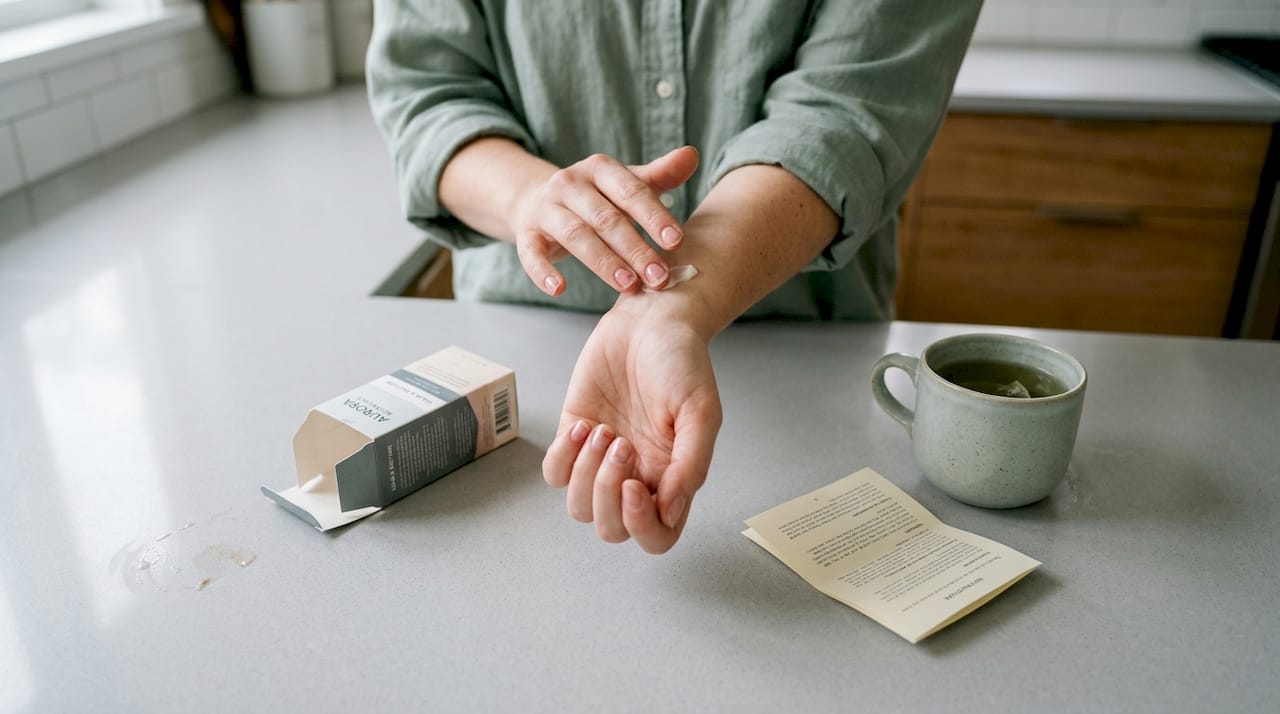
Before starting any new product, patch test. Apply a small amount behind your ear or on your inner wrist for 24 hours. If you see redness, swelling, or itching, skip it. This one step can save you from a painful reaction that sets your skin back weeks.
| Product category | Key ingredient examples | What it does |
|---|---|---|
| Gentle cleanser | Glycerin, ceramides | Removes debris, preserves barrier |
| Acne treatment | Benzoyl peroxide, salicylic acid, retinol | Kills bacteria, unclogs pores, boosts cell turnover |
| Moisturizer | Hyaluronic acid, niacinamide | Hydrates, supports skin barrier |
| SPF 30+ | Zinc oxide, chemical filters | Protects against UV damage and hyperpigmentation |
According to practice guidelines for acne management, a standard acne-care workflow involves gentle cleansing twice daily, targeted treatments, moisturizing, and broad-spectrum SPF 30+ in the morning. That’s it. The routine is simple by design.
Pro Tip: If your skin is oily, you might feel tempted to skip moisturizer. Don’t. When your skin is stripped of hydration, it overproduces oil to compensate. A lightweight, oil-free moisturizer actually helps calm that cycle down.
Step-by-step: The daily acne-care routine
Now that you have your essentials, here’s exactly how to bring your acne-care workflow to life every morning and night.
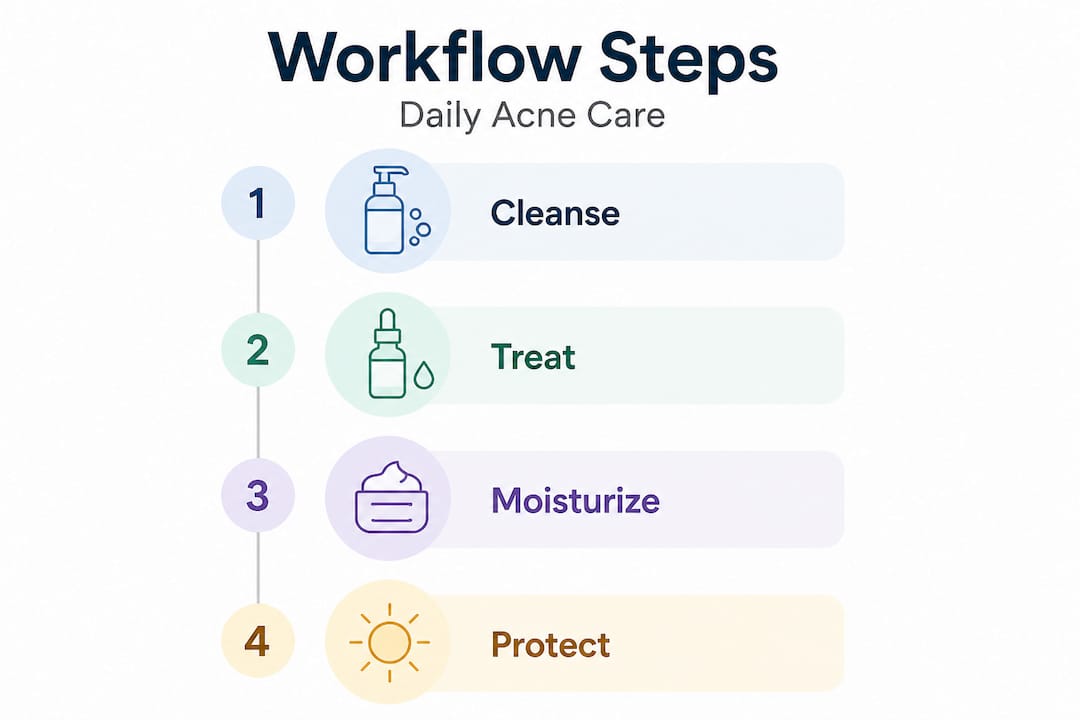
Getting the order right matters more than most people realize. Applying products in the wrong sequence can reduce their effectiveness or cause unnecessary irritation. Here’s a clear breakdown of what to do each day.
Morning routine:
- Cleanse with a gentle, fragrance-free face wash. Use lukewarm water and your fingertips, not a scrubbing brush. Rinse thoroughly and pat dry with a clean towel.
- Apply your acne treatment. If you’re using benzoyl peroxide or salicylic acid, a thin layer across the affected areas is enough. Let it absorb for about 60 seconds before moving on.
- Apply moisturizer. Use a pea-sized amount. Press it gently into the skin rather than rubbing aggressively.
- Finish with SPF 30+. Apply it as the final step before makeup or going outside. Don’t skip this even on cloudy days.
Evening routine:
- Cleanse again with the same gentle cleanser to remove sunscreen, sweat, and any buildup from the day.
- Apply your acne treatment or retinoid. Evening is the ideal time for retinoids (vitamin A derivatives) because UV light can degrade them. Start with two nights per week if you’re new to retinoids to avoid peeling.
- Moisturize. Night is when your skin repairs itself, so don’t skip this step.
For teens dealing with hormonal acne, breakouts tend to cluster around the jawline, chin, and forehead. Stick with salicylic acid treatments and consider a low-strength retinol to start. For adults in their 20s and 30s who experience persistent acne, a retinoid combined with niacinamide in your moisturizer is often more effective. The AAD guidelines for acne vulgaris management strongly support using topical benzoyl peroxide and retinoids for mild to moderate acne, with oral options reserved for more severe or persistent cases.
Check out these daily skin routine tips to make the most of every step.
“Consistency is the most effective ingredient.”
Pro Tip: Put your skincare products where you’ll actually see them. Keeping them on your bathroom counter (rather than a drawer) means fewer skipped nights. If you travel often, set up a small travel kit so your routine doesn’t fall apart when you’re away from home.
Troubleshooting: Common mistakes and how to fix them
Even with a guideline-based routine, mistakes can sabotage results. Let’s spot and solve them.
Most people who feel like “nothing works” are making one or more of these common errors. The fix is usually simpler than they expect.
Mistakes that wreck your routine:
- Over-scrubbing: Using rough exfoliants or scrubbing too hard strips away your skin barrier. This triggers inflammation, which makes acne worse. Stick to chemical exfoliants like salicylic acid and use them as directed, not every hour.
- Using too many actives at once: Layering benzoyl peroxide, a retinoid, an AHA, and a vitamin C serum all in the same routine is a recipe for irritation. Start with one active ingredient and add another only after your skin has adjusted over four to six weeks.
- Skipping SPF: This is the most ignored step in acne care. Acne treatments make your skin more sensitive to UV rays. Skipping sunscreen leads to post-acne dark spots called post-inflammatory hyperpigmentation, which can last months.
- Picking pimples: Squeezing or popping pimples pushes bacteria deeper into the skin and breaks down surrounding tissue. This slows healing and significantly raises your risk of permanent scarring.
- Switching products too fast: If you switch every two weeks because you haven’t seen dramatic results, you’re resetting the clock every time. A routine needs four to six weeks of consistent use before you can fairly judge whether it’s working.
As noted in a report on why over-treating backfires, over-treatment with harsh actives damages the skin barrier and actually worsens acne long term. Balance and hydration are what keep a routine working.
You are not alone in this.
Acne affects 85% of adolescents at some point. That’s nearly every teen. Knowing how widespread it is doesn’t make your breakouts less frustrating, but it does mean there’s a large, research-backed body of knowledge about what works.
For people struggling with excess shine alongside breakouts, the guide on managing oily skin naturally offers practical adjustments that complement your acne routine without adding more products to the mix.
Customizing and maintaining your routine for long-term clear skin
Having covered fixes for common mistakes, let’s look at how to refine and sustain a workflow that will keep your skin consistently clear.
Acne severity varies widely, and so does the right approach. Here’s how to calibrate your routine based on where you’re starting from.
| Acne severity | Recommended approach | When to escalate |
|---|---|---|
| Mild (a few whiteheads, blackheads) | Salicylic acid cleanser, gentle retinol, SPF | After 6 weeks with no improvement |
| Moderate (inflamed pimples, some cysts) | Benzoyl peroxide, retinoid, non-comedogenic moisturizer | Scarring or spread after 4 weeks |
| Severe (widespread inflammation, cysts) | Dermatologist visit, possible oral medication | Immediately if cysts or deep nodules appear |
How to adjust your routine over time:
- Start with the minimum effective routine: cleanser, one treatment, moisturizer, SPF.
- After four weeks, assess your skin. If you’re seeing fewer breakouts, stay the course.
- If you’re seeing no change, consider upgrading your treatment strength or adding a second active (like moving from salicylic acid to a retinoid).
- Once your skin clears significantly, shift into maintenance mode. Use your retinoid two or three nights per week instead of every night to prevent relapse.
- Watch for early signs of a breakout returning, such as increased oiliness or small bumps, and respond quickly rather than waiting until things escalate.
The idea that you need a 10-step routine or a shelf full of serums is mostly driven by marketing. According to the AAD’s guide for skincare, the priority is a simple, consistent routine tailored to your acne severity, particularly for the 15 to 35 age range. Teens benefit most from targeting hormonal triggers, while adults in their late 20s and 30s often need persistent treatment strategies. An evidence-based review of current approaches shows that trendy multi-step Korean beauty routines and “clean beauty” claims can sometimes delay real results by adding unnecessary steps or products that irritate sensitive acne-prone skin.
The basic skincare workflow at Skin-Styles maps out exactly which steps belong in a sustainable, long-term routine without the clutter.
On diet and sun exposure: Many people believe cutting out dairy or chocolate will clear their skin. Current guidelines say diet and sun exposure have minimal direct impact on acne for most people. Focus your energy on the routine, not food elimination experiments.
Why simplicity and patience beat complex skincare fads
You’ve seen how to craft and tweak your workflow. Now let’s step back and rethink how to succeed long term.
Here’s an uncomfortable truth: the skincare industry profits from convincing you that your current routine isn’t enough. New “revolutionary” ingredients appear every few months. Retinol gets replaced by bakuchiol. Salicylic acid is upstaged by polyhydroxy acids. None of these shifts are as dramatic as the marketing suggests. The basics still dominate.
In our experience watching people go through acne care cycles, the people who see the clearest, most lasting improvement are almost never the ones using the most advanced or expensive products. They’re the ones who cleanse twice a day, apply one good treatment consistently, and never skip SPF. It’s boring. It works.
The science here is worth paying attention to. Research into the skin microbiome and barrier protection shows that supporting your skin’s ecosystem with moisturizer and sunscreen actually enhances the protective bacteria living on your skin’s surface. Over-exfoliating or layering harsh actives wipes these out. You’re not just irritating your skin when you overdo it. You’re destroying a natural defense system.
There’s also the patience factor. Four to six weeks feels like forever when you’re 17 and dreading school photos. But skin cell turnover takes roughly 28 days. Any treatment needs at least that long before you’ll see meaningful change. Quitting at week two means you’ll never know if it was about to work.
The smartest move you can make is to commit to stepwise skincare building rather than chasing every new product launch. One simple, dialed-in routine repeated daily will always outperform a complicated one done inconsistently.
Ready to upgrade your acne-care routine?
With your workflow mapped out and test-driven, the right products can make your next step even more seamless.
At Skin-Styles, we’ve put together a curated selection of products that fit naturally into every phase of the acne-care workflow you just built. Whether you need a targeted spot treatment, a lightweight moisturizer that won’t clog pores, or a gentle daily cleanser, we have you covered.

Browse our collection of facial creams and gels to find effective, non-comedogenic options designed for acne-prone skin. If you want tried-and-true formulas with a strong following, check out our Cosrx acne solutions lineup. Cosrx has become a go-to brand for people serious about managing acne without overloading their skin. Find the essentials that work for your routine and your budget, all in one place.
Frequently asked questions
How long before I see results with a new acne-care workflow?
Most people notice improvement within 4 to 6 weeks if they follow a routine consistently, as recommended by dermatologist guidelines. Jumping between products before this window closes will reset your progress.
Should I moisturize even if my skin is oily or acne-prone?
Yes. Skipping moisturizer signals your skin to overproduce oil, making breakouts worse. Research on the skin microbiome and barrier shows that consistent moisturizer use supports your skin’s protective function.
Do diet or sun exposure significantly affect acne?
For most people, the direct impact is minimal according to current practice guidelines. Focus your energy on maintaining a consistent daily routine rather than eliminating food groups.
Is it safe to use multiple acne treatments at once?
Simple combinations work better than stacking many actives. Over-treatment damages the barrier, causes irritation, and can actually trigger more breakouts. Introduce one new treatment at a time.
When should I see a dermatologist for acne?
If your acne is severe, causing visible scars, or showing no improvement after six weeks of consistent care, it’s time to get professional help. The AAD recommends escalating care whenever scarring is involved or standard treatments aren’t working.