

TL;DR:
- Feeding tools should match a baby’s developmental stage to support skill-building.
- Phased feeding sets help prevent food refusal and frustration by evolving with baby’s abilities.
- Flexibility and caregiver responsiveness are key to successful and confident feeding practices.
Most parents assume that as long as a spoon reaches the baby’s mouth, the feeding gear doesn’t really matter. That belief leads to weeks of frustration, food refusals, and messy floors that never seem to get better. The reality is that feeding is a skill, not just a reflex, and the tools you use either support or hinder that skill-building. Phased feeding sets are built around one powerful idea: your baby’s feeding ability changes month by month, and your gear should change with it. This guide explains what phased feeding sets actually are, why child development research backs them, and how to use them at home without overcomplicating things.
Table of Contents
- What are phased feeding sets and how do they work?
- The developmental science behind phased feeding
- Phased feeding sets vs. ‘one-size-fits-all’ methods: What’s the difference?
- How to use phased feeding sets effectively at home
- Why flexibility matters more than any feeding set
- Discover the next step in easy feeding
- Frequently asked questions
Key Takeaways
| Point | Details |
|---|---|
| Structured skill building | Phased feeding sets align with your baby’s development, helping them acquire feeding skills step by step. |
| Lower stress transitions | Using these sets minimizes frustration and mess for both parents and children during feeding changes. |
| Evidence-informed approach | Research suggests phased feeding supports healthy habits, though individual timelines may vary. |
| Flexibility is key | Adapting sets and routines to your child’s signals is more effective than rigid schedules. |
What are phased feeding sets and how do they work?
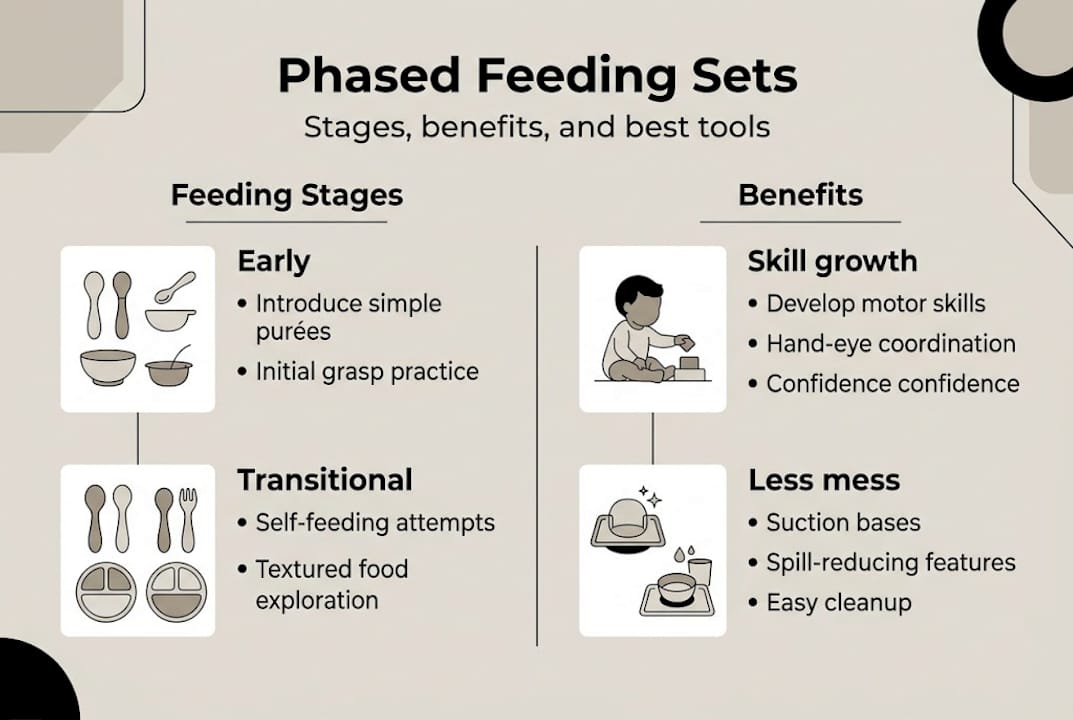
Phased feeding sets are collections of feeding tools grouped by developmental stage. Instead of handing your six-month-old the same spoon you’d use for an 18-month-old, these sets match the tool to the skill level. Early phases typically include soft-tipped spoons, shallow bowls, and puree-friendly designs. Later phases introduce deeper bowls, fork-friendly plates, and items built for self-feeding practice.
Phased feeding sets are designed to match a baby’s evolving feeding skills, progressing from smooth textures to more complex foods and tools as coordination grows. This isn’t marketing language. It reflects how oral-motor skills, hand-eye coordination, and sensory acceptance actually develop in the first two years of life.
Here’s what supporting healthy infant development through the right tools actually looks like across phases:
- Phase 1 (around 4 to 6 months): Silicone-tipped soft spoons, small shallow bowls for purees, and bibs with deep catch pockets
- Phase 2 (around 6 to 9 months): Slightly deeper bowls with suction bases, thicker-grip spoons, and divided plates to separate textures
- Phase 3 (around 9 to 12 months): Fork-friendly options, open cups with small sips, and self-feeding starter plates
- Phase 4 (12 months and beyond): Full self-feeding sets with plates, utensils, and cups that build independence
The key difference between phased sets and random gear is intentionality. A random collection of bowls and spoons might technically work, but it doesn’t teach your child anything. Phased sets teach grip, encourage exploration, and reduce frustration by meeting your child where they actually are.
Pro Tip: Don’t use age as the only signal to advance phases. Watch your baby’s behavior. If they’re grabbing the spoon or leaning forward for bites, those are readiness cues that matter more than the number on the calendar.
| Phase | Age range | Key tools | Food texture |
|---|---|---|---|
| 1 | 4 to 6 months | Soft spoon, shallow bowl | Smooth purees |
| 2 | 6 to 9 months | Suction bowl, thick-grip spoon | Mashed textures |
| 3 | 9 to 12 months | Divided plate, starter fork | Soft chunks |
| 4 | 12+ months | Full self-feeding set, open cup | Table foods |
The developmental science behind phased feeding
Feeding a baby isn’t just about nutrition. It’s a full-body learning experience. Your child is simultaneously practicing mouth movements, swallowing control, hand-to-mouth coordination, and sensory tolerance every single time they eat. That’s a lot happening in one high chair session.
Research confirms that feeding is a developmental process involving multiple skills, and that appropriate texture and tool progression is central to helping babies avoid feeding difficulties down the line. Skipping stages, like jumping from purees to whole foods too quickly, can lead to texture aversion, gagging that becomes habitual, or outright refusal.
Here are five key developmental skills that phased feeding directly supports:
- Oral-motor control: Learning to move food around the mouth before swallowing
- Swallowing coordination: Managing thicker textures as throat muscles strengthen
- Hand-eye coordination: Guiding utensils toward the mouth with increasing accuracy
- Sensory acceptance: Building tolerance for new textures, temperatures, and smells
- Self-regulation: Recognizing hunger and fullness cues during a meal
Comparison of phased vs. non-phased approaches:
| Outcome area | Phased feeding | Non-phased feeding |
|---|---|---|
| Texture acceptance | Gradual and positive | Often inconsistent |
| Frustration levels | Generally lower | Often higher |
| Skill development | Structured and supported | Can miss key stages |
| Parent confidence | Increases with guidance | Often uncertain |
One important caveat: variability in feeding skill measurement means there’s no single universal timeline. What works for one baby may not work the same way for another, due to a lack of standardized assessment tools across the field.
Feeding progress isn’t a race. Some babies need more time at one phase before moving forward. The goal is readiness, not speed. Flexibility within a structured system is what produces lasting results.
This is why using a feeding routine guide alongside phased tools makes such a practical difference. Routine provides the container; phased tools provide the scaffolding.
Phased feeding sets vs. ‘one-size-fits-all’ methods: What’s the difference?
Walk into any big-box baby store and you’ll find aisles of colorful bowls, spoons, and plates with no developmental guidance attached. These items aren’t bad, but they’re not designed to teach anything. That’s the core problem with one-size-fits-all feeding gear.
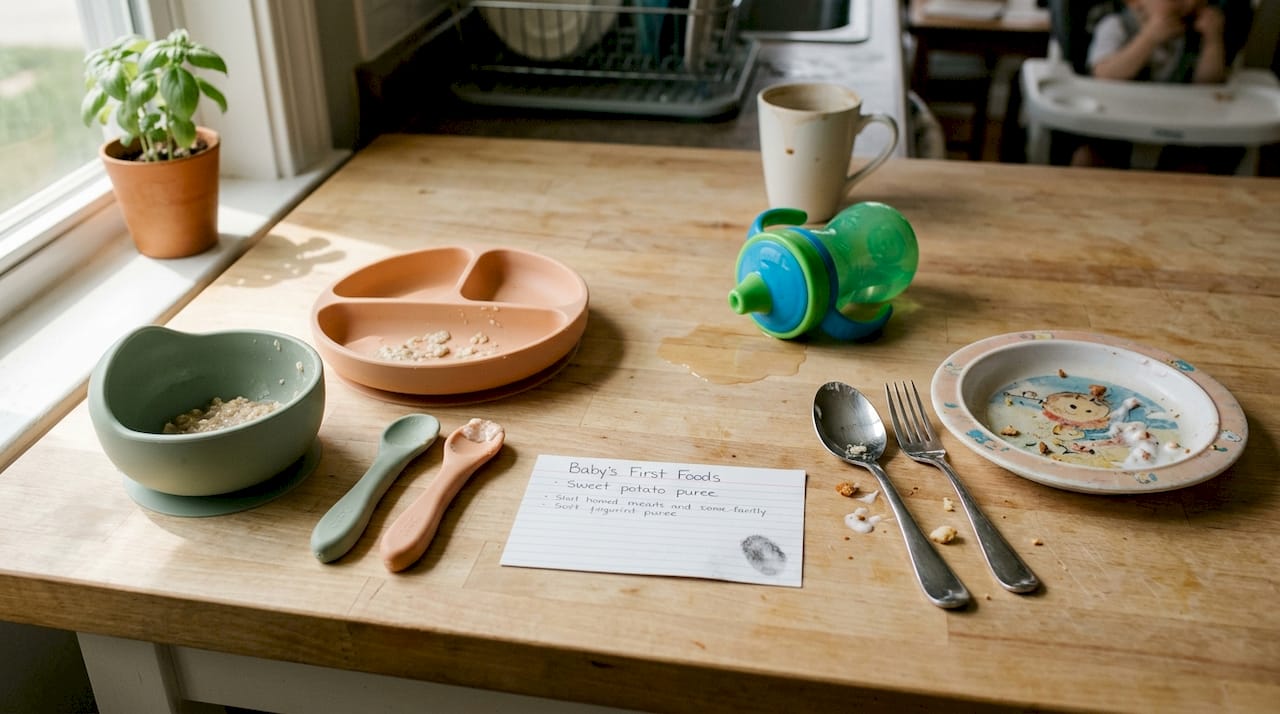
Generic approaches assume that any spoon works for any age. But a toddler spoon handed to a six-month-old with limited grip strength creates a guaranteed mess and a frustrated baby. Phased sets are built around your child’s actual ability at each stage, not a generalized average.
Top four benefits of phased feeding approaches:
- Reduces feeding frustration by giving babies tools they can actually use
- Encourages independence by progressively introducing self-feeding elements
- Supports texture progression so babies aren’t overwhelmed by food changes
- Builds caregiver confidence because parents have a clear, stage-based roadmap
Responsive feeding, where caregivers follow the baby’s hunger and fullness cues in real time, is a widely praised philosophy. However, responsive feeding does not always have consistent or proven benefits for all infants, particularly preterm babies, where outcomes vary significantly. Phased sets offer something responsive feeding alone can’t always provide: physical structure that meets the child’s motor skills head-on.
This is where practical parents find the sweet spot. You can embrace responsiveness and use phased tools. They’re not opposing approaches. The tools give you structure; your attentiveness gives the tools meaning.
For parents also navigating the mess factor, pairing phased sets with mess-free feeding strategies dramatically changes the mealtime experience, especially during the transition to chunky or self-fed foods.
How to use phased feeding sets effectively at home
Owning a phased feeding set is only half the equation. How you use it determines whether your baby thrives or just tolerates mealtime. Here’s a simple five-step routine that works across different schedules and household setups.
- Identify your baby’s current phase by observing how they handle food, grip, and swallowing rather than relying only on age recommendations
- Set up a consistent mealtime space with the appropriate phase tools ready before your baby gets hungry and impatient
- Introduce the tool before the food by letting your baby handle the spoon or bowl during a non-feeding moment so it doesn’t feel foreign
- Watch for advancement cues like reaching for the spoon, chewing efficiently, or showing frustration with textures they previously accepted
- Advance only when ready and never feel pressure to rush phases because another baby seems further along
Readiness cues matter more than any schedule. Paced feeding and phased tools work best when combined with genuine caregiver observation. No preset timetable fits every child.
Pro Tip: If your baby refuses a new phase tool, go back to the previous one for a week. Regression isn’t failure. It’s information about where your child actually is right now.
For broader context on daily routines, the feeding tips for parents on our site cover the nuances that a tool set alone can’t address, from timing meals to reading fullness signals.
Common troubleshooting situations:
- Refusal to use new utensils: Let babies explore tools during play, not just mealtimes
- Increased mess at a new phase: Totally normal during skill transitions; suction bowls help
- Impatience from caregivers: Remind yourself that a five-minute messy meal is still a learning win
Why flexibility matters more than any feeding set
Here’s the opinion that often gets left out of baby feeding conversations: the tool is never the whole answer. We’ve seen parents invest in beautiful, well-designed phased feeding sets and still struggle because they’re following the phase chart more than they’re following their baby.
Strict adherence to any system, no matter how well researched, can work against you if your baby isn’t showing the developmental signs that justify moving forward. The families who report the most success with phased approaches are the ones who treat the set as a guide, not a contract.
Industry voices increasingly support this idea. Caregiver responsiveness is what drives better feeding outcomes, with the physical tools providing helpful support rather than leading the process.
A great feeding set is a tool, not a script. True progress comes from following your child’s lead.
Mixing structured products with flexible observation isn’t a compromise. It’s the actual best practice. A set gives you a framework; your child tells you how fast to move through it. Combining both is what separates a frustrating feeding journey from a genuinely rewarding one. Pairing thoughtful feeding habits with safe skincare and feeding routines rounds out a holistic approach to your baby’s daily care.
Discover the next step in easy feeding
If the science and practical guidance here have made phased feeding feel accessible, the next step is finding the right set to start with. A well-designed tool makes all the difference when you’re ready to put these ideas into action.

Our 8-piece silicone baby feeding set is BPA-free, includes suction plates and bowls, and is built specifically for toddler self-feeding transitions. It’s a practical match for the phased approach covered in this guide. Skin Styles also carries baby skincare essentials and other family care products, because we believe great baby care goes beyond the high chair.
Frequently asked questions
What age should I start using phased feeding sets?
Most phased feeding sets are ideal for babies transitioning to solids. Feeding tool progression typically begins around 6 months, though your child’s individual readiness always takes priority over a fixed age.
Can phased feeding sets be used for both breastfed and formula-fed babies?
Yes, phased feeding tools support skill progression regardless of feeding background. Pacing methods work with different feeding styles and are not limited to one approach.
Do phased feeding sets reduce mealtime messes?
By matching utensils to your baby’s actual abilities, phased sets often reduce mess and build confidence. Appropriate feeding tools can make meals less messy and frustrating for both baby and caregiver.
Is there scientific proof that phased feeding sets work better?
Research supports skill-based feeding progressions, though individual results vary. Formal measurement tools for feeding outcomes are still being standardized, meaning evidence is positive but not yet fully uniform across studies.