

Finding skincare solutions that truly work can feel overwhelming for those living with sensitive skin. Discomfort from burning, itching, or redness often strikes after using everyday products or with changing weather. Since sensitive skin affects 50 to 70 percent of people globally, understanding personal triggers and safe beauty routines matters more than ever. This guide offers practical strategies to help you pinpoint sensitivities, choose gentle products, and maintain a soothing, consistent routine.
Table of Contents
- Step 1: Identify Key Skin Sensitivities And Triggers
- Step 2: Select Gentle Skincare Products And Routines
- Step 3: Apply Soothing And Protective Methods Daily
- Step 4: Monitor Skin Reactions And Adjust Care
- Step 5: Maintain A Consistent, Healthy Skincare Regimen
Quick Summary
| Key Insight | Explanation |
|---|---|
| 1. Identify skin triggers | Track irritants and responses to customize your skincare routine effectively. |
| 2. Choose gentle products | Select fragrance-free, hypoallergenic options suited for sensitive skin. |
| 3. Implement daily protection | Use sunscreen, mild cleansers, and moisturizers to prevent flare-ups. |
| 4. Monitor skin reactions | Document symptoms and triggers to refine your skincare approach. |
| 5. Establish a consistent regimen | Maintain a daily routine to strengthen your skin’s barrier and health. |
Step 1: Identify key skin sensitivities and triggers
Understanding your skin’s unique sensitivities is the first critical step in managing sensitive skin effectively. Sensitive skin affects 50-70% of people globally, making it crucial to recognize your specific triggers.
To identify your skin sensitivities, start by systematically tracking potential irritants and your skin’s reactions. Key triggers typically include:
- Environmental factors like extreme temperatures and wind
- Cosmetic and personal care products
- Chemical irritants in soaps and detergents
- Stress and hormonal changes
- UV exposure and pollution
Keep a detailed skin reaction journal documenting when flare-ups occur, noting specific products used, environmental conditions, and symptoms. Objective skin reactions include visible signs like discoloration and bumps, while subjective reactions involve sensations like burning and itching.
Here is a quick comparison of common sensitive skin triggers and example irritants:
| Trigger Type | Typical Irritant Examples | Reaction Signs |
|---|---|---|
| Environmental | Wind, heat, cold | Redness, dryness |
| Cosmetic Products | Fragrances, harsh preservatives | Burning, stinging |
| Chemical Irritants | Detergents, household cleaners | Itching, rash |
| Physical Stressors | Stress, hormonal shifts | Flare-ups, inflammation |
| UV/Pollution | Sun exposure, city air pollution | Discoloration, sensitivity |
Consider conducting a patch test with new products on a small skin area, waiting 24-48 hours to observe potential reactions. This methodical approach helps you pinpoint exact sensitivities and develop a targeted skincare strategy.
Pro tip: Take smartphone photos of skin reactions to track changes and show dermatologists precise visual documentation of your sensitive skin symptoms.
Step 2: Select gentle skincare products and routines
Building a skincare routine for sensitive skin requires careful product selection and strategic approach. Gentle skincare routines prioritize simple, effective products that minimize potential irritation while supporting skin health.
When selecting skincare products for sensitive skin, focus on these essential criteria:
- Products with minimal ingredient lists
- Fragrance-free formulations
- Hypoallergenic certifications
- Non-comedogenic options
- Products specifically designed for sensitive skin
Recommended product types include mild cleansers, hydrating moisturizers, and protective sunscreens. Products with the National Rosacea Society Seal of Acceptance can help minimize adverse reactions, ensuring higher compatibility with sensitive skin conditions.

Consider consulting a dermatologist to develop a personalized skincare routine tailored to your specific sensitivities. Some individuals might benefit from targeted products containing soothing ingredients like hyaluronic acid, ceramides, or niacinamide that help strengthen the skin barrier.
Pro tip: Perform a patch test with new products on a small skin area and wait 48 hours to check for potential reactions before full application.
Step 3: Apply soothing and protective methods daily
Managing sensitive skin requires a consistent daily approach that protects and nurtures your skin’s delicate balance. Dermatologists recommend daily protective strategies to maintain skin health and prevent potential irritations.
Your daily sensitive skin protection routine should include these essential steps:
- Apply broad-spectrum sunscreen (SPF 30 or higher)
- Use gentle, fragrance-free moisturizers
- Cleanse with mild, non-irritating products
- Avoid hot water when washing
- Wear protective clothing outdoors
Moisturizing techniques play a crucial role in maintaining skin comfort. Applying moisturizers with ceramides and lipids helps restore the skin barrier, providing essential protection against environmental stressors.
Pay special attention to your skin’s unique needs by monitoring how it responds to different environmental conditions and adjusting your routine accordingly. Some individuals might require additional protective measures like using specialized soothing serums or wearing protective layers during extreme weather.
Pro tip: Keep your skincare products at room temperature and apply them in a consistent, gentle manner to minimize potential skin irritation.
Step 4: Monitor skin reactions and adjust care
Sensitive skin requires ongoing attention and careful observation to prevent and manage potential irritations. Monitoring skin reactions helps identify specific triggers and symptoms that can impact your overall skin health and comfort.
Track your skin’s responses using these systematic methods:
- Document specific symptoms like redness, itching, or burning
- Note environmental conditions during reactions
- Record new product introductions and corresponding skin changes
- Take weekly photographs to track visual changes
- Create a detailed symptom and trigger journal
Reaction tracking strategies involve understanding both subjective sensations and visible changes. Allergy testing and patch testing can precisely identify potential allergens causing adverse skin responses.
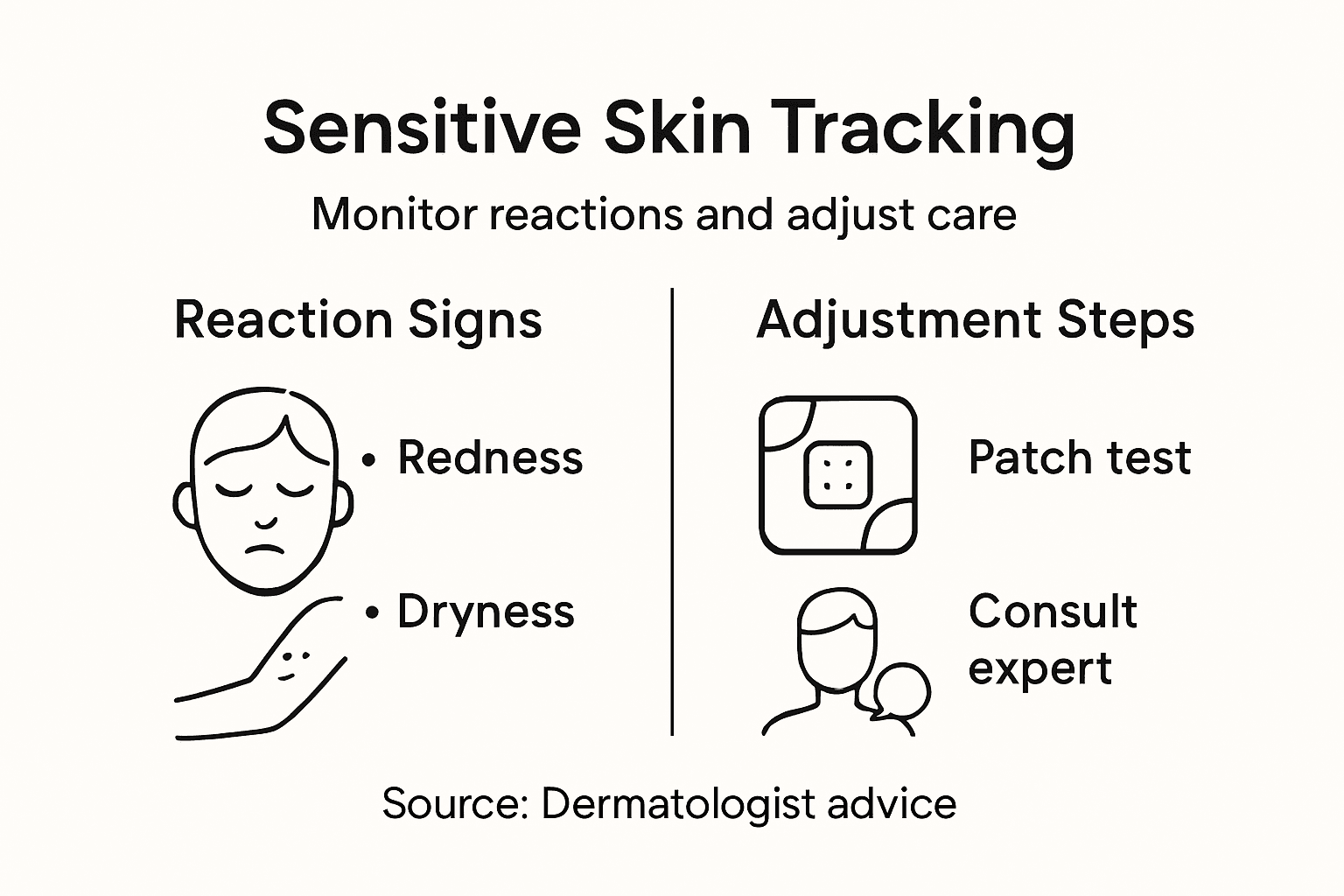
Consult a dermatologist if you notice persistent or escalating skin reactions. Professional guidance can help you develop a targeted approach to managing your unique skin sensitivities, potentially preventing long-term complications.
Pro tip: Use a digital spreadsheet or dedicated smartphone app to consistently log skin reactions, making it easier to identify patterns and share comprehensive information with healthcare professionals.
Step 5: Maintain a consistent, healthy skincare regimen
Consistency is the cornerstone of effective skincare, especially for those with sensitive skin. A daily routine supports skin’s barrier function and overall health, helping you manage and prevent potential irritations.
Establish a reliable skincare routine with these essential steps:
The following table summarizes the roles of essential skincare routine steps for sensitive skin:
| Routine Step | Purpose | Example Product Type |
|---|---|---|
| Cleansing | Removes dirt with minimal irritation | Gentle foaming cleanser |
| Moisturizing | Reinforces skin barrier | Fragrance-free cream |
| Sun Protection | Shields from UV and pollutants | Mineral sunscreen |
| Targeted Care | Addresses specific skin needs | Soothing serum |
- Cleanse twice daily with gentle, non-irritating products
- Apply moisturizer immediately after cleansing
- Use broad-spectrum sunscreen every morning
- Target specific skin concerns with specialized treatments
- Perform weekly skin assessments
Personalized skincare strategies involve adapting your routine to your unique skin needs. Active ingredients like vitamin C can address specific skin concerns while maintaining overall skin health.
Remember that skincare is not one-size-fits-all. Pay attention to how your skin responds to different products and be willing to make incremental adjustments. Consistency does not mean rigidity but rather a thoughtful, responsive approach to skin maintenance.
Pro tip: Set daily smartphone reminders for your skincare routine to ensure you maintain consistent application times and product sequence.
Discover Gentle Solutions for Sensitive Skin Comfort
Managing sensitive skin means understanding its unique needs and avoiding common triggers like harsh ingredients and environmental stressors. This article outlined how to choose gentle products and build routines that protect and soothe your delicate skin. If redness, itching, or burning feel familiar, finding the right skincare essentials is key to lasting comfort.
Experience the difference that careful product selection can make by exploring our collection of Facial Cleansers crafted for sensitive skin. Complement your routine with nourishing options from the SKIN 1004 range, known for its soothing, hypoallergenic formulations designed to strengthen your skin barrier.

Start your journey to calm, healthy skin today by visiting Skin-Styles.com. Shop now for gentle, effective products tailored to sensitive skin needs and enjoy a skincare routine that truly works for your lasting comfort.
Frequently Asked Questions
How can I identify my specific skin sensitivities?
To identify your specific skin sensitivities, track your skin’s reactions to potential irritants in a journal. Note the products you use, environmental conditions, and symptoms, and look for patterns over time.
What should I look for in skincare products for sensitive skin?
When selecting skincare products for sensitive skin, focus on those with minimal ingredient lists, fragrance-free formulations, and hypoallergenic certifications. Aim to choose products designed specifically for sensitive skin to reduce the risk of irritation.
How often should I apply sunscreen to protect my sensitive skin?
You should apply broad-spectrum sunscreen with an SPF of 30 or higher every morning and reapply every two hours when outdoors. Consistent application helps protect your sensitive skin from UV damage and environmental pollutants.
What daily steps should I include in my sensitive skincare routine?
Your daily skincare routine for sensitive skin should include gentle cleansing, moisturizing immediately after cleansing, and sun protection each morning. Stick to these essential steps to maintain your skin’s barrier function and overall health.
How can I effectively monitor my skin reactions?
To monitor your skin reactions effectively, keep a detailed journal documenting symptoms, new products, and environmental conditions. Take weekly photographs to track visible changes and adjust your skincare routine accordingly.
What soothing ingredients should I look for to help manage sensitive skin?
Look for soothing ingredients like hyaluronic acid, ceramides, or niacinamide when choosing products for sensitive skin. Incorporate these ingredients to help strengthen your skin barrier and reduce irritation over time.