

Finding the right exfoliant can feel confusing when every product promises glowing results. If you have ever wondered why some women see smoother, brighter skin after switching up their skincare routines, the answer often lies in the power of chemical exfoliants like Alpha Hydroxy Acids (AHAs) and Beta Hydroxy Acids (BHAs). These ingredients target different concerns and skin types, helping you confidently address issues from rough texture to stubborn clogged pores.
Table of Contents
- Understanding AHAs And BHAs In Skincare
- Types And Key Differences Explained
- How Chemical Exfoliation Works
- Common Uses For Various Skin Types
- Risks And Safe Application Guidelines
- Alternatives And Combining Options
Key Takeaways
| Point | Details |
|---|---|
| Understand AHAs and BHAs | AHAs are water-soluble and ideal for dry, sun-damaged skin, while BHAs are oil-soluble and best for oily, acne-prone skin. |
| Chemical Exfoliation Benefits | Chemical exfoliants provide controlled exfoliation at a cellular level, improving skin texture and promoting hydration without physical abrasion. |
| Skin Type Considerations | Tailor your exfoliation strategy to your skin type, using AHAs for dry skin and BHAs for oily skin, and gradually increase concentrations. |
| Safety Protocols | Always perform a patch test, start with lower concentrations, and use sunscreen daily to minimize potential risks associated with chemical exfoliants. |
Understanding AHAs and BHAs in Skincare
Skincare enthusiasts are increasingly turning to chemical exfoliants to transform their complexion, and two powerhouse ingredients stand out: Alpha Hydroxy Acids (AHAs) and Beta Hydroxy Acids (BHAs). These skincare superheroes work differently to tackle various skin concerns, offering targeted solutions for diverse skin types and conditions.
AHAs are water-soluble acids primarily derived from fruits and milk, expertly designed for surface exfoliation. Their primary functions include:
- Improving skin texture and tone
- Encouraging cell turnover
- Enhancing skin hydration
- Reducing the appearance of fine lines
- Supporting collagen production
Conversely, BHAs are oil-soluble acids that penetrate deeper into the skin, making them particularly effective for oily and acne-prone complexions. Salicylic acid, the most common BHA, offers unique benefits by:
- Unclogging pores
- Reducing excess sebum production
- Calming inflammation
- Fighting acne-causing bacteria
- Providing mild exfoliation
Chemical exfoliation differs dramatically from traditional physical scrubs. While physical exfoliants mechanically remove dead skin cells, AHAs and BHAs work at a cellular level, dissolving the bonds between skin cells to promote smoother, more radiant skin.
Chemical exfoliants can dramatically improve skin texture and appearance when used correctly.
Pro tip: Start with low concentrations of AHAs or BHAs and gradually increase frequency to allow your skin to build tolerance and minimize potential irritation.
Types and Key Differences Explained
Alpha Hydroxy Acids (AHAs) and Beta Hydroxy Acids (BHAs) represent two distinct categories of chemical exfoliants, each with unique molecular characteristics and skin interactions. Understanding their fundamental differences is crucial for selecting the most effective skincare approach.
AHA Characteristics:
- Water-soluble chemical compounds
- Derived from natural sources like fruits and milk
- Work primarily on skin’s surface layer
- Excellent for dry, mature, and sun-damaged skin
- Improve overall skin texture and tone
BHA Characteristics:
- Oil-soluble chemical compounds
- Primarily represented by salicylic acid
- Penetrate deeper into pores
- Ideal for oily and acne-prone skin types
- Provide deeper cleansing and congestion relief
Molecular Structure Matters. The primary distinction between AHAs and BHAs lies in their solubility and penetration capabilities. Water-soluble AHAs remain on the skin’s surface, while oil-soluble BHAs can navigate through sebum and penetrate deeper into pores.
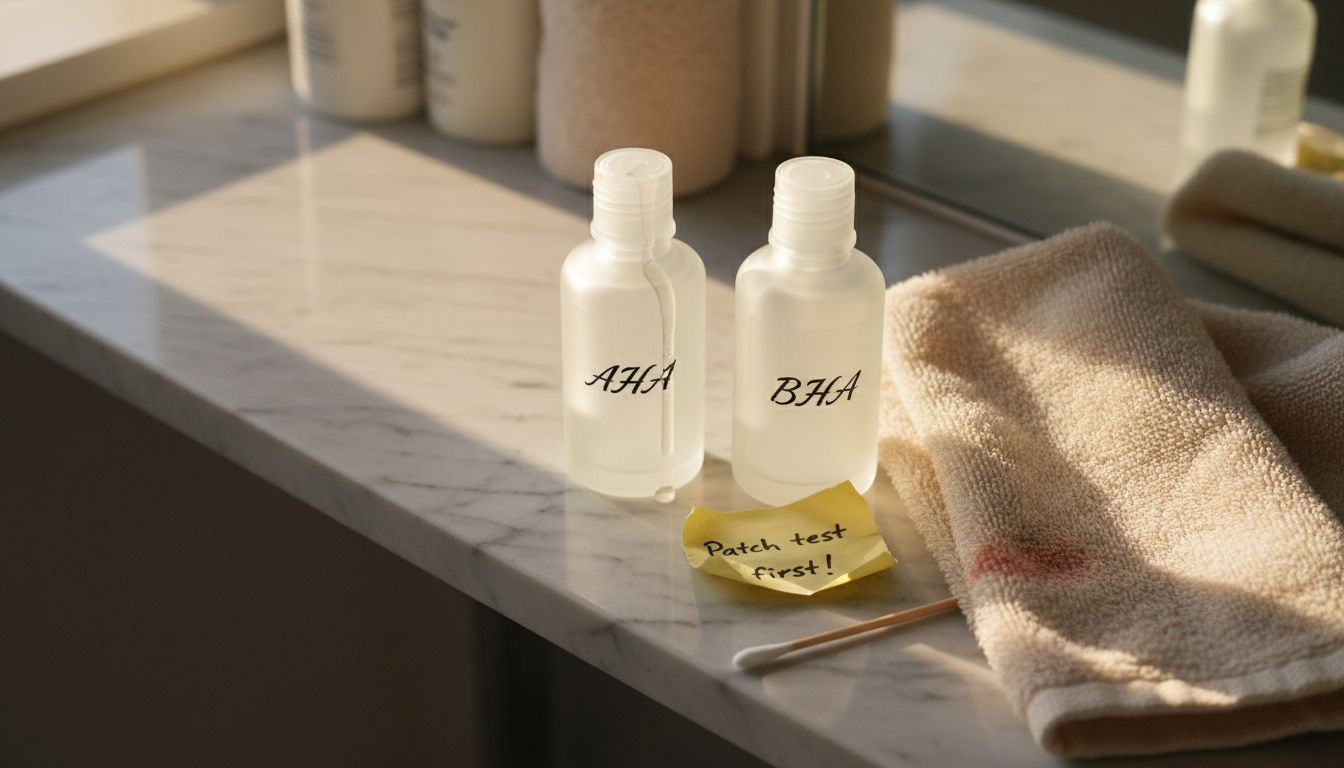
Here is a quick reference comparing AHAs and BHAs for different skin needs:
| Category | AHAs (Alpha Hydroxy Acids) | BHAs (Beta Hydroxy Acids) |
|---|---|---|
| Solubility | Water-soluble, surface action | Oil-soluble, penetrates pores |
| Best for | Dry, sun-damaged, or mature skin | Oily, acne-prone, or congested skin |
| Notable Example | Glycolic, lactic acids | Salicylic acid only |
| Key Drawback | May increase sun sensitivity | May cause dryness in sensitive skin |
Choosing between AHAs and BHAs depends on understanding your unique skin concerns and type.
Pro tip: Consider combining AHAs and BHAs in your skincare routine, but introduce them gradually to prevent potential skin irritation and allow your skin to adapt.
How Chemical Exfoliation Works
Chemical exfoliation is a sophisticated skincare process that goes far beyond traditional scrubbing. Dissolving cellular bonds between skin cells allows for a more refined and targeted approach to skin renewal, revealing smoother, more radiant complexion.
The Mechanism of Chemical Exfoliation:
- Breaks down intercellular connections
- Removes dead skin cells without physical abrasion
- Stimulates natural cell turnover
- Promotes collagen production
- Improves overall skin texture and appearance
Different acids work through unique pathways. AHAs primarily operate on the skin’s surface, gently lifting away dead cells and stimulating hydration. BHAs, being oil-soluble, can penetrate deeper into pores, dissolving sebum and clearing congestion more effectively than surface-level treatments.
Precision Matters. Unlike harsh physical scrubs that can cause micro-tears, chemical exfoliants work at a cellular level, providing controlled and predictable skin renewal.
Chemical exfoliation represents a scientifically advanced approach to skin regeneration.
Pro tip: Always patch test new chemical exfoliants and start with lower concentrations to understand how your unique skin responds.
Common Uses for Various Skin Types
Understanding your skin type is crucial when selecting chemical exfoliants. Different skin types require tailored exfoliation strategies that address unique concerns and prevent potential irritation.
Skin Type Exfoliation Guide:
- Dry Skin: Benefit from mild AHA concentrations
- Oily Skin: Ideal for BHA treatments
- Combination Skin: Requires balanced approach
- Sensitive Skin: Need gentler, lower concentration acids
- Acne-Prone Skin: Best suited for salicylic acid (BHA)
Targeted Acid Recommendations:
- Dry/Sun-Damaged Skin: AHAs (glycolic, lactic acids)
- Improve skin texture
- Enhance hydration
- Reduce fine lines
- Oily/Acne-Prone Skin: BHAs (salicylic acid)
- Unclog pores
- Reduce inflammation
- Control excess sebum
Precision Matters. Concentration is key - typically 10% for AHAs and 1-2% for BHAs, with careful introduction to prevent skin sensitivity.
Effective chemical exfoliation requires understanding your unique skin characteristics.
Pro tip: Start with lowest acid concentrations and gradually increase, always performing a patch test to understand your skin’s tolerance.
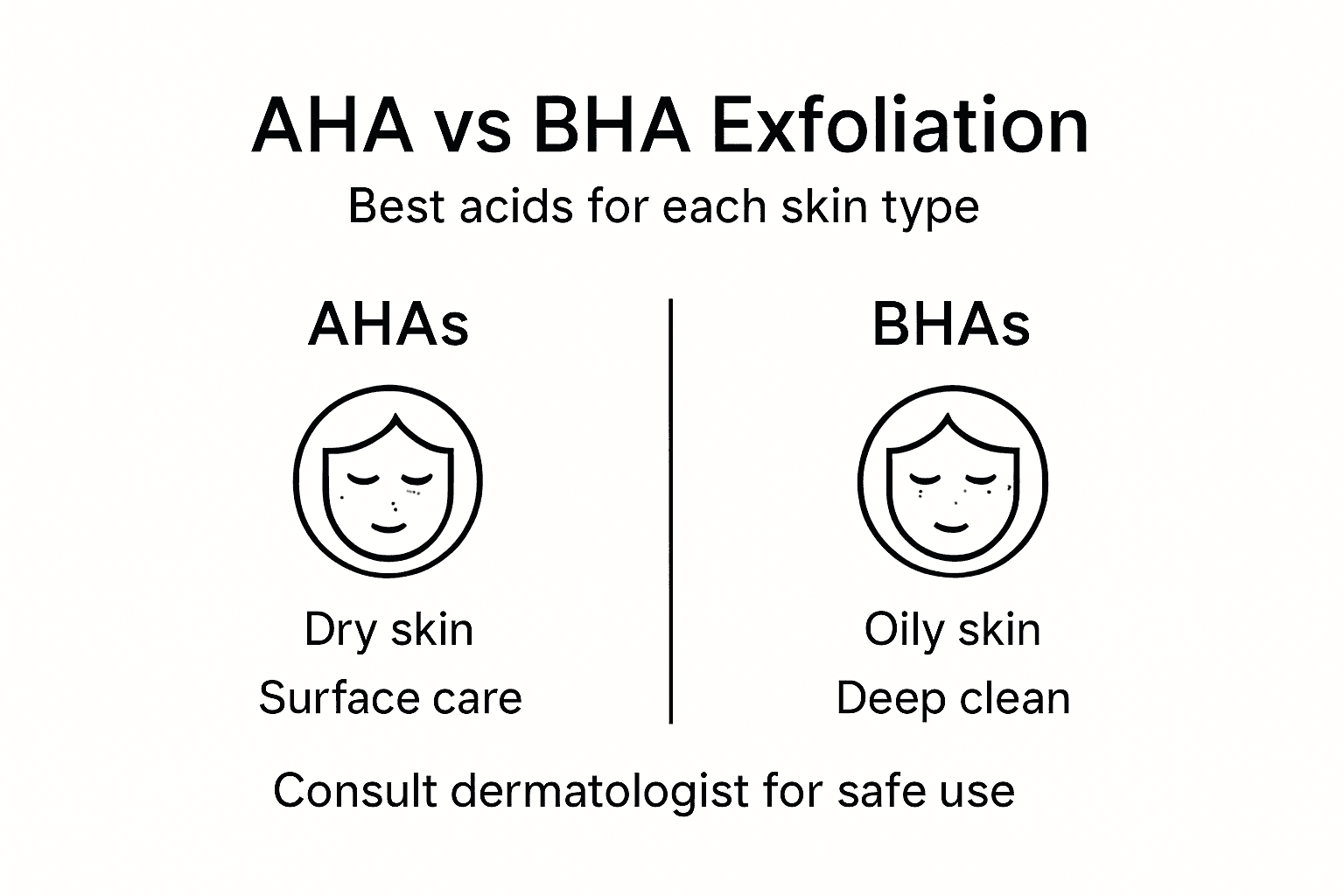
The table below summarizes recommended exfoliant types by skin type:
| Skin Type | Recommended Exfoliant | Typical Frequency |
|---|---|---|
| Dry | Low-strength AHA | 1-2 times per week |
| Oily | Low-strength BHA | 2-3 times per week |
| Combination | AHA or BHA, alternate use | 1-2 times per week |
| Sensitive | Mild AHA or enzyme-based | Once per week |
| Acne-Prone | Salicylic acid (BHA) | 2-3 times per week |
Risks and Safe Application Guidelines
Chemical exfoliants offer transformative skincare benefits, but understanding potential safety risks remains critical. Improper usage can lead to unexpected skin reactions and long-term damage.
Potential Risks of Chemical Exfoliants:
- Increased sun sensitivity
- Potential skin irritation
- Risk of chemical burns
- Potential allergic reactions
- Disruption of skin barrier function
Safety Application Protocols:
- Always perform patch testing
- Start with lowest concentration
- Gradually increase frequency
- Use broad-spectrum sunscreen daily
- Monitor skin’s response carefully
Concentration Guidelines:
- AHAs: Maximum 10% concentration
- BHAs: Maximum 2% concentration
- Sensitive skin: Lower concentrations recommended
- Professional treatments: Higher concentrations under supervision
Proper application and understanding individual skin response are key to safe chemical exfoliation.
Pro tip: Consult a dermatologist before introducing new chemical exfoliants, especially if you have sensitive or reactive skin.
Alternatives and Combining Options
Chemical exfoliation offers powerful skincare benefits, but understanding alternative and complementary approaches can maximize your skin’s potential. When AHAs and BHAs might not be suitable, several alternative exfoliation methods can help maintain skin health.
Alternative Exfoliation Methods:
-
Physical Exfoliation
- Gentle scrubs
- Soft washcloths
- Konjac sponges
-
Enzyme-Based Exfoliation
- Papaya-based treatments
- Pineapple enzyme masks
- Gentle fruit-derived exfoliants
-
Mechanical Exfoliation
- Microdermabrasion
- Professional dermaplaning
- Gentle sonic cleansing devices
Strategic Combination Techniques:
- Alternate AHA and BHA treatments
- Use lower concentrations when combining
- Introduce new products gradually
- Monitor skin’s response carefully
- Always use sun protection
Combining Acid Strategies:
- Mild AHA + Low BHA concentration
- Rotate acid treatments
- Use on alternate days
- Start with patch testing
Successful skincare requires personalized approaches and careful product integration.
Pro tip: Consult a skincare professional to design a customized exfoliation strategy that matches your unique skin profile and concerns.
Unlock Radiant Skin with Expert AHA and BHA Solutions
Struggling to find the right way to exfoliate for brighter, healthier skin? The article “Role of AHAs and BHAs: Exfoliation for Radiant Skin” highlights the challenges of balancing effective chemical exfoliation without irritation. Whether you are dealing with dry, oily, sensitive, or acne-prone skin, understanding how to incorporate Alpha Hydroxy Acids (AHAs) and Beta Hydroxy Acids (BHAs) is crucial for achieving smooth texture and a natural glow.
Take control of your skincare routine with carefully formulated products tailored to your unique needs. Discover moisturizers and cleansers designed to work seamlessly with AHAs and BHAs to boost hydration while gently renewing your skin. At Skin-Styles.com, you can explore a wide range of chemical exfoliants and complementary solutions backed by expert insights.

Experience the benefits of targeted exfoliation and transform your complexion today. Visit Skin-Styles.com now to find the perfect blend of products that suit your skin type. Learn more about how to safely incorporate these powerful acids by browsing our trusted skincare collection. Take the first step to radiant skin with confidence and expert support at Skin-Styles.com.
Frequently Asked Questions
What are AHAs and BHAs in skincare?
AHAs (Alpha Hydroxy Acids) are water-soluble acids derived from fruits and milk, effective for surface exfoliation, improving texture and hydration. BHAs (Beta Hydroxy Acids), primarily salicylic acid, are oil-soluble and penetrate deeper into pores, making them ideal for oily and acne-prone skin.
How do I choose between AHAs and BHAs for my skin type?
Choose AHAs if you have dry, mature, or sun-damaged skin for surface-level exfoliation. Opt for BHAs if you have oily or acne-prone skin, as they target clogged pores and control excess sebum.
How often should I use AHAs and BHAs in my skincare routine?
Start with AHAs once or twice a week and BHAs two to three times a week, depending on skin sensitivity. Gradually increase frequency as your skin builds tolerance and response.
What are the risks of using AHAs and BHAs?
Potential risks include increased sun sensitivity, skin irritation, and allergic reactions. Always perform a patch test, start with lower concentrations, and use sunscreen daily for protection.