

Every year, the beauty industry generates over 120 billion units of packaging waste globally, much of it destined for landfills. For eco-conscious skincare enthusiasts, this is more than just an american problem—it is a worldwide call to rethink daily routines. Exploring what sustainable skincare truly means uncovers the environmental, ethical, and health impacts woven into every beauty product you choose. Discover how conscious decisions can help build a healthier planet and a glowing complexion.
Table of Contents
- What Sustainable Skincare Really Means
- Key Features of Eco-Conscious Products
- Environmental and Health Benefits Explained
- Certifications, Greenwashing, and Consumer Risk
- How to Build a Sustainable Routine
Key Takeaways
| Point | Details |
|---|---|
| Holistic Approach | Sustainable skincare focuses on environmental and social responsibility throughout the entire product lifecycle. |
| Ingredient and Packaging Transparency | Eco-conscious products prioritize natural ingredients and sustainable packaging to minimize environmental impact. |
| Health Benefits | Sustainable choices reduce exposure to harmful chemicals, promoting better skin health and reducing potential dermatological issues. |
| Importance of Certifications | Authentic sustainability certifications help consumers identify genuinely ethical brands and avoid greenwashing practices. |
What Sustainable Skincare Really Means
Sustainable skincare represents a holistic approach that goes far beyond simple product selection. It encompasses a comprehensive commitment to environmental responsibility, ethical practices, and conscious consumption throughout a product’s entire lifecycle. Emerging research in cosmetic sustainability reveals that true sustainability involves intricate considerations across multiple dimensions.
At its core, sustainable skincare examines every stage of product development through an ecological and social lens. This means carefully evaluating ingredient sourcing, manufacturing processes, packaging materials, transportation methods, and the ultimate environmental impact. Ethical sourcing becomes paramount, requiring brands to prioritize ingredients that are responsibly harvested, support local communities, and minimize ecosystem disruption. Comprehensive sustainability frameworks emphasize that genuine sustainability extends beyond environmental concerns to include fair labor practices, worker welfare, and transparent supply chains.
The practical manifestation of sustainable skincare involves multiple strategic approaches. Brands committed to sustainability typically focus on:
- Using organic, biodegradable ingredients
- Implementing recyclable or compostable packaging
- Reducing carbon emissions in production
- Supporting fair trade and ethical labor practices
- Minimizing water and energy consumption during manufacturing
- Creating products designed for minimal waste
Pro Tip - Green Consumer Strategy: Research brands thoroughly and look for certifications like Ecocert, USDA Organic, or Leaping Bunny, which provide independent verification of sustainable and ethical practices.
Key Features of Eco-Conscious Products
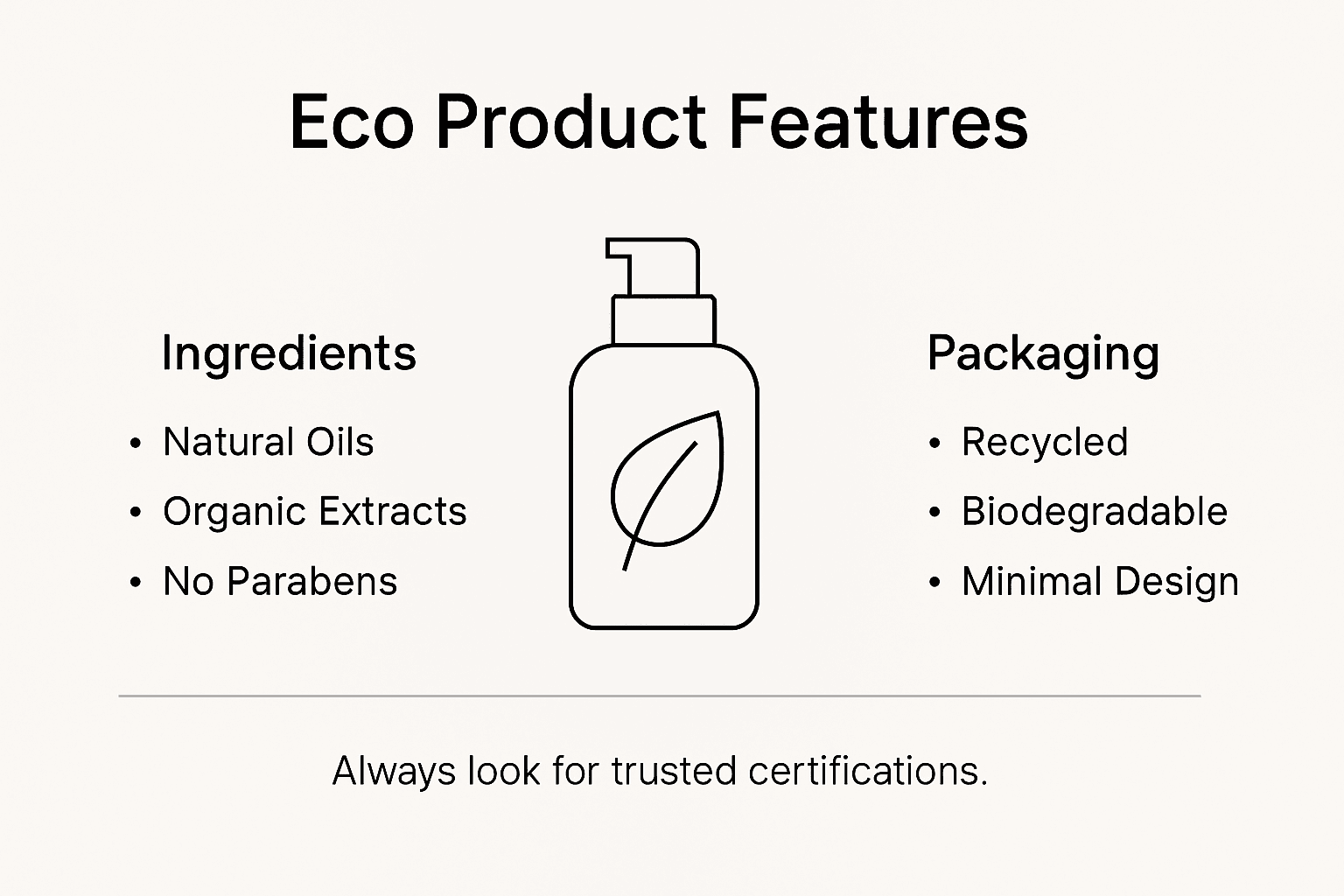
Eco-conscious skincare products distinguish themselves through a comprehensive approach that prioritizes environmental integrity and personal wellness. These products go beyond traditional cosmetic standards, integrating sustainable practices into every aspect of their creation and lifecycle. Understanding holistic skincare approaches reveals how modern consumers are demanding more transparent and responsible beauty solutions.
Ingredient Transparency becomes a fundamental characteristic of eco-conscious products. This means utilizing natural, organic, and responsibly sourced ingredients that minimize environmental impact while delivering exceptional skincare benefits. Brands committed to sustainability typically focus on:
- Plant-based, biodegradable ingredients
- Avoiding synthetic chemicals and harmful preservatives
- Prioritizing ingredients with minimal processing
- Supporting regenerative agriculture practices
- Ensuring fair trade and ethical sourcing
Packaging represents another critical dimension of eco-conscious product design. Sustainable brands invest significant effort in creating packaging solutions that dramatically reduce waste and environmental footprint. This includes strategies like:
- Using recycled or recyclable materials
- Implementing refillable container systems
- Designing minimal, lightweight packaging
- Eliminating single-use plastics
- Utilizing biodegradable or compostable packaging components
Pro Tip - Sustainability Verification: Always check product labels for third-party certifications like USDA Organic, Ecocert, or Leaping Bunny, which provide independent validation of a brand’s environmental and ethical commitments.
Environmental and Health Benefits Explained
Sustainable skincare represents a powerful intersection of personal health and environmental preservation. Recent scientific research on eco-friendly skincare practices demonstrates that conscious consumer choices can significantly reduce the beauty industry’s ecological footprint while simultaneously protecting individual wellness. This holistic approach goes beyond simple product selection, creating a meaningful impact on both personal and planetary health.
Environmental Benefits are multifaceted and far-reaching. Sustainable skincare practices directly contribute to reducing pollution, minimizing greenhouse gas emissions, and conserving natural resources. Brands committed to ecological responsibility implement strategies such as:
- Using renewable and biodegradable ingredients
- Developing zero-waste packaging solutions
- Implementing carbon-neutral manufacturing processes
- Supporting regenerative agricultural practices
- Reducing water consumption in production
From a health perspective, sustainable skincare offers profound advantages by minimizing exposure to harmful synthetic chemicals. Comprehensive studies on eco-friendly skincare alternatives reveal that natural ingredients not only protect skin health but also reduce the risk of long-term dermatological issues. Natural formulations tend to be gentler, reducing the likelihood of allergic reactions, skin irritations, and potential hormone disruptions associated with traditional synthetic cosmetic ingredients.

Pro Tip - Ingredient Awareness: Always review product ingredient lists, prioritizing items with transparent, natural compositions and avoiding complex chemical names you cannot pronounce or understand.
Certifications, Greenwashing, and Consumer Risk
Greenwashing represents a significant challenge in the sustainable skincare landscape, where companies strategically manipulate marketing language to appear more environmentally responsible than they truly are. Recent comprehensive research on sustainability certifications reveals the complex mechanisms behind these deceptive practices, highlighting the critical need for consumer awareness and rigorous certification standards.
Authentic sustainability certifications serve as crucial consumer protection tools, translating complex ecological commitments into clear, verifiable standards. Reputable certifications typically evaluate multiple dimensions of product sustainability, including:
- Ingredient sourcing practices
- Manufacturing environmental impact
- Worker welfare and fair labor conditions
- Packaging waste reduction
- Carbon footprint measurements
- Chemical safety and toxicity standards
Independent certification accountability mechanisms provide consumers with critical insights into a brand’s genuine environmental commitments. However, not all certifications are created equal. Some labels represent rigorous, independent assessments, while others serve as superficial marketing tools with minimal substantive requirements. Consumers must develop a discerning eye, understanding that true sustainability extends far beyond trendy green packaging or vague environmental claims.
Pro Tip - Certification Verification: Always cross-reference certification claims with the issuing organization’s specific criteria, and be skeptical of broad, unsubstantiated environmental promises.
Here’s a comparison of reputable sustainability certifications commonly found on skincare products:
| Certification Name | Focus Area | Key Verification Criteria |
|---|---|---|
| Ecocert | Organic/natural cosmetics | Ingredient sourcing, packaging, audits |
| USDA Organic | Organic agricultural content | Minimum 95% organic ingredients |
| Leaping Bunny | Cruelty-free standards | No animal testing at any stage |
| COSMOS | Sustainability/organics | Ingredient origin, production, safety |
How to Build a Sustainable Routine
Transitioning to a sustainable skincare routine requires thoughtful strategy and incremental changes that prioritize both personal wellness and environmental responsibility. Practical approaches to developing an eco-conscious skincare regimen emphasize the power of intentional product selection and mindful consumption.
Minimalist Approach is key to building a sustainable skincare routine. This means carefully curating a collection of multi-functional, high-quality products that serve multiple purposes while minimizing waste. Consider implementing these strategic steps:
- Conduct a comprehensive audit of your current skincare products
- Identify items with excessive packaging or questionable ingredient profiles
- Prioritize brands with transparent sustainability commitments
- Select multipurpose products that reduce overall consumption
- Invest in refillable or concentrated formulations
- Choose products with recyclable or biodegradable packaging
Ethical brand selection forms the cornerstone of a truly sustainable skincare routine. Look beyond marketing claims and investigate a brand’s comprehensive environmental practices. Evaluate potential skincare products based on:
- Ingredient sourcing transparency
- Manufacturing environmental impact
- Commitment to fair labor practices
- Carbon neutrality efforts
- Long-term sustainability initiatives
- Cruelty-free and vegan certifications
Pro Tip - Gradual Transition Strategy: Replace one product at a time with a sustainable alternative, allowing yourself to adjust slowly and make informed, intentional choices without feeling overwhelmed.
The following table summarizes steps for building a highly effective sustainable skincare routine:
| Step | Description | Impact |
|---|---|---|
| Product Audit | Review usage and environmental impact | Reduces excess consumption |
| Brand Research | Investigate sustainability commitments | Ensures ethical purchasing |
| Prioritize Multipurpose Items | Select products with several functions | Cuts down packaging and waste |
| Phased Transitioning | Switch out one product at a time | Reduces overwhelm, ensures adaptation |
Choose Sustainable Skincare That Truly Cares
Understanding why sustainability in skincare matters is the first step toward protecting your skin and the planet. Many people face the challenge of finding products that combine ethical ingredient sourcing, eco-friendly packaging, and proven benefits without falling for greenwashing. At Skin-Styles.com, we recognize your goal to build a skincare routine that supports fair labor, reduces waste, and uses natural formulas that nurture your skin safely.
Discover our curated selection of Facial Serums and trusted brands like Purito and SKIN 1004 that emphasize transparency and sustainability in every product. Making the switch today means you contribute to reducing environmental impact while enjoying healthier skin.

Start transforming your skincare routine now with trusted sustainable choices from Skin-Styles.com. Embrace products that offer real ecological and health benefits while supporting ethical practices. Visit us to explore our collections and take your first step toward responsible beauty.
Frequently Asked Questions
What does sustainable skincare mean?
Sustainable skincare refers to a holistic approach that encompasses environmental responsibility, ethical practices, and conscious consumption throughout a product’s entire lifecycle, including ingredient sourcing, manufacturing, packaging, and the impact on communities and ecosystems.
Why is ingredient transparency important in sustainable skincare products?
Ingredient transparency is crucial because it ensures that products contain natural, organic, and responsibly sourced ingredients. This minimizes environmental impact and promotes consumer trust in the formulations being used on the skin.
How can I identify truly sustainable skincare brands?
To identify sustainable skincare brands, look for third-party certifications like Ecocert, USDA Organic, or Leaping Bunny, which indicate genuine environmental and ethical commitments. Additionally, researching a brand’s sourcing practices and manufacturing processes can provide further insights.
What are the health benefits of using sustainable skincare products?
Sustainable skincare products often use natural ingredients that can minimize exposure to harmful synthetic chemicals. This can lead to fewer allergic reactions, reduced skin irritations, and a lower risk of long-term dermatological issues, promoting overall skin health.