

Every parent faces daily decisions about what touches their child’s lips and how clean it truly is. For infants, whose immune systems can’t fight infection like older children, the way you clean and sterilize bottles or nipples matters more than most realize. Sterilizing feeding accessories involves using boiling water, steam, or chemical solutions to kill bacteria, viruses, and microorganisms, protecting your baby from illness. Understanding what sets sterilization apart and how it helps reduce infection risks empowers you to make safer choices for your child.
Table of Contents
- What Sterilizing Feeding Accessories Means
- Common Types of Infant Feeding Accessories
- Health Risks of Improper Accessory Cleaning
- Sterilization Methods and Effectiveness
- Mistakes to Avoid When Sterilizing Accessories
Key Takeaways
| Point | Details |
|---|---|
| Importance of Sterilization | Sterilizing infant feeding accessories is crucial for eliminating harmful pathogens that can lead to serious infections in newborns and young infants. |
| Selecting the Right Method | Choose a sterilization method that fits your routine, as consistent practice is essential for successful sterilization. |
| Proper Cleaning Procedures | Always clean feeding accessories thoroughly before sterilization to ensure effective pathogen elimination. |
| Health Risks of Contamination | Improper cleaning can expose infants to significant health risks, including serious infections and allergic reactions due to chemical residues. |
What Sterilizing Feeding Accessories Means
Sterilizing feeding accessories is the process of completely eliminating bacteria, viruses, and harmful microorganisms from bottles, nipples, and related items your baby uses during feeding. This goes well beyond simply rinsing or cleaning with soap and water. When you sterilize, you’re using heat, steam, or chemical solutions to kill virtually all pathogens that could potentially harm your infant. Understanding the distinction matters because sterilization differs fundamentally from cleaning and sanitizing. Cleaning removes visible dirt and milk residue. Sanitizing reduces germs to supposedly safe levels. Sterilization, however, destroys nearly everything.
This process becomes particularly critical during your baby’s first months. Newborns and young infants have vulnerable, developing immune systems that cannot fight off infections the way older children can. A single contaminated bottle could introduce dangerous pathogens that lead to serious illness. The research shows that proper cleaning and sterilization of infant feeding equipment significantly reduces infection risks. Most families sterilize using boiling water, electric steam sterilizers, microwave sterilizers, or occasionally bleach solutions. The method you choose depends on your schedule, available equipment, and how frequently you need to prepare bottles.
What makes sterilization different from your everyday kitchen cleanup is the intensity and consistency required. You cannot sterilize by wiping something down or using room temperature water. The heat or chemical concentration must reach levels strong enough to penetrate crevices where bacteria hide, particularly around nipple threads and bottle seams where milk can accumulate and bacteria thrive. Parents often wonder if sterilization is truly necessary every single time. The answer depends on your baby’s age and health status. Newborns under three months benefit from sterilization of all feeding equipment before use. After that point, many pediatricians say thorough washing combined with occasional sterilization works well for healthy infants, though continuing regular sterilization provides extra assurance.
Pro tip: Start your sterilization routine before your baby arrives by testing your chosen method with clean bottles and nipples, so you have the process down and all equipment working perfectly when you bring your newborn home.
Common Types of Infant Feeding Accessories
Infant feeding accessories come in many forms, each designed for different feeding situations and infant needs. The most recognizable option is the traditional bottle paired with a nipple, which allows caregivers to feed expressed breast milk or formula. Bottles come in various sizes, from smaller 4-ounce options for newborns to larger 9-ounce bottles for older infants. Nipples vary in flow rate and shape, designed to mimic natural breastfeeding or accommodate different sucking styles. Beyond bottles, breastfeeding aids include breast shields, nipple creams, and expression devices that help mothers provide milk more comfortably. Many families use multiple types depending on their circumstances and preferences.
Cup feeding represents an alternative that gains importance in specific situations. Small disposable cups, such as medicine cups or bathroom cups, can be used when bottles cannot be properly cleaned due to emergencies or limited resources. Cup feeding requires careful technique to prevent spilling and choking, but it offers flexibility for caregivers who need feeding options when standard equipment is unavailable. Feeding tubes and specialized bottles designed for infants with cleft palates or other feeding difficulties serve those with unique medical needs. These accessories require even more careful attention to cleanliness since they often contact sensitive areas or bypass normal protective mechanisms. Formula preparation equipment, including mixing bottles, measuring spoons, and storage containers, also falls under the category of feeding accessories that need regular sterilization and proper maintenance.
When selecting feeding accessories, quality and material matter significantly. Most modern bottles and nipples use food-grade silicone or polypropylene plastic that can withstand heat and repeated sterilization. Some families prefer glass bottles for durability and ease of cleaning, though they require extra care to prevent breakage around infants. The variety available means you can choose based on your baby’s preferences, your lifestyle, and your sterilization capabilities. What works beautifully for one family might not suit another, so having a few different types on hand helps you adapt to your infant’s changing needs and your circumstances.
Pro tip: Start with two or three different bottle and nipple styles before your baby arrives, then observe which your infant prefers and sterilizes most easily for your routine.
Health Risks of Improper Accessory Cleaning
When feeding accessories are not cleaned properly, your infant faces real health dangers. Contaminated bottles and nipples become breeding grounds for harmful bacteria, viruses, and fungi that can cause serious infections in babies whose immune systems are still developing. The risks go beyond simple stomach upset. Pathogen transmission through feeding equipment can lead to diarrhea, respiratory infections, and in severe cases, systemic infections that require hospitalization. A single bottle with milk residue left in warm conditions can harbor thousands of bacteria within hours. Your infant’s immature immune system cannot fight off these pathogens the way an older child or adult could, making even seemingly minor contamination potentially serious.
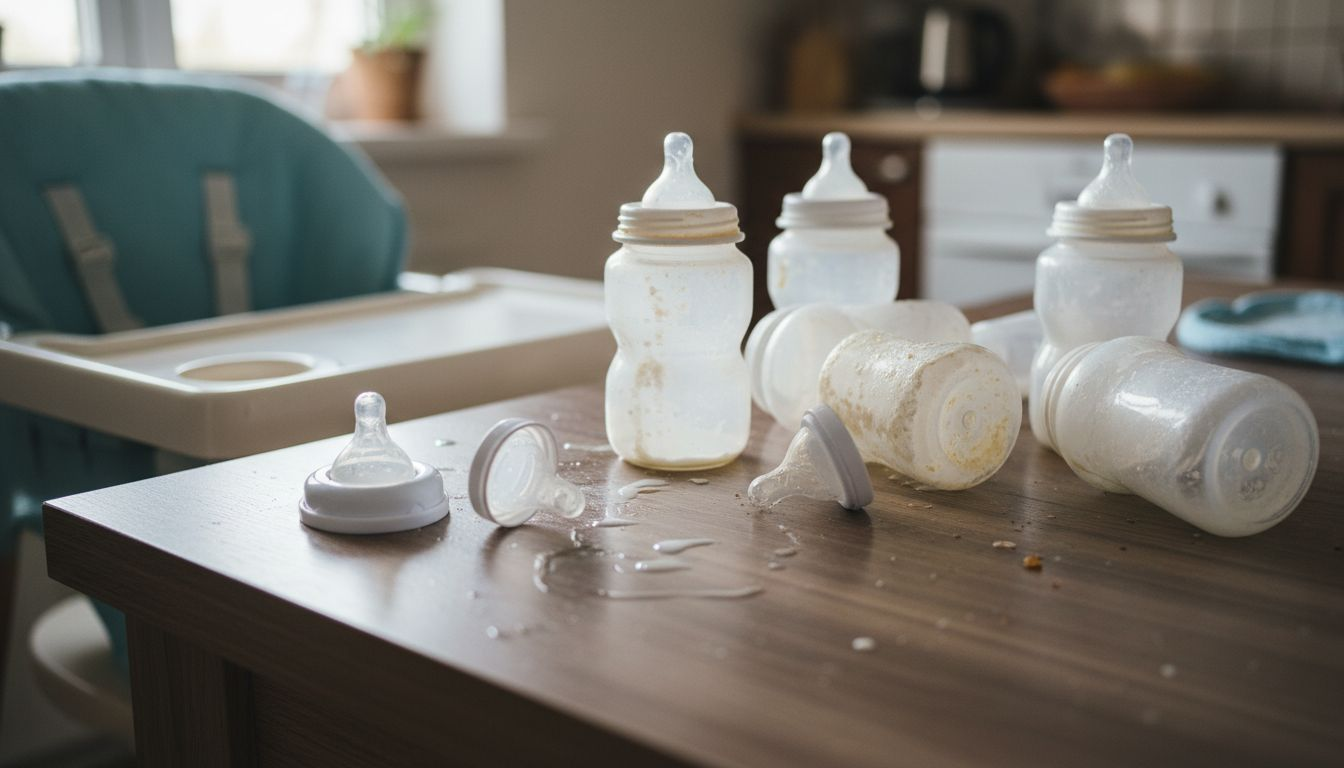
Beyond microbial dangers, improper cleaning methods introduce chemical hazards that parents sometimes overlook. Many households use standard kitchen cleaners or disinfectants that leave residues on bottles and nipples. When your baby feeds from contaminated equipment, they ingest traces of these chemicals directly into their developing bodies. Volatile organic compounds and cleaning chemical residues can cause respiratory problems, allergic reactions, and other health issues in infants and young children. Some parents think a quick rinse under tap water is sufficient, not realizing that water alone cannot remove bacterial biofilms or chemical residues effectively. Others use hot water that is not quite hot enough, which can actually encourage bacterial growth rather than kill it.
The consequences of improper cleaning accumulate over time. Your baby might seem fine for weeks, then suddenly develop unexplained diarrhea or a respiratory infection that doctors struggle to trace back to their feeding equipment. By then, your infant has suffered needlessly. Prevention through proper cleaning and sterilization is infinitely easier than treating infections after they develop. The risk is not theoretical either. Outbreaks of foodborne illness in childcare settings often trace back to inadequately cleaned feeding equipment. Your home feeding practice deserves the same attention to safety that professional facilities are required to maintain.
Here’s a summary of key risks when infant feeding accessories are not cleaned correctly:
| Risk Type | Example Problem | Possible Consequence |
|---|---|---|
| Bacterial contamination | Leftover milk in bottle seams | Diarrhea or severe infections |
| Chemical residue | Dishwasher soap left on nipple | Allergic reactions, breathing issues |
| Inadequate temperature | Only rinsed in warm water | Surviving germs multiply fast |
Pro tip: Keep a simple checklist near your sink listing the exact cleaning steps you use for bottles and nipples, then follow it religiously every single time to prevent any shortcuts during exhausting nighttime feedings.
Sterilization Methods and Effectiveness
Different sterilization methods work in different ways, each with distinct advantages depending on your household setup and feeding schedule. The most common approach for families is boiling, which uses heat to kill microorganisms. Simply submerging bottles and nipples in rapidly boiling water for 5 to 10 minutes effectively sterilizes equipment without chemicals or special machines. This method works everywhere you have access to a stove, making it ideal for travel or backup sterilization. However, boiling can wear out silicone nipples faster over time, and the process requires constant monitoring to prevent scorching or overboiling.
Electric steam sterilizers represent the most popular choice for busy parents. These countertop machines use pressurized steam to rapidly kill all microorganisms in around 8 to 15 minutes, depending on the model. Steam sterilization through autoclaves is among the most effective and widely validated sterilization methods for reusable feeding accessories. Electric sterilizers hold multiple bottles simultaneously, making them efficient for families who prepare several bottles at once. Microwave sterilizers work similarly but use steam generated by microwaving water, offering a faster option for smaller loads. Both electric and microwave sterilizers are more expensive upfront but save time during daily routines. The key advantage is consistency—these machines maintain specific temperatures and durations that effectively eliminate all microorganisms including bacterial spores.
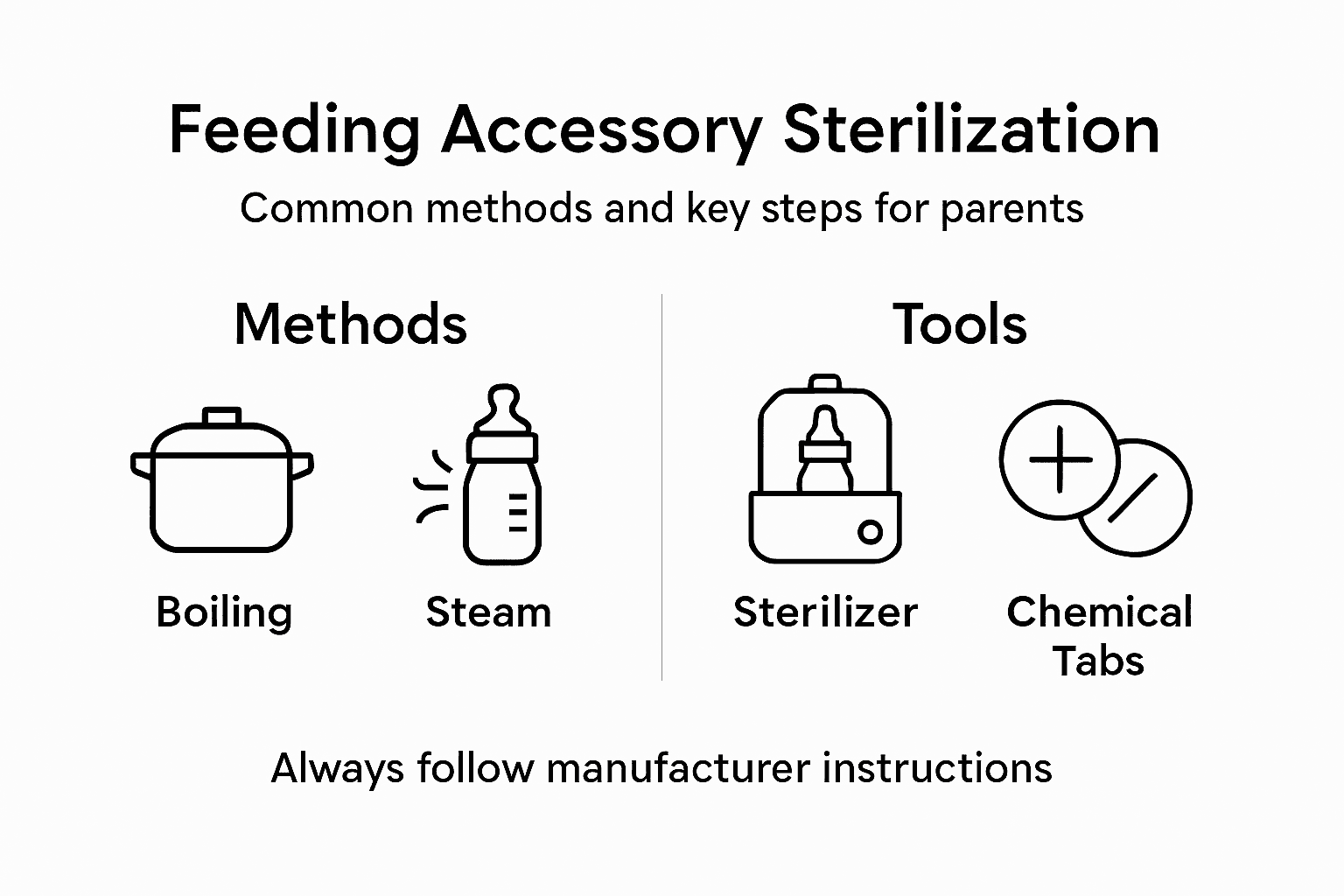
Chemical sterilizers offer flexibility for parents without access to steam equipment or those who travel frequently. These tablet or liquid solutions require soaking bottles for specified periods, typically 15 to 30 minutes, to disinfect items thoroughly. While effective when used correctly, chemical methods require careful rinsing afterward to remove residues. Some parents combine methods strategically: using an electric sterilizer at home for daily use and keeping chemical sterilizer tablets on hand for travel or emergencies. The effectiveness of any method depends entirely on proper technique. Overcrowding a sterilizer, using incorrect water temperatures, or failing to reach specified durations all compromise results, leaving your baby vulnerable to contamination.
Pro tip: Choose a sterilization method that fits your natural routine rhythm rather than one you think you “should” use, because consistency matters far more than having the fanciest equipment.
To help you select the most suitable sterilization method, compare their pros and cons below:
| Method | Main Advantage | Main Drawback | Ideal For |
|---|---|---|---|
| Boiling | Cheap and easy to access | Wears out nipples over time | Travel, backup scenarios |
| Electric Steam Sterilizer | Fast and consistent cycles | Higher upfront cost | Daily use, busy families |
| Microwave Sterilizer | Convenient and quick | Limited by microwave size | Small batches, quick use |
| Chemical Sterilizer | Portable and equipment-free | Can leave chemical residues | Travel, emergencies |
Mistakes to Avoid When Sterilizing Accessories
One of the most common sterilization failures happens before the actual sterilization process even begins. Parents often skip or rush the cleaning step, assuming the sterilizer will handle everything. This backfires badly because sterilization works best on clean surfaces. Milk residue, formula buildup, and food particles create barriers that prevent heat or chemicals from reaching bacteria hiding underneath. You must wash bottles and nipples thoroughly with hot soapy water first, using a bottle brush to scrub the interior and a small brush for nipple crevices. Only after items are visibly clean should you proceed to sterilization. Another critical oversight is failing to disassemble equipment completely. Nipple shields, valve seals, and removable bottle liners must come apart for proper sterilization. Inadequate cleaning or inability to dismantle components traps contaminants inside, defeating the entire purpose of sterilization.
Timing and temperature errors undermine sterilization effectiveness significantly. Many parents underfill their electric sterilizers or skip preheating, resulting in temperatures that are too low. Others yank bottles out after just a few minutes instead of waiting for complete cycles. If you are using boiling water, some families do not maintain a rolling boil for the full recommended duration. Insufficient sterilization cycle time or temperature leaves bacteria and viruses alive on your feeding equipment. Chemical sterilizers present their own pitfall: using expired solutions that have lost their disinfectant potency. Check expiration dates before each use and replace solutions on schedule. Cross-contamination during handling also matters. Touching sterilized bottles with unwashed hands or placing them on dirty countertops immediately after sterilization negates all your previous effort.
Ignoring manufacturer instructions creates preventable problems. Each sterilizer model has specific requirements for water levels, loading patterns, and cycle selection. Stuffing bottles too tightly, using the wrong water type, or skipping indicator checks allows failures to go unnoticed. Some parents also store sterilized bottles incorrectly, leaving them exposed to contamination in open cupboards or using non-sterile containers. The moment sterilized items leave your sterilizer, they begin accumulating bacteria again. Store them in clean, sealed containers and use them within 24 hours for maximum safety. Finally, avoid reusing chemical sterilizer solutions beyond their recommended lifespan. Fresh solution for each batch ensures complete sterilization.
Pro tip: Set phone reminders for your sterilization schedule and twice yearly reminders to check sterilizer equipment for mineral buildup or worn components that might reduce effectiveness.
Protect Your Baby with Safe and Sterilized Feeding Accessories
Ensuring your baby’s feeding accessories are properly sterilized is one of the most important steps to keep your infant safe from harmful germs and infections. This article highlights how critical thorough cleaning and sterilization are for newborns and young infants with delicate immune systems. At Skin Styles, we understand that maintaining a hygienic feeding routine can feel overwhelming during busy days and sleepless nights. That is why we offer a selection of carefully curated products designed to support families in creating a safe feeding environment. Explore our range of Other Products – Skin Styles that includes sterilization aids and essential accessories to make your routine easier and more reliable.

Don’t wait until germs become a threat to your baby’s health. Act now to build a feeding setup you trust by visiting Skin Styles. Start with trusted products that fit your lifestyle and simplify cleaning and sterilization so you can focus on what truly matters – your baby’s well-being.
Frequently Asked Questions
Why is sterilization necessary for feeding accessories?
Sterilization eliminates harmful microorganisms like bacteria and viruses from feeding accessories, which is critical for newborns and young infants whose immune systems are still developing.
How often should I sterilize my baby’s feeding accessories?
For infants under three months old, all feeding equipment should be sterilized before each use. After that, thorough washing combined with occasional sterilization is usually sufficient for healthy infants.
What are the different methods of sterilizing feeding accessories?
Common sterilization methods include boiling, electric steam sterilizers, microwave sterilizers, and chemical solutions. Each method effectively eliminates microorganisms, but they vary in convenience, cost, and time required.
What mistakes should I avoid during the sterilization process?
Avoid skipping the initial cleaning of bottles and nipples, not disassembling all components, and underestimating the time or temperature needed for effective sterilization. Improper handling and storage can also compromise sterilized items.