

Finding the right cleanser can feel confusing when so many options claim to be gentle, hydrating, and effective. For health-focused millennials and Gen Z beauty fans, understanding what really works matters more than following hype. That is why micellar water contains micelles—tiny structures that sweep away dirt, oil, and makeup without harsh chemicals or scrubbing, making it a standout choice for those who want clean, balanced skin without irritation or expense.
Table of Contents
- Micellar Water Explained and Common Myths
- How Micellar Technology Cleanses Your Skin
- Types of Micellar Water and Key Differences
- Benefits and Drawbacks for Various Skin Types
- Choosing, Using, and Avoiding Mistakes
Key Takeaways
| Point | Details |
|---|---|
| Understanding Micellar Water | Micellar water is a specialized cleansing solution that effectively lifts dirt, oil, and makeup without harsh chemicals, making it suitable for all skin types. |
| Debunking Common Myths | Micellar water is not just water; it contains surfactants that cleanse and remove impurities, and it should not replace an entire skincare routine. |
| Tailoring to Skin Type | Choosing the right formulation based on your skin type is crucial, as variations in surfactant types and additional ingredients can enhance effectiveness. |
| Proper Usage for Best Results | Apply micellar water gently with a cotton pad and avoid vigorous rubbing to ensure effective cleansing without irritating the skin. |
Micellar Water Explained and Common Myths
Micellar water sounds like marketing magic, but it’s actually rooted in solid chemistry. At its core, micellar water contains micelles – tiny clusters of molecules with a unique structure that makes them perfect for lifting dirt and oil from your skin. Each micelle has a hydrophilic head (water-loving) and a hydrophobic tail (oil-loving), which means they naturally trap oily substances like makeup, sunscreen, and sebum in their center while the water-loving outer layer keeps everything suspended in water. This isn’t just water or a gimmick product; it’s a specialized cleansing solution created through surfactant chemistry that’s far more sophisticated than your average cleanser.
The confusion starts because micellar water originated in France and arrived on Western shelves with an almost mysterious reputation. What you’re actually getting is purified water combined with mild surfactants and moisturizers that create this micelle action. Unlike traditional toners that dry out your skin, micellar water works as both a makeup remover and a cleanser without the harsh chemicals or alcohol that strip away natural oils. It effectively removes most makeup, including some waterproof cosmetics, which is why beauty routines across different skin types have embraced it. The fact that it’s gentle enough for sensitive skin while still powerful enough to break down stubborn products makes it genuinely versatile. When building an effective cleansing routine, understanding how your cleanser actually works – rather than just trusting marketing language – gives you real control over your skincare results.
Now let’s tackle the myths that keep circulating online. The biggest misconception is that micellar water is “just water,” which couldn’t be further from the truth. Plain water alone cannot dissolve or trap oily substances effectively because oil and water simply don’t mix. Another common belief is that micellar water only removes makeup, implying it’s not a real cleanser. Wrong again. Because it contains those surfactants with detergent-like properties, it cleanses your entire face by lifting dead skin cells, bacteria, and environmental pollution alongside makeup and sunscreen. Some people think it’s too gentle to be effective on oily or acne-prone skin, but that actually depends on the specific formula and your skin’s needs. The chemistry works regardless of your skin type; what changes is whether you might benefit from pairing it with additional cleansing steps for a more thorough routine. One final myth worth addressing is that micellar water can replace all other skincare steps. While it’s an excellent cleansing product, it’s part of a complete routine, not a standalone solution.
Pro tip: Apply micellar water to a cotton pad and gently swipe your face in circular motions rather than rubbing, which allows the micelles to effectively trap impurities without tugging on delicate facial skin.
How Micellar Technology Cleanses Your Skin
Understanding how micellar water actually works on your skin requires understanding the science behind those tiny molecular structures. Micellar technology relies on surfactants, which are molecules with two completely different personalities. One end loves water (hydrophilic), while the other end loves oil (hydrophobic). When you apply micellar water to your skin, these surfactants don’t float around randomly. Instead, they self-assemble into micelles, which are spherical clusters where the oil-loving tails point inward and the water-loving heads face outward toward the surrounding liquid. This structure is crucial because it creates the perfect trap for makeup, sebum, and dirt particles. The oil-loving core of each micelle acts like a magnet for greasy substances, pulling them away from your skin and suspending them in the water so they can be wiped away with a cotton pad. Micelle formation depends on concentration, temperature, and agitation, which means a well-formulated micellar water contains enough surfactants to create a high concentration of micelles that can tackle even stubborn, waterproof makeup.

What makes this technology so effective compared to regular cleansing is that it works without aggressive scrubbing or harsh chemicals. Traditional cleansers often rely on sulfates or alcohol to strip away oils, which can leave your skin feeling tight and compromised. Micellar water, by contrast, cleanses through this gentle molecular action. When you apply it, the micelles surround oil droplets and lift them away from your skin without disrupting your natural protective barrier. The water-loving exterior of each micelle keeps everything suspended so you can simply wipe it away. This is why micellar water removes makeup, dirt, and oil simultaneously while maintaining your skin’s natural moisture. Dermatologists appreciate this approach because it means sensitive skin gets a thorough cleanse without the irritation that comes from rubbing or rinsing with hot water. Even for oily or acne-prone skin, the technology works the same way. The difference is that you might choose a micellar water formulated specifically for your skin type, with added ingredients tailored to your needs.
Here’s a side-by-side view comparing micellar water to traditional cleansers:
| Aspect | Micellar Water | Traditional Cleanser |
|---|---|---|
| Key Ingredients | Surfactants, moisturizers | Soaps, sulfates, alcohol |
| Cleansing Method | Traps impurities with micelles | Emulsifies or dissolves dirt |
| Skin Barrier Impact | Maintains moisture | Can strip natural oils |
| Suitability | Gentle for all skin types | May irritate sensitive skin |
The elegance of micellar technology is that it works at every step of your routine. You can use it as a first cleanse to remove makeup and sunscreen, or as a standalone cleanser on days when your skin needs something gentler. Some people incorporate it into their morning routine to refresh their skin without heavy washing, while others use it as part of a comprehensive cleansing approach for thorough makeup removal at night. The key is recognizing that micelles are doing the work for you through chemistry, not through manual scrubbing. When you understand this, you realize why application matters. You’re not supposed to rub your skin vigorously with micellar water because the micelles are already working. A gentle swipe is enough to allow them to capture impurities. This is also why leaving micellar water on your skin for a few seconds before wiping gives better results than immediately removing it. Those extra moments let the micelles fully surround and trap the dirt and oil particles.
Pro tip: Store your micellar water in a cool place and shake the bottle gently before use, as this helps maintain optimal micelle concentration and ensures the surfactants stay properly distributed throughout the product.
Types of Micellar Water and Key Differences
Not all micellar waters are created equal, and understanding the variations will help you pick the right one for your skin. The foundation of every micellar water remains the same: purified water combined with surfactants that form micelles. However, what differentiates one bottle from another comes down to the specific ingredients beyond that base formula. Micellar solutions vary based on surfactant type and concentration, which means a micellar water formulated for heavy makeup removal operates differently than one designed for sensitive skin. Some formulations use non-ionic surfactants like caprylic or capric glycerides, which are gentler and less likely to irritate delicate skin. Others might include stronger cleansing agents if the goal is tackling stubborn, long-wearing makeup. The concentration of these surfactants directly impacts how effectively the product works. A higher concentration means more micelles available to trap oil and dirt, which translates to more powerful cleansing action. This is why some micellar waters feel like they glide across your skin while others require more vigorous wiping to remove makeup.
Beyond surfactant differences, the real variation comes from added ingredients tailored to specific skin concerns. Micellar waters designed for sensitive skin typically contain soothing agents like chamomile or aloe vera, and are always alcohol-free to prevent irritation or dryness. Hydrating formulations incorporate humectants such as glycerin or hyaluronic acid, making them ideal if your skin tends toward dryness or if you live in a low-humidity climate. Some brands add exfoliating acids like salicylic acid or lactic acid, transforming micellar water into a gentle exfoliating cleanser that removes dead skin cells alongside makeup. Others include fragrances for a refreshing experience, though fragrance-free options exist for those with fragrance sensitivities. Micellar waters differ mainly by the additional ingredients included beyond basic surfactants, and these additions define whether a product is best for makeup removal, regular cleansing, or skin soothing. If you have oily or acne-prone skin, you might choose a micellar water with light texture and minimal added oils. For combination skin, a balancing formula works better than one formulated exclusively for dry or oily types. The takeaway is that choosing micellar water involves matching the formulation to your skin type and specific needs rather than assuming all bottles do the same thing.
Key Categories to Know
When shopping, you’ll encounter micellar waters organized into several loose categories. Standard cleansing micellar waters focus on removing makeup and dirt with minimal added ingredients. These work for most skin types and serve as reliable daily cleansers. Hydrating micellar waters contain extra moisturizing ingredients and feel richer on the skin, making them better for dry or mature skin that needs nourishment during cleansing. Sensitive skin formulations emphasize gentleness with soothing ingredients and absolutely no alcohol or harsh surfactants. They clean effectively without triggering irritation or compromising the skin barrier. Exfoliating micellar waters contain mild acids or enzymatic ingredients, offering gentle exfoliation alongside cleansing. These appeal to people who want to simplify their routine by combining two steps. Micellar waters for specific concerns like acne-prone skin might include salicylic acid or niacinamide to address breakouts while cleansing. Understanding how different cleansers target specific skin types helps you navigate these options with confidence.
The practical reality is that your choice depends on what your skin actually needs right now. During winter, you might prefer a hydrating micellar water, while summer humidity might make you lean toward a lighter formulation. If you’re dealing with a breakout, an exfoliating or acne-targeted micellar water could be beneficial. The good news is that micellar water is affordable enough to experiment with different types until you find what works best for your unique skin. Pay attention to how your skin responds. If it feels tight or stripped after cleansing, you need a gentler or more hydrating formula. If makeup isn’t coming off completely, you might benefit from a stronger cleansing formulation or a micellar water with higher surfactant concentration. The differences between types matter, but they all operate on the same fundamental chemistry that makes micellar water effective.
See the unique features of each micellar water type at a glance:
| Category | Best For | Notable Additives | Cleansing Strength |
|---|---|---|---|
| Standard | Daily makeup removal | Minimal extra ingredients | Moderate |
| Hydrating | Dry or mature skin | Glycerin, hyaluronic acid | Mild |
| Sensitive Skin | Reactive or delicate skin | Aloe, chamomile | Gentle |
| Exfoliating | Dull or acne-prone skin | Salicylic or lactic acid | Dual (cleanse/exfoliate) |
Pro tip: Check the ingredient list for alcohol content and surfactant type before purchasing; micellar waters labeled “alcohol-free” with gentle surfactants like caprylic glycerides work better for sensitive skin, while those with stronger agents suit oily or heavily made-up skin.
Benefits and Drawbacks for Various Skin Types
Micellar water isn’t a one-size-fits-all solution, and understanding how it performs on different skin types helps you decide if it deserves a place in your routine. For sensitive skin, micellar water is genuinely one of the gentler options available. The low levels of nonionic surfactants used in most formulations mean you get effective cleansing without the irritation that comes from harsher detergents. Unlike traditional cleansers that can strip away your natural oils and leave your skin feeling raw, micellar water using nonionic surfactants shows cleansing efficacy with minimal irritation31391-9/abstract), making it particularly beneficial for reactive or compromised skin. It removes light makeup and environmental debris without disrupting your skin barrier, which is the main concern for anyone with sensitivity. The downside is that if you wear heavy makeup or waterproof formulas, micellar water alone might not cut it. You may need to follow up with another cleansing step or use a stronger product specifically designed for makeup removal.
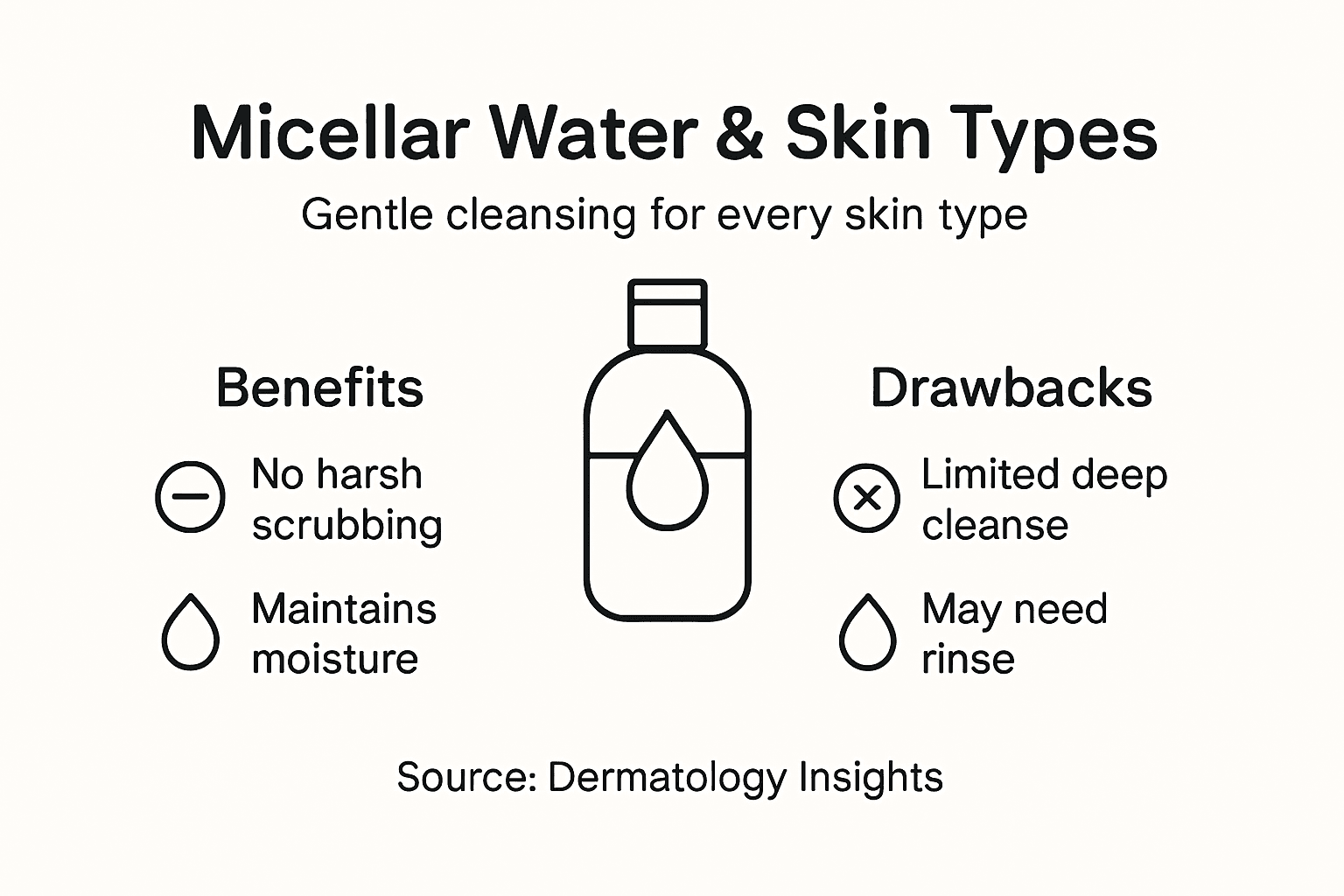
Dry skin types also benefit from micellar water, but with important nuances. Because it doesn’t strip away natural oils and often includes hydrating ingredients like glycerin or hyaluronic acid, it cleanses without leaving that uncomfortable tight feeling. Many people with dry skin struggle because standard cleansers actually make their dryness worse by removing the protective lipid layer. Micellar water’s gentle action preserves this barrier while still removing impurities and makeup. The trade-off is similar to sensitive skin: if your makeup routine is elaborate or includes stubborn waterproof products, you might find micellar water insufficient as your sole cleanser. For oily and acne-prone skin, the story becomes more complicated. Micellar water effectively removes excess sebum and dirt, which makes it appealing for managing breakouts and shine. However, clinical research into micellar water effects on skin barrier function and hydration maintenance suggests the full implications for oily skin are still under investigation. What this means practically is that while micellar water won’t make oiliness worse, it may not address the specific needs of acne-prone skin as effectively as targeted treatments. Some oily skin sufferers find it perfect for morning cleansing or for days when they’re not wearing makeup, while others prefer something with more active acne-fighting ingredients.
Combination skin benefits from micellar water’s balanced approach. It cleanses oily zones without drying out dry areas, which is exactly what combination skin needs. You can use the same product everywhere without worrying about stripping the dry zones or leaving residue on oily areas. The flexibility of micellar water also works in your favor because you can choose formulations with specific additional ingredients. If your combination skin is also sensitive, pick a fragrance-free, alcohol-free option. If you’re dealing with breakouts in your oily zones, select one with salicylic acid or niacinamide. Understanding how your specific skin type impacts your cleansing routine helps you leverage micellar water’s strengths without working against your skin’s natural characteristics.
Quick Skin Type Reference
- Sensitive skin - Best choice as primary cleanser; gentle on reactive skin; limited effectiveness on heavy makeup
- Dry skin - Excellent option; preserves hydration; may need backup for waterproof makeup
- Oily skin - Good for basic cleansing and sebum removal; consider pairing with targeted acne treatments
- Acne-prone skin - Works well for daily cleansing; choose formulations with exfoliating acids for extra benefit
- Combination skin - Ideal choice; balanced cleansing across different zones; easily customizable by formulation
- Mature skin - Strong option; gentle action preserves skin barrier; seek hydrating formulations
The reality is that micellar water’s biggest strength is its gentleness combined with efficacy. Its biggest limitation is that it may not handle extreme situations like heavy theatrical makeup or multiple layers of waterproof products. For most people following normal makeup routines, micellar water works wonderfully as either a standalone cleanser or the first step in a double cleanse routine. Pay attention to how your specific skin responds over two to three weeks of consistent use. If your skin feels cleaner, less irritated, and more hydrated, you have found your match. If you’re not seeing the results you want, try a different formulation or integrate micellar water into a more comprehensive routine.
Pro tip: If you have oily skin but like micellar water’s gentleness, use it in the morning and opt for a slightly stronger cleanser at night when you’re removing makeup and the day’s accumulated oil.
Choosing, Using, and Avoiding Mistakes
Selecting the right micellar water means looking beyond marketing language and understanding what actually matters for your skin. Start by checking the ingredient list rather than relying on packaging claims alone. Look for alcohol-free formulations if you have sensitive or dry skin, since alcohol can be drying and irritating. Pay attention to the surfactant type. Non-ionic surfactants like caprylic or capric glycerides are gentler than anionic surfactants, which is why they appear more frequently in products marketed for sensitive skin. Beyond the basics, micellar water products show significant variation in chemical safety, so choosing products with positive eco-labels or transparent ingredient sourcing helps minimize exposure to potentially harmful substances. Check reviews from people with similar skin types to yours, but remember that one person’s dream product might not work for you. What matters most is reading actual ingredient lists and understanding what each component does. If you see endocrine disruptors or unnecessary fillers, skip that product. The price point doesn’t always correlate with quality either. Some affordable micellar waters are formulated beautifully, while expensive options sometimes contain more marketing than substance.
Using micellar water correctly makes a significant difference in results. The standard method is straightforward: apply it to a cotton pad and gently swipe your face in circular motions. But here is where mistakes happen. Some people think vigorous rubbing removes more makeup, when actually gentle motion allows the micelles to work effectively without tugging on delicate skin. Another common error is applying micellar water to soaking wet skin. Work with damp or dry skin for better effectiveness. When it comes to rinsing, the choice to rinse or leave micellar water on skin can affect skin barrier function and hydration levels, which is why following product-specific guidance and monitoring your skin’s response matters. Some micellar waters are designed to be rinsed off with water, while others are meant to be left on as the final step. Read your product instructions because this distinction affects how well it works and whether it causes irritation. Start with once daily application and adjust based on how your skin responds. Overusing any cleanser, even a gentle one, can compromise your skin barrier over time. If you’re using micellar water twice daily, make sure you are genuinely removing makeup or heavy dirt buildup both times, not just cleansing out of habit.
Common Mistakes to Avoid
- Using too much product - A small amount on a cotton pad goes a long way; oversaturation wastes product and can leave residue
- Applying to wet skin - Work with dry or slightly damp skin for optimal micellar effectiveness
- Rubbing instead of swiping - Let the micelles do the work rather than manually scrubbing your face
- Neglecting eye area sensitivity - Apply gently around eyes or use a micellar water specifically formulated for delicate eye areas
- Skipping patch testing - Always test on a small area first, especially if you have reactive skin
- Ignoring product instructions - Whether you rinse or not matters for that specific formula
- Using expired products - Check expiration dates; formulations break down over time
- Mixing with incompatible products immediately - Let micellar water fully dry before applying other skincare products
When shopping for micellar water, you will notice price variation from budget-friendly options to luxury brands. The difference typically comes down to additional active ingredients, packaging, and brand recognition rather than the core micellar technology itself. A $5 micellar water and a $25 version both cleanse through the same molecular action. What justifies higher price points is additional benefits like targeted treatment ingredients, superior hydrating components, or brands with extensive research backing. For many people, mid-range micellar waters offer the best balance. You get formulations with decent ingredients and reasonable pricing without overpaying for branding. Pay attention to whether a product aligns with your values too. If sustainability matters to you, research brands committed to eco-friendly practices and responsible sourcing. If cruelty-free certification is important, verify third-party validation rather than trusting brand claims alone. The most expensive mistake is buying something that does not match your skin type or needs, so take time to identify your priorities before purchasing.
Pro tip: Buy a small travel size first if you are trying a new brand or formulation, giving your skin time to adjust over one to two weeks before committing to a full-size bottle.
Discover the Power of Gentle, Effective Cleansing with Micellar Water
Struggling to find a cleanser that removes makeup and impurities without stripping your skin of moisture or causing irritation Micellar water’s unique surfactant technology offers a solution that is gentle yet powerful. If you want to protect your skin barrier while effectively cleansing, choosing the right micellar water tailored to your skin type is key. At Skin-Styles.com, we understand these concerns and provide a carefully curated selection of cleansers that harness this advanced technology alongside soothing and hydrating ingredients.

Explore our range of gentle cleansers to find formulas free from harsh alcohols and packed with skin-loving ingredients. Whether your skin is sensitive, oily, dry, or combination, you can achieve a refreshed, clean complexion without compromise. Take control of your skincare routine today with products designed to support your skin’s natural balance. Visit Skin-Styles.com now and experience the difference that a scientifically formulated cleanser can make.
Frequently Asked Questions
What is micellar water?
Micellar water is a cleansing solution that contains micelles, which are tiny clusters of molecules that trap dirt and oil from the skin. It combines purified water with mild surfactants and moisturizers, making it effective for removing makeup and cleansing the skin without harsh chemicals.
How does micellar water work on the skin?
Micellar water works through the action of micelles, which have both hydrophilic (water-loving) and hydrophobic (oil-loving) parts. When applied to the skin, micelles attract and trap oil and dirt particles, effectively removing them when wiped away with a cotton pad.
Is micellar water suitable for all skin types?
Yes, micellar water is generally suitable for all skin types, including sensitive skin. However, specific formulations may be designed for particular needs, such as hydrating ingredients for dry skin or exfoliating acids for acne-prone skin. It’s important to choose a product that matches your skin concerns.
Can I use micellar water to replace my entire skincare routine?
While micellar water is excellent for cleansing, it should not entirely replace a comprehensive skincare routine. It’s effective for removing makeup and impurities, but it may not provide all the hydrating or treatment benefits that other skincare products offer. Consider using it as part of a complete regimen.