

Finding safe and effective baby skincare products can feel overwhelming when studies show that the newborn skin barrier is up to 30% thinner than adult skin. For first-time parents in every country, including American families, learning how delicate infant skin really is makes choosing the right routine crucial. This guide breaks down the essentials, highlights common mistakes, and helps you identify ingredients that truly protect your newborn’s sensitive skin without unnecessary risks.
Table of Contents
- Defining Baby Skincare Essentials
- Recognizing Different Infant Skin Types
- Choosing Safe Skincare Products For Babies
- Common Ingredients And Their Effects
- Mistakes To Avoid In Newborn Skincare
Key Takeaways
| Point | Details |
|---|---|
| Understanding Infant Skin | Infant skin is significantly different from adult skin, requiring specialized care focused on protection, hydration, and minimal intervention. |
| Identifying Skin Types | Recognizing the four primary infant skin types (normal, dry, sensitive, and atopic) allows for tailored skincare routines to address specific needs. |
| Choosing Safe Products | Select skincare items that are hypoallergenic, pH-balanced, and free from harsh chemicals to support healthy skin development in infants. |
| Avoid Common Mistakes | Prevent over-washing and the use of harsh products, and ensure regular moisturization to protect the delicate microbiome and skin barrier of newborns. |
Defining Baby Skincare Essentials
Understands the unique characteristics of infant skin requires specialized knowledge and careful approach. Infant skin anatomy represents a delicate ecosystem dramatically different from adult skin, featuring thinner layers, heightened sensitivity, and an immature protective barrier that demands gentle, purposeful care.
Baby skincare essentials fundamentally revolve around three critical principles: protection, hydration, and minimal intervention. The skin barrier in newborns is approximately 30% thinner than adult skin, making it significantly more vulnerable to environmental stressors, irritants, and potential infections. This vulnerability necessitates a strategic approach focused on maintaining natural moisture, preventing potential skin disruptions, and supporting the gradual development of a robust dermatological defense system.
Key components of effective baby skincare include:
- Gentle Cleansing: Using lukewarm water and mild, fragrance-free cleansers
- Moisturizing: Applying hypoallergenic, non-comedogenic moisturizers that support skin barrier function
- Sun Protection: Utilizing physical sunblocks with zinc oxide for infants over 6 months
- Temperature Regulation: Keeping skin cool and dry to prevent potential irritation
Pro Tip: Always perform a patch test with new skincare products on a small area of your baby’s skin and wait 24 hours to check for potential allergic reactions.
Recognizing Different Infant Skin Types
Infant skin is a complex biological system with remarkable variability, requiring parents to understand its nuanced characteristics. Dermatological research has comprehensively mapped the diverse spectrum of infant skin types, revealing intricate differences that significantly impact skincare approaches and potential treatment strategies.

Generally, infant skin types can be categorized into four primary classifications: normal, dry, sensitive, and atopic. Normal skin appears smooth, well-hydrated, and demonstrates balanced moisture levels. Dry skin tends to look flaky, feels rough, and may appear slightly reddened, often requiring additional moisturization. Sensitive skin presents heightened reactivity to environmental stimuli, showing increased likelihood of developing rashes or irritation. Atopic skin represents the most complex type, frequently associated with genetic predispositions toward conditions like eczema, characterized by persistent dryness and potential inflammation.
Key diagnostic indicators for identifying infant skin types include:
- Texture and smoothness of skin surface
- Moisture retention capabilities
- Frequency and intensity of skin reactions
- Presence of visible redness or inflammation
- Hereditary factors and family medical history
Understanding these variations helps parents develop personalized skincare routines that address their infant’s specific dermatological needs, preventing potential complications and supporting healthy skin development.
Here’s a summary that distinguishes the four primary infant skin types and suggests appropriate care.
| Skin Type | Key Traits | Common Issues | Recommended Care Approach |
|---|---|---|---|
| Normal | Smooth, balanced moisture | Occasional dryness | Maintain gentle routine |
| Dry | Flaky, rough, slight redness | Patchiness, irritation | Use thicker, fragrance-free moisturizer |
| Sensitive | Reacts to stimuli easily | Frequent redness, rashes | Avoid triggers, use ultra-gentle products |
| Atopic | Persistent dryness, inflammation | Eczema, chronic irritation | Consult dermatologist, special creams |
Pro Tip: Consult a pediatric dermatologist for professional assessment if you notice persistent skin irregularities or unexplained changes in your infant’s skin condition.
Choosing Safe Skincare Products For Babies
International regulatory guidelines for infant skincare products underscore the critical importance of selecting safe, minimally processed formulations designed specifically for delicate infant skin. Understanding the unique physiological characteristics of newborn skin demands a meticulous approach to product selection, prioritizing gentle, hypoallergenic ingredients that support natural dermatological development.
Parents should focus on key criteria when evaluating baby skincare products, including:
- Ingredient Transparency: Avoid products containing harsh chemicals like parabens, sulfates, and synthetic fragrances
- Hypoallergenic Certification: Look for products specifically tested and approved for infant use
- pH-Balanced Formulations: Select products matching the natural pH of infant skin (approximately 4.5-5.5)
- Minimal Preservative Content: Choose products with the lowest possible preservative concentrations
- Dermatologist-Tested Validation: Prioritize items recommended by pediatric skin specialists
The most reliable skincare products for babies demonstrate exceptional gentleness, utilizing natural ingredients that mimic the skin’s intrinsic protective mechanisms. These formulations should create a protective barrier without disrupting the delicate microbiome or causing potential irritation. Carefully reading product labels, understanding ingredient functions, and consulting pediatric professionals can help parents make informed decisions that prioritize their infant’s skin health and overall well-being.
Pro Tip: Perform a 24-hour patch test with any new skincare product on a small area of your baby’s skin to check for potential allergic reactions or sensitivities.
Common Ingredients And Their Effects
Scientific research on infant skincare ingredients reveals a complex landscape of components that can dramatically impact infant skin health. Understanding the nuanced effects of various ingredients is crucial for parents seeking to protect their baby’s delicate dermatological ecosystem.
Beneficial ingredients that support infant skin health include:
- Ceramides: Natural lipids that reinforce skin barrier function
- Glycerin: Powerful humectant that attracts and retains moisture
- Panthenol: Vitamin B5 derivative that soothes and hydrates skin
- Aloe Vera: Natural anti-inflammatory agent with gentle cooling properties
- Calendula: Botanical extract known for its healing and protective qualities
Conversely, parents must vigilantly avoid potentially harmful ingredients such as parabens, sulfates, synthetic fragrances, and alcohol-based compounds. These substances can disrupt the natural skin barrier, cause irritation, and potentially lead to long-term dermatological complications. The infant skin microbiome is exceptionally sensitive, requiring minimalist, carefully selected ingredients that support natural protective mechanisms without introducing unnecessary chemical interventions.
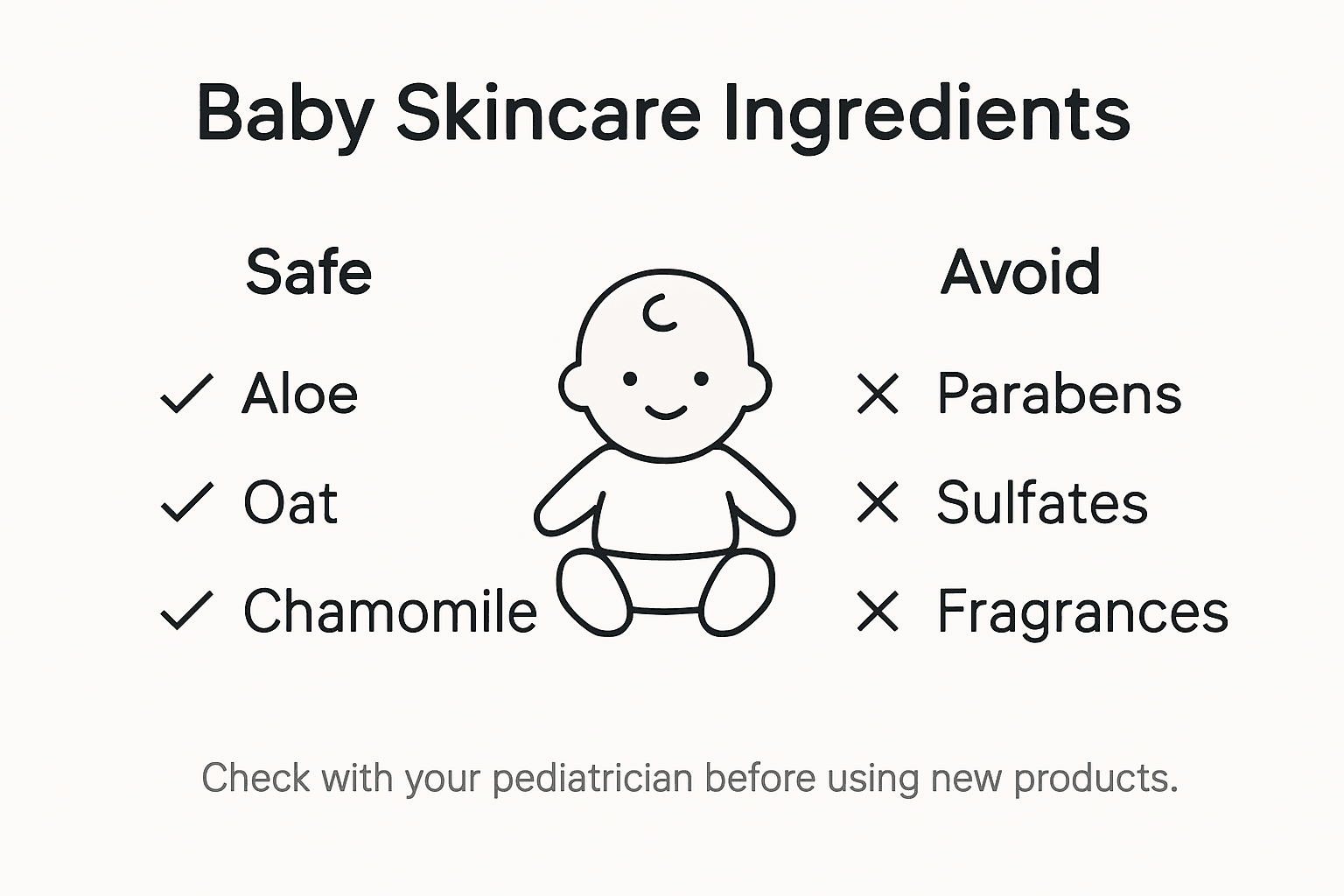
Below is a reference to help parents understand both beneficial and harmful common baby skincare ingredients.
| Ingredient | Effect on Infant Skin | Common Source |
|---|---|---|
| Ceramides | Strengthens barrier | Moisturizers, creams |
| Glycerin | Enhances hydration | Lotions, cleansers |
| Parabens | May cause irritation | Preservatives in cosmetics |
| Aloe Vera | Soothes, reduces inflammation | Natural gels, creams |
| Sulfates | Can disrupt barrier | Harsh soaps, body washes |
Pro Tip: Consult your pediatrician and conduct a small patch test before introducing any new skincare product to verify your baby’s individual skin sensitivity.
Mistakes To Avoid In Newborn Skincare
Systematic reviews of infant skincare practices reveal a constellation of common errors that can significantly compromise a newborn’s delicate skin health. Understanding these mistakes is crucial for parents seeking to provide optimal care and prevent potential long-term dermatological complications.
Key mistakes that parents frequently encounter include:
- Over-Washing: Bathing newborns too frequently or using water that is too hot
- Harsh Product Selection: Using adult skincare products or soaps with aggressive chemical compositions
- Neglecting Moisturization: Failing to apply appropriate hydrating products after bathing
- Ignoring Skin Barrier Protection: Removing natural protective substances like vernix caseosa too quickly
- Inappropriate Diaper Care: Not changing diapers frequently enough or using irritating wipes
The consequences of these errors extend beyond immediate skin irritation. Improper skincare can disrupt the newborn’s delicate microbiome, compromise the natural skin barrier, and potentially lead to chronic skin conditions such as eczema or dermatitis. Parents must approach infant skincare with a gentle, minimalist strategy that prioritizes the baby’s unique physiological needs and supports natural skin development.
Pro Tip: Always consult your pediatrician before introducing any new skincare routine and perform patch tests to identify potential skin sensitivities.
Gentle Care Starts with the Right Products for Baby Skin
Caring for your newborn’s delicate skin presents unique challenges such as sensitivity, dryness, and maintaining a balanced moisture barrier. The article highlighted the importance of gentle cleansing, effective hydration, and avoiding harsh chemicals to protect your infant’s natural skin barrier. These concerns require carefully chosen skincare solutions that match your baby’s specific skin type and support healthy, irritation-free development.
Explore our thoughtfully curated range at Facial Cleansers – Skin Styles and Facial Creams & Gels – Skin Styles which feature hypoallergenic, pH-balanced, and dermatologist-tested products designed specifically with infant skin in mind. Our collection helps you avoid common skincare mistakes while nurturing your baby’s sensitive skin with the utmost care.

Take control of your baby’s skincare journey today by visiting Skin-Styles.com. Discover trusted products that protect, hydrate, and soothe with every application. Shop now and provide your child’s skin the gentle protection it deserves.
Frequently Asked Questions
What are the essential principles of baby skincare?
Baby skincare essentials focus on three critical principles: protection, hydration, and minimal intervention. These principles help maintain natural moisture, improve skin barrier function, and prevent skin disruptions.
How can I determine my baby’s skin type?
You can identify your baby’s skin type by observing its texture, moisture retention, responsiveness to stimuli, any visible redness or inflammation, and considering family medical history. Common classifications include normal, dry, sensitive, and atopic skin.
What ingredients should I avoid in baby skincare products?
Avoid harsh ingredients such as parabens, sulfates, synthetic fragrances, and alcohol-based compounds, as they can irritate the delicate skin barrier and lead to long-term complications.
How often should I moisturize my baby’s skin?
Moisturizing should be done after every bath and anytime the skin appears dry or flaky. It’s crucial to maintain good hydration and barrier function, especially for babies with dry or sensitive skin.