

Choosing the right baby bottle nipple can feel overwhelming when you’re faced with dozens of options, each promising different benefits. With varying shapes, materials, and flow rates, it’s easy to second-guess your decision. This guide breaks down the key criteria for selecting bottle nipples, explains the most common types available in 2026, and helps you match the right nipple to your baby’s unique feeding needs. You’ll learn how material choices affect safety and comfort, how flow rates correspond to developmental stages, and which features can reduce common feeding issues like gas or colic.
Table of Contents
- Key Criteria For Choosing Baby Bottle Nipples
- Popular Types Of Baby Bottle Nipples In 2026
- Materials Used In Baby Bottle Nipples And Their Benefits
- Comparing Baby Bottle Nipples: Summary Table And Recommendations
- FAQ
Key takeaways
| Point | Details |
|---|---|
| Flow rates matter | Slow, medium, and fast flow nipples correspond to baby’s age and sucking strength to prevent choking or frustration. |
| Shape affects latch | Wide-base, orthodontic, and angled nipples each support different feeding preferences and oral development needs. |
| Material impacts safety | Silicone offers durability and hypoallergenic properties, while latex provides softness but may trigger allergies. |
| Sterilization is essential | Proper cleaning and sterilization prevent bacteria buildup and protect baby’s health regardless of nipple type. |
| Match to baby’s stage | Observing your baby’s feeding cues helps you adjust nipple choice as they grow and develop new skills. |
Key criteria for choosing baby bottle nipples
Understanding the main selection factors helps you evaluate nipple options with confidence. Flow rate is the first consideration. Newborns typically need slow flow nipples that release milk gradually, preventing choking and allowing them to coordinate sucking, swallowing, and breathing. As babies grow stronger and more efficient at feeding, medium and fast flow nipples become appropriate, usually around three to six months. Choosing the wrong flow rate can lead to frustration if milk comes too slowly or choking if it flows too quickly.
Nipple shape plays a crucial role in how well your baby latches and feeds. Wide-base nipples with gradual slopes mimic the breast’s natural shape, making them ideal for babies who switch between breastfeeding and bottle feeding. Orthodontic nipples feature a flattened shape designed to support proper oral development and palate formation. Angled nipples position milk away from the ear canal, potentially reducing the risk of ear infections while making feeding more comfortable for both baby and caregiver.
Material selection directly impacts safety, durability, and baby’s comfort. Silicone nipples are firm, easy to clean, and resistant to odors and stains. They maintain their shape well and are hypoallergenic, making them suitable for most babies. Latex nipples are softer and more flexible, which some babies prefer, but they can cause allergic reactions in sensitive infants and tend to wear out faster. Both materials require sterilize feeding accessories practices to ensure safety.
Compatibility with your existing bottles is another practical factor. Some nipples only fit specific bottle brands, while others offer universal sizing. Consider how easy the nipple is to clean, whether it has multiple parts that trap milk residue, and if it can withstand repeated sterilization without degrading.
Pro Tip: Start every baby with a slow flow nipple regardless of age when introducing bottles, then gradually increase flow rate based on feeding cues like frustration or excessive drooling.
Popular types of baby bottle nipples in 2026
Standard or natural shape nipples feature a rounded tip with a wide base that gradually narrows. These designs aim to replicate the breast’s shape and feel, encouraging babies to use the same latch and tongue movement they would during breastfeeding. The wide base requires babies to open their mouths wider, promoting proper jaw development. Many parents find these feeding accessories safety features help babies transition smoothly between breast and bottle without nipple confusion.
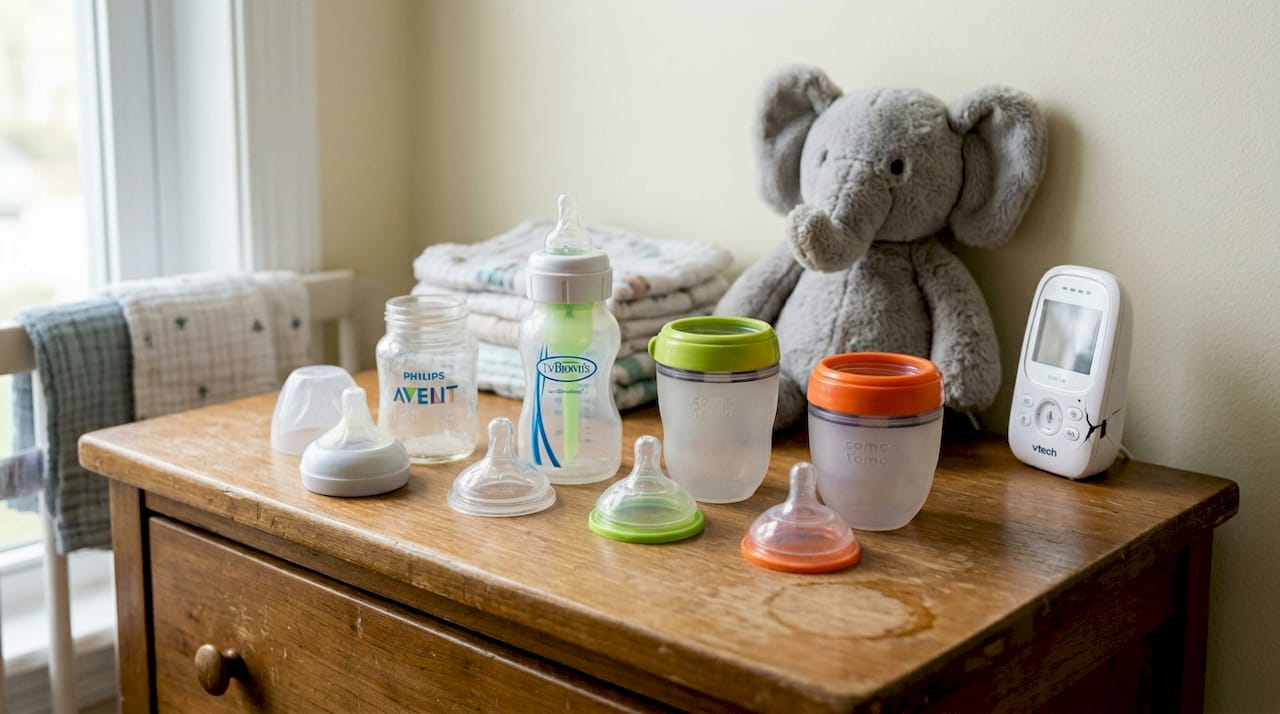
Orthodontic nipples have a distinctly flattened, asymmetrical shape that rests against baby’s palate. The design supports natural oral development by encouraging proper tongue placement and reducing pressure on developing teeth and gums. These nipples work well for babies who spend significant time bottle feeding, though some infants initially resist the unfamiliar shape. They’re particularly beneficial for babies with a strong sucking reflex who might develop oral habits with standard round nipples.
Angled nipples bend at the base, positioning the nipple tip upward when the bottle is held at a natural angle. This design keeps milk pooled at the nipple rather than flowing toward the bottle’s bottom, reducing the amount of air baby swallows during feeding. Less air intake often translates to fewer gas bubbles and reduced discomfort. Angled designs also allow caregivers to hold the bottle at a more ergonomic position during feeding sessions.
Specialty nipples address specific feeding challenges. Variable flow nipples let you control milk flow by rotating the bottle, offering flexibility as baby’s appetite changes throughout a feeding. Anti-colic nipples incorporate venting systems that equalize pressure inside the bottle, preventing vacuum formation that can cause babies to gulp air. Some feature multiple vents or internal straws that direct air away from the milk. Vented designs typically have more components to clean but can significantly reduce gas and spit-up in sensitive babies.
Pro Tip: If your baby struggles with gas despite using anti-colic nipples, check that all vents are clear and properly assembled, as blocked vents eliminate the pressure-equalizing benefit.
Materials used in baby bottle nipples and their benefits
Silicone dominates the baby bottle nipple market due to its impressive safety profile and practical advantages. This synthetic material resists heat, maintaining its shape and integrity through repeated boiling and steam sterilization. Silicone doesn’t absorb odors or flavors, so nipples won’t retain the taste of formula or breast milk between uses. The material is naturally hypoallergenic, making allergic reactions extremely rare. Silicone nipples feel firmer than latex alternatives, which some babies prefer for a consistent feeding experience. They typically last longer before showing signs of wear, though they can tear if baby develops teeth and bites down.
Latex, derived from natural rubber, offers a softer, more flexible alternative that closely mimics the texture of human skin. Many babies find latex nipples easier to compress, requiring less effort during feeding. The material warms to body temperature quickly, creating a more natural feel. However, latex poses allergy risks for babies sensitive to rubber proteins, and reactions can range from mild skin irritation to serious respiratory symptoms. Latex nipples also degrade faster, becoming sticky or discolored after several months of use. They can’t withstand high heat sterilization as well as silicone, limiting cleaning options.
Some manufacturers offer natural rubber nipples as a middle ground, providing latex-like softness with potentially fewer allergens. These remain less common than silicone or latex options. Regardless of material choice, proper feeding accessories sterilization methods protect your baby from harmful bacteria that can accumulate in nipple crevices.
| Material | Durability | Texture | Allergy Risk | Heat Tolerance | Lifespan |
|---|---|---|---|---|---|
| Silicone | High | Firm | Very Low | Excellent | 3-6 months |
| Latex | Moderate | Soft | Moderate | Good | 1-3 months |
| Natural Rubber | Moderate | Soft | Low | Good | 2-4 months |
The table shows silicone’s advantages in longevity and safety, while latex offers superior softness. Consider your baby’s sensitivity history and your sterilization preferences when choosing between materials. If anyone in your family has latex allergies, silicone is the safer choice.
Comparing baby bottle nipples: summary table and recommendations
A comprehensive comparison helps you see how different nipple characteristics align with your baby’s needs. The following table consolidates shape, material, flow, and feature information to simplify your decision.
| Nipple Type | Best Material | Ideal Flow Rate | Key Benefit | Potential Drawback |
|---|---|---|---|---|
| Standard/Natural | Silicone | Slow to Medium | Supports breastfeeding transition | May not reduce gas |
| Orthodontic | Silicone | Medium | Promotes oral development | Some babies reject the shape |
| Angled | Silicone | Slow to Fast | Reduces air intake and gas | More expensive than standard |
| Anti-Colic Vented | Silicone | Variable | Minimizes colic symptoms | Multiple parts complicate cleaning |
| Wide-Base | Silicone or Latex | Slow | Mimics breast for easy latch | Requires compatible wide bottles |
Based on specific situations, here are targeted recommendations. First, for newborns in their first month, choose slow flow silicone nipples with a natural or wide-base shape to support gentle feeding and easy latch development. Second, for babies transitioning between breast and bottle, wide-base silicone nipples with slow flow help maintain breastfeeding success by requiring similar mouth positioning. Third, for babies experiencing gas or colic, angled or vented anti-colic nipples in slow to medium flow can reduce air swallowing and digestive discomfort. Fourth, for older infants six months and beyond who feed efficiently, medium to fast flow orthodontic nipples support continued oral development while meeting increased nutritional needs.
Selecting the right nipple reduces feeding difficulties and improves overall comfort during mealtimes. Watch your baby’s feeding behavior closely. Signs of contentment include steady sucking rhythm, relaxed body posture, and satisfaction after feeding. Warning signs that you need a different nipple include excessive fussiness, milk dribbling from the mouth, choking or coughing, taking unusually long to finish bottles, or refusing to feed altogether.
If feeding problems persist despite trying different nipple types, consult your pediatrician. Underlying issues like tongue tie, reflux, or oral motor difficulties may require professional evaluation and treatment beyond nipple selection.
Find safe and comfortable feeding essentials at Skin Styles
Now that you understand how to choose the right bottle nipple, you can explore quality feeding products designed with baby’s safety and comfort in mind. Skin Styles offers BPA-free feeding solutions that make mealtime easier for both you and your little one. The 8-piece silicone baby feeding set includes suction plates, bowls, and bibs made from food-grade silicone that’s gentle on sensitive skin and easy to clean.

These feeding essentials complement your bottle feeding routine as your baby grows and begins exploring solid foods. The silicone construction means no harsh chemicals, and the suction bases help reduce mealtime messes. While you’re preparing for your baby’s feeding journey, Skin Styles also carries facial creams and gels to help parents maintain their own skincare routines during busy parenting days. Investing in quality feeding accessories creates a foundation for healthy eating habits and comfortable mealtimes throughout your baby’s first years.
FAQ
What material is safest for baby bottle nipples?
Silicone is widely considered the safest nipple material due to its hypoallergenic properties and exceptional durability. It resists bacterial growth, withstands repeated sterilization without degrading, and doesn’t contain allergens that could trigger reactions. Latex offers a softer feel but poses allergy risks for some babies, particularly those with rubber sensitivities or family histories of latex allergies. For most families, silicone provides the best combination of safety, longevity, and ease of maintenance.
How do I know if my baby needs a different nipple flow rate?
Observe your baby’s feeding behavior for clear signals about flow rate appropriateness. If your baby takes longer than 20 minutes to finish a bottle, appears frustrated, or falls asleep mid-feeding from exhaustion, the flow may be too slow. Conversely, if milk dribbles excessively from their mouth, they cough or choke during feeding, or seem overwhelmed by the milk flow, you should switch to a slower nipple. Babies should feed actively for 10 to 20 minutes with a steady, rhythmic sucking pattern.
Can nipple shape affect breastfeeding success?
Nipple shape significantly influences how easily babies transition between breast and bottle without developing preferences that interfere with breastfeeding. Wide-base nipples that mimic the breast’s natural shape encourage babies to maintain the wide latch and tongue movement used during nursing. Orthodontic nipples promote healthy oral development but may feel different enough that some babies begin preferring bottle over breast. Choose nipples designed to support breastfeeding if you plan to continue nursing alongside bottle feeding.
How often should baby bottle nipples be replaced?
Replace bottle nipples every two to three months under normal use, or immediately if you notice any damage. Inspect nipples before each use for cracks, tears, thinning, discoloration, or stickiness, all signs that replacement is needed. Damaged nipples can harbor bacteria in cracks and pose choking hazards if pieces tear off during feeding. Silicone nipples generally last longer than latex, but both materials degrade over time from repeated sterilization and baby’s sucking action. Regular replacement ensures optimal safety and feeding performance.