

Finding the right anti-aging skincare routine can feel overwhelming when you see aisles of products and advice crowding social feeds. Still, nearly 60 percent of American women report they want expert guidance to slow visible aging and protect their youthful glow. A well-structured, step-by-step approach brings clarity, offering health-conscious women proven methods that make a noticeable difference. Discover practical strategies and product tips to help you confidently create a more vibrant, resilient complexion at any age.
Table of Contents
- Step 1: Prepare Your Skin for Treatment
- Step 2: Select Targeted Anti-Aging Products
- Step 3: Apply Products in Correct Sequence
- Step 4: Enhance Results with Tools and Techniques
- Step 5: Check for Skin Improvement
Quick Summary
| Key Point | Explanation |
|---|---|
| 1. Cleanse and tone before treatment | Use a gentle cleanser and an alcohol-free toner to prepare your skin for effective product absorption. |
| 2. Choose targeted ingredients | Identify your primary skin concerns and select scientifically backed ingredients such as retinol, vitamin C, and hyaluronic acid. |
| 3. Apply products in the correct order | Layer products from thinnest to thickest consistency to maximize absorption and effectiveness of active ingredients. |
| 4. Incorporate tools to enhance results | Use at-home tools like facial rollers and gua sha stones to boost circulation and product penetration. |
| 5. Track your skin improvements | Take regular photographs and notes to objectively evaluate progress and maintain consistent documentation of changes. |
Step 1: Prepare Your Skin for Treatment
Successful anti-aging skincare starts with thorough preparation, creating the ideal canvas for targeted treatments. Understanding how to cleanse and prime your skin sets the foundation for maximum product absorption and effectiveness.
Begin by gently removing any makeup, dirt, and environmental pollutants that have accumulated on your skin throughout the day. Use a mild cleanser appropriate for your skin type, applying lukewarm water and using soft circular motions to avoid unnecessary friction. Pat your skin dry with a clean towel rather than rubbing, which can cause unnecessary stress and potential microabrasions.
After cleansing, consider using a toner to rebalance your skin’s pH levels and prepare it for subsequent treatments. Select an alcohol-free formula that hydrates while removing any remaining traces of impurities. This critical step ensures your skin is perfectly primed to receive serums, moisturizers, and specialized anti-aging products.
Pro tip: Keep your cleansing and toning products at room temperature for a more comfortable and enjoyable skincare experience.
Step 2: Select Targeted Anti-Aging Products
Choosing the right anti-aging products requires a strategic approach that addresses your specific skin concerns and goals. Targeted skincare ingredients can dramatically improve your skin’s appearance and health, so understanding how to select the most effective formulations is crucial.
Start by identifying your primary skin concerns such as fine lines, uneven texture, dark spots, or loss of elasticity. Look for scientifically backed ingredients like retinol for cell turnover, vitamin C for brightening, hyaluronic acid for hydration, and peptides for collagen production. Pay close attention to your skin type when selecting products choose lightweight serums for oily skin, richer formulations for dry skin, and nonirritating options for sensitive complexions.
Prioritize products with multiple beneficial ingredients and focus on building a comprehensive routine rather than chasing single miracle solutions. Consider your age, environmental exposure, and specific skin challenges when curating your anti-aging product lineup. Sunscreen remains the most critical anti-aging product, so ensure you select a broad-spectrum formula with at least SPF 30 to protect against both UVA and UVB rays.
Here is a summary of popular anti-aging skincare ingredients and their primary benefits:
| Ingredient | Main Benefit | Best For |
|---|---|---|
| Retinol | Boosts cell turnover | Fine lines, texture |
| Vitamin C | Brightens skin | Dullness, dark spots |
| Hyaluronic Acid | Deep hydrates skin | Dry or dehydrated skin |
| Peptides | Enhances collagen | Firmness, elasticity |
| Niacinamide | Calms and evens tone | Redness, enlarged pores |
Pro tip: Always patch test new products and introduce them gradually to minimize potential skin irritation and allow your skin to adjust.
Step 3: Apply Products in Correct Sequence
Applying skincare products in the right order is just as crucial as selecting the right ingredients. International skincare experts recommend a strategic layering approach to maximize product effectiveness and ensure optimal absorption of active ingredients.
Begin with the thinnest consistency products and progress to thicker formulations. Start with water-based serums and treatments first, allowing them to penetrate deeply into your skin. Follow with lightweight moisturizers, then seal everything with richer creams or oils. Your antioxidant serums should be applied before moisturizers but after cleansing, while targeted treatments like retinol or vitamin C work best when applied directly to clean skin. Always apply sunscreen as your final daytime step to protect the carefully crafted treatment layers underneath.

Remember that timing matters as much as sequence. Wait approximately 30 to 60 seconds between product applications to allow each formula to absorb properly and prevent potential interactions that could reduce efficacy. This methodical approach ensures that each carefully selected product can work its magic without interference.
Pro tip: Keep a simple white towel nearby to gently pat and help products absorb faster without dragging or stressing your skin.
Step 4: Enhance Results with Tools and Techniques
Taking your anti-aging routine beyond topical products can significantly amplify your skin transformation journey. Advanced biomaterials and device-based techniques offer innovative approaches to boost collagen production and improve skin regeneration far beyond traditional skincare methods.
Consider incorporating gentle at-home tools like facial rollers, gua sha stones, and electronic microcurrent devices to stimulate circulation and promote lymphatic drainage. These tools can help your carefully selected skincare products penetrate more deeply while providing additional benefits such as muscle toning and reducing puffiness. For more intensive results, explore professional treatments like microneedling, low-level laser therapy, and ultrasound technologies that trigger deeper cellular renewal and collagen synthesis. Always start with less invasive techniques and gradually introduce more advanced methods as your skin adapts.
Pay close attention to your skin’s response when introducing new tools or techniques. Some methods might cause temporary redness or sensitivity, so introduce them gradually and monitor how your skin reacts. Consistency and gentle approach are key to preventing irritation while maximizing potential anti-aging benefits.
Compare these anti-aging tools and their benefits:
| Tool | Main Benefit | Best Use Case |
|---|---|---|
| Facial roller | Reduces puffiness | Morning de-puffing routine |
| Gua sha stone | Lifts and sculpts | Contouring facial features |
| Microcurrent device | Tones facial muscles | Improving firmness |
| LED light device | Promotes cell renewal | Addressing aging signs |
Pro tip: Clean and sanitize your skincare tools after each use to prevent bacteria buildup and potential skin irritation.
Step 5: Check for Skin Improvement
Tracking your anti-aging skincare progress requires a systematic and observant approach. Recent research provides standardized clinical tools for evaluating skin aging improvements that go beyond simple visual assessment.
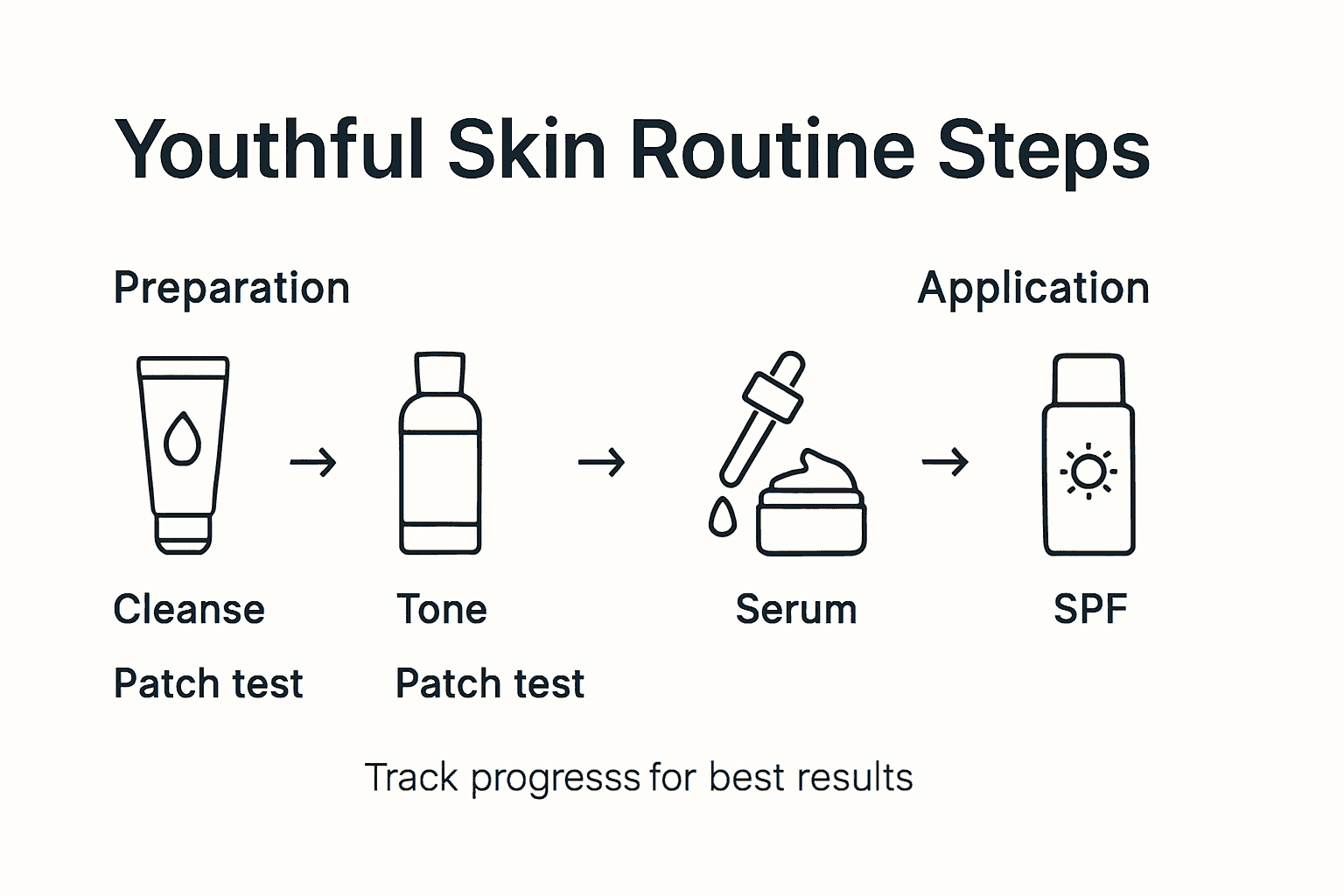
Start by taking consistent baseline photographs in similar lighting conditions every four to six weeks. Focus on key areas like around your eyes, forehead, and jawline. Document these images chronologically to create a visual progression record. Supplement photographic evidence with detailed written notes tracking specific changes such as skin texture, fine line reduction, overall luminosity, and evenness of skin tone. Consider using digital skin analysis tools that can measure factors like hydration levels, elasticity, and pigmentation changes more objectively.
Dont rely solely on visual cues. Pay attention to how your skin feels different texture improvements like increased smoothness or reduced roughness can be subtle indicators of progress. Some changes might be more noticeable to you than in photographs skin that feels more supple or appears more radiant can signal successful anti-aging interventions. Remember that meaningful skin transformation is a gradual process patience and consistent documentation are your best allies.
Pro tip: Create a dedicated digital folder or journal to track your skincare progress and maintain motivation throughout your anti-aging journey.
Elevate Your Anti-Aging Routine with Targeted Skincare Solutions
Achieving youthful skin means tackling challenges like fine lines, uneven texture, and loss of firmness with the right products and methods. This article highlights the importance of proper cleansing, strategic layering, and powerful ingredients such as retinol, vitamin C, and peptides. If you are looking to transform your skin texture and boost collagen naturally you need to start with a carefully designed routine supported by proven skincare formulations.
Discover a selection of potent Facial Serums and rejuvenating Facial Creams & Gels at Skin-Styles.com designed to maximize absorption and deliver visible anti-aging benefits.

Ready to see lasting improvements? Visit Skin-Styles.com now to explore premium anti-aging products tailored for every skin type and begin your journey toward radiant, youthful skin today. Don’t wait for results - start treating your skin with care and precision right now.
Frequently Asked Questions
How do I prepare my skin for an anti-aging routine?
Start by thoroughly cleansing your skin to remove makeup, dirt, and pollutants. Use a mild cleanser suitable for your skin type and follow up with a hydrating, alcohol-free toner to rebalance your skin’s pH before applying any treatments.
What ingredients should I look for in anti-aging products?
Focus on scientifically backed ingredients like retinol for cell turnover, vitamin C for brightening, and hyaluronic acid for hydration. Choose products based on your specific skin concerns, such as fine lines or dryness, and ensure they suit your skin type for maximum effectiveness.
In what order should I apply my anti-aging skincare products?
Apply your skincare products from thinnest to thickest consistency, starting with water-based serums, followed by moisturizers, and finishing with creams or oils. For daytime routines, always layer sunscreen as your final step to protect your skin from further aging.
How can I enhance the results of my anti-aging skin routine?
Incorporate tools and techniques such as facial rollers or gua sha stones to stimulate circulation and improve product absorption. Additionally, consider professional treatments like microneedling or laser therapy to boost collagen production and achieve more noticeable results over time.
How do I track the progress of my anti-aging routine?
Take consistent photographs of your skin in similar lighting every four to six weeks to document changes. Also, note specific improvements in texture, fine lines, and overall luminosity in a journal to help you stay motivated and measure your progress effectively.
What are the signs that my anti-aging products are working?
Look for improvements in skin texture, increased smoothness, and a reduction in fine lines over time. Some changes may be subtle, so pay attention to how your skin feels and appears, noting differences both visually and to the touch.