

TL;DR:
- A simple three-step skincare routine includes cleanse, moisturize, and protect with sunscreen.
- Introduce new products gradually, patch test, and avoid over-exfoliating to protect skin health.
- Focus on consistency with SPF and hydration for lasting skin improvements over complex routines.
Walk into any beauty store and you’ll face hundreds of products all claiming to transform your skin overnight. It’s no wonder so many beginners freeze up before they even start. The truth is, a solid skincare routine doesn’t require a 10-step program or a shelf full of serums. Dermatologists consistently point to a 3-step foundation as the most effective starting point. This guide will walk you through the essential steps, explain which ingredients actually matter, and help you avoid the most common mistakes beginners make.
Table of Contents
- The core steps: What every beginner routine needs
- Choosing the right products: Ingredients and order
- Building your routine safely: What to watch for
- Common myths and mistakes: What beginners should avoid
- Our perspective: Simplicity wins for lasting skin health
- Ready to take the next step? Discover beginner-friendly skincare
- Frequently asked questions
Key Takeaways
| Point | Details |
|---|---|
| Start simple | A gentle three-step routine is beginner-friendly and supports healthy skin. |
| Choose wisely | Use gentle cleansers, the right moisturizer, and SPF 30+ daily for protection. |
| Introduce slowly | Add one new product at a time and patch test to avoid irritation. |
| Beware of myths | Trendy products and long routines won’t guarantee better results—less is often more. |
| Lifestyle matters | Good sleep and healthy habits make your skincare routine much more effective. |
The core steps: What every beginner routine needs
Now that you know skincare doesn’t have to be complicated, let’s break down the truly essential steps. Whether you’re dealing with dry patches, oily skin, or just want a healthy glow, the same basic framework applies to everyone.
A simple everyday routine comes down to three non-negotiable actions: cleanse, moisturize, and protect. That’s it for your morning. At night, you cleanse and moisturize again, and once you’re comfortable, you can add a treatment step like a targeted serum. Treatments are optional at first and should only come after you’ve built a stable base.
Here’s what each step actually does for your skin:
- Cleansing removes dirt, oil, pollution, and leftover makeup that accumulate throughout the day. Without it, everything else you apply sits on top of a layer of grime.
- Moisturizing keeps your skin barrier (the outer protective layer) strong and hydrated. A healthy barrier means fewer breakouts, less sensitivity, and more even tone over time.
- Sunscreen (AM only) is the single most important anti-aging and protective step you can take. UV exposure causes up to 90% of visible skin aging, and skipping SPF makes every other product less effective.
For a deeper look at how these steps fit together, our skincare steps guide walks through the full process with product examples.
One thing beginners often overlook is the importance of gentle cleansers. Harsh soaps strip your skin’s natural oils, which actually triggers more oil production and irritation. Starting with a gentle formula protects your barrier from day one.
Pro Tip: If you have sensitive or dry skin, skip the morning cleanse and just rinse with water. Your skin doesn’t get dirty while you sleep, and cleansing twice daily can be too much for delicate skin types.
Choosing the right products: Ingredients and order
With the steps in mind, product choice and application order become much less intimidating. The key is knowing what to look for and what to avoid.
Start with a gentle, fragrance-free cleanser suited to your skin type. Fragrance is one of the top causes of skin irritation, especially for beginners whose skin hasn’t been tested with many products yet. For choosing cleansers that won’t cause problems, look for labels that say “gentle,” “for sensitive skin,” or “sulfate-free.”
For moisturizers, focus on hydration ingredients like ceramides, hyaluronic acid (HA), and glycerin. Ceramides repair and reinforce the skin barrier. HA pulls moisture into the skin. Glycerin locks it in. Together, these three are a powerhouse combination for almost every skin type.
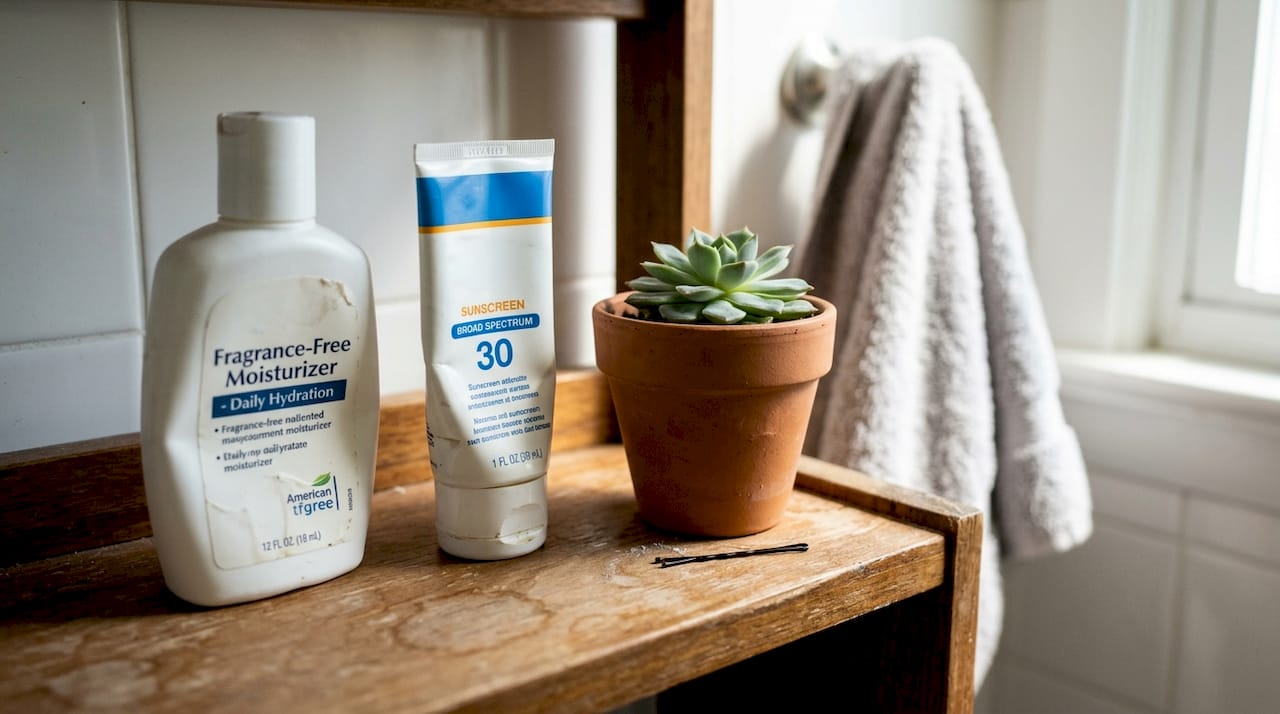
For sunscreen, go with broad-spectrum SPF 30 or higher. “Broad-spectrum” means it protects against both UVA (aging) and UVB (burning) rays. According to dermatologist recommendations, beginners should skip actives like retinol or vitamin C until their skin is stable with the basics.
Application order matters more than most people realize. Apply products thinnest to thickest: cleanser first, then any lightweight serum, then moisturizer, and finally sunscreen in the morning. Heavier products applied first can block lighter ones from absorbing.
| Product type | Look for | Avoid |
|---|---|---|
| Cleanser | Gentle, sulfate-free, fragrance-free | Soap bars, alcohol-based formulas |
| Moisturizer | Ceramides, hyaluronic acid, glycerin | Fragrance, mineral oil (for acne-prone) |
| Sunscreen | Broad-spectrum SPF 30+ | SPF below 30, no UVA protection |
| Serum (later) | Niacinamide, vitamin C, retinoids | Multiple actives at once |
Paying attention to key ingredients like ceramides, HA, and niacinamide gives you a real advantage when shopping.
Pro Tip: Before applying any new product to your whole face, do a patch test. Apply a small amount to the inside of your wrist or behind your ear and wait 24 hours. If no redness or itching appears, you’re good to go.
Building your routine safely: What to watch for
Selecting great products is important, but how you introduce them and manage your routine makes a big difference. Many beginners make the mistake of launching five new products at once and then having no idea which one caused a breakout or rash.
The golden rule is: introduce one new product at a time. Wait at least one week before adding another. This gives your skin time to react and gives you clear information about what’s working. Our routine workflow guide breaks this process down into a practical schedule.
Exfoliation is another area where beginners often go overboard. Safe exfoliation means no more than one to two times per week, and only after your basic routine feels comfortable. Over-exfoliating strips the skin barrier and leads to redness, flaking, and sensitivity.
“More products don’t mean better results. Overloading your skin with actives and treatments damages the barrier and creates the exact problems you’re trying to solve.” — Northwell Health skin experts
Here are the key safety tips every beginner should follow:
- Introduce one new product at a time and wait 7 days before adding another.
- Always patch test before applying anything new to your full face.
- Limit exfoliation to once or twice per week maximum.
- If your skin feels tight, red, or irritated, scale back to just cleanser and moisturizer.
- Wear sunscreen every single day, including on cloudy days and when you’re mostly indoors.
- Give any new product at least 4 to 6 weeks before judging whether it works.
Barrier damage from product overuse is one of the most common issues dermatologists see in new skincare users. Keeping it simple protects you from this entirely.
Common myths and mistakes: What beginners should avoid
While building safe habits, it’s also important to sidestep popular misconceptions. The skincare world is full of marketing claims and social media trends that can lead beginners in the wrong direction.
Let’s look at the most common myths and what the facts actually say:
| Myth | Fact |
|---|---|
| More products equal better skin | 3 well-chosen steps outperform a 10-step routine for most people |
| You can skip SPF if you’re indoors | UV rays penetrate windows; daily SPF is essential |
| Natural ingredients are always safe | Many natural extracts cause allergic reactions |
| Expensive products work better | Price doesn’t predict effectiveness; ingredients do |
| Oily skin doesn’t need moisturizer | All skin types need hydration to stay balanced |
Dermatologists emphasize simplicity over trend-chasing. A focused routine built around sunscreen and hydration consistently outperforms complex routines full of trendy actives.
Watch out for these red flags in product marketing:
- Claims like “works overnight” or “erases wrinkles in 7 days”
- Long ingredient lists with multiple fragrance compounds
- Products that promise to “detox” your skin (your liver does that, not a cream)
- Influencer-promoted routines with 8 or more steps labeled as “essential”
Finally, don’t underestimate lifestyle. Sleep, diet, and not smoking have a measurable impact on how your skin looks and responds to products. Poor sleep raises cortisol, which breaks down collagen. A diet high in processed sugar accelerates skin aging. No product can fully compensate for these factors, so building good habits off the shelf matters just as much as what you put on your face.
Visit our simple routine benefits resource for a practical breakdown of how a minimal routine delivers maximum results.
Our perspective: Simplicity wins for lasting skin health
Having covered what to avoid, let’s take a step back and consider the bigger picture. After guiding many beginners through their first routines, one pattern stands out clearly: the people who stick with a simple, consistent approach always win over those who chase every new trend.
The skincare industry is designed to make you feel like you need more. A new peptide complex here, a “revolutionary” acid blend there. But skin is a living organ that responds best to stability. Every time you swap out a product or pile on something new, you’re essentially resetting the clock.
Our honest advice: prioritize SPF and a good moisturizer above everything else. These two steps, done consistently, deliver more visible improvement over six months than any 10-step routine done inconsistently. Explore detailed routine strategies only once you feel confident in your foundation.
Patience is the ingredient nobody sells. Give your skin time, keep it simple, and you’ll see results that actually last.
Ready to take the next step? Discover beginner-friendly skincare
If you’re ready to take your first confident steps, here’s where to start. Building a routine is so much easier when you’re not guessing which products to trust.

At Skin Styles, we’ve curated collections specifically for beginners who want effective, gentle options without the confusion. Our gentle facial creams collection features moisturizers formulated with the barrier-supporting ingredients covered in this guide. If you’re looking for trusted brand options, our Cosrx products range is a dermatologist-favorite choice that’s gentle enough for first-time users. Browse by skin concern, read product descriptions, and start with just the basics. We make it easy to build a routine that actually fits your skin and your life.
Frequently asked questions
How many steps should a beginner skincare routine have?
A beginner routine should have 3 steps: cleanse, moisturize, and apply SPF in the morning. Optional treatments can be added later once your skin is stable.
Can I skip sunscreen indoors?
No. Daily sunscreen use is recommended even indoors because UV rays pass through windows and cause cumulative skin damage over time.
How do I know if a product irritates my skin?
If you notice redness, burning, or itching after applying a new product, stop using it immediately. Always patch test new products on a small area of skin before applying to your full face.
Should I use serums and actives from the start?
Most beginners should focus on gentle basics first. Avoid actives like retinol or vitamin C initially and introduce them only after your skin is comfortable with the core routine.
Does lifestyle affect how well my skincare routine works?
Yes, significantly. Sleep, diet, and not smoking all directly affect how your skin looks and how well it responds to the products you use.