

Finding a truly natural skincare routine can feel confusing when so many products claim to be chemical-free yet lack clear definitions. With terms like natural and organic often used without regulation in the United States, making healthy choices becomes challenging for those wanting safer alternatives. This guide will clarify common myths, spotlight the reality of natural ingredients, and help you make informed decisions that support your skin’s health and your peace of mind.
Table of Contents
- Defining Natural Skincare and Common Myths
- Types of Natural Skincare Ingredients Explained
- Key Benefits for Skin and Overall Health
- Comparing Natural Versus Synthetic Products
- Risks, Allergens, and What to Avoid
- Ethical, Environmental, and Wellness Impact
Key Takeaways
| Point | Details |
|---|---|
| Natural Does Not Always Mean Safe | Consumers should be aware that some natural ingredients can cause allergic reactions or skin irritation, requiring careful evaluation. |
| Research Ingredients | Prioritize understanding ingredient sourcing, transparency, and potential effects on individual skin types for safer choices. |
| Consider Ethical Practices | Evaluate the environmental impact and ethical sourcing of skincare products, supporting brands that demonstrate sustainability. |
| Consult Experts | Seek advice from dermatologists to develop a personalized natural skincare routine tailored to specific skin health needs. |
Defining Natural Skincare and Common Myths
The term natural skincare encompasses topical products crafted from ingredients sourced directly from nature, including plants, minerals, and botanical extracts. However, the definition remains frustratingly complex. Natural ingredients lack consistent regulatory definitions, creating significant confusion for consumers seeking authentic, chemical-free products.
Most people assume “natural” automatically means safe and healthy, but this misconception can lead to dangerous assumptions. Natural ingredients are not inherently harmless - some can trigger severe allergic reactions or cause skin irritation. In fact, many natural substances require careful evaluation by dermatological experts to determine their true safety and effectiveness.
Common myths surrounding natural skincare often mislead consumers. Here are key misconceptions to be aware of:
- Natural always means safe: Not true. Some natural ingredients can be more irritating than synthetic alternatives
- All chemicals are harmful: Scientifically incorrect. Many synthetic ingredients are carefully formulated and extensively tested
- Organic equals perfect skincare: Organic certification doesn’t guarantee product effectiveness or skin compatibility
Understanding these nuances requires careful research and informed decision-making. Consumers should prioritize ingredient transparency, individual skin needs, and scientific validation over marketing claims.
Pro tip: Always patch test new skincare products, regardless of whether they’re marketed as natural or synthetic, to ensure your skin’s compatibility and prevent potential adverse reactions.
Types of Natural Skincare Ingredients Explained
Natural skincare ingredients represent a diverse and fascinating world of botanical, marine, and plant-based compounds that offer remarkable skin benefits. Innovative green chemistry technologies are transforming how we source and incorporate these powerful natural elements into skincare formulations.

The landscape of natural ingredients encompasses several key categories that provide unique therapeutic properties. Plant-based ingredients like vegetable oils, herbal extracts, and essential oils form the foundation of many natural skincare products. These components offer diverse benefits ranging from hydration to anti-inflammatory effects, making them incredibly versatile for different skin types and concerns.
Marine-derived ingredients represent another exciting frontier in natural skincare. Marine ingredients extend beyond traditional algae and seaweed to include sophisticated compounds like:
- Marine collagen: Enhances skin elasticity and promotes regeneration
- Omega-3 fatty acids: Provides intense hydration and reduces inflammation
- Sea peptides: Supports cellular repair and skin resilience
- Marine minerals: Detoxifies and remineralizes skin tissue
Ultimately, understanding these ingredients requires careful research and an appreciation for their complex biological origins. Consumers should prioritize products that transparently source and responsibly incorporate these natural compounds.
Pro tip: When exploring natural skincare ingredients, always verify the sourcing and extraction methods to ensure maximum potency and minimal environmental impact.
Key Benefits for Skin and Overall Health
Natural skincare offers profound benefits that extend far beyond surface-level appearance. Preventive skincare practices protect against multiple health risks, including premature aging, environmental damage, and potential skin diseases.
The holistic advantages of a comprehensive natural skincare routine encompass multiple dimensions of health. Skin barrier protection plays a crucial role in overall wellness, acting as the body’s first line of defense against external pathogens, pollutants, and environmental stressors. Maintaining this protective layer through natural ingredients helps support immune function and reduce inflammatory responses.
Key benefits of natural skincare for skin and overall health include:
- Cellular regeneration: Supports natural healing and repair processes
- Hydration maintenance: Prevents dryness and supports skin elasticity
- Antioxidant protection: Neutralizes free radicals and reduces oxidative stress
- Inflammation reduction: Minimizes skin irritation and potential long-term damage
- Microbiome balance: Supports the skin’s natural protective ecosystem
Natural skincare isn’t just about looking good - it’s about supporting your body’s most extensive protective organ.
Consumers should recognize that effective skincare goes beyond superficial treatments, focusing on long-term skin health and overall physiological well-being. By choosing natural ingredients tailored to individual skin types, individuals can create a personalized approach to maintaining skin resilience and vitality.
This overview highlights skin health benefits resulting from natural skincare routines:
| Benefit | Direct Effect | Broader Health Impact |
|---|---|---|
| Barrier Strength | Reduces water loss | Protects against pollutants |
| Antioxidant Support | Neutralizes free radicals | Slows signs of skin aging |
| Microbiome Balance | Encourages healthy flora | Supports immune defenses |
| Hydration | Maintains skin elasticity | Prevents flaking and tightness |
Pro tip: Consult with a dermatologist to understand your specific skin type and develop a targeted natural skincare strategy that addresses your unique health needs.
Comparing Natural Versus Synthetic Products
Skincare ingredients represent a complex landscape where natural and synthetic products each offer unique advantages and potential drawbacks. The perception of natural being inherently safer is fundamentally misleading, as safety depends on scientific evidence rather than ingredient origin.
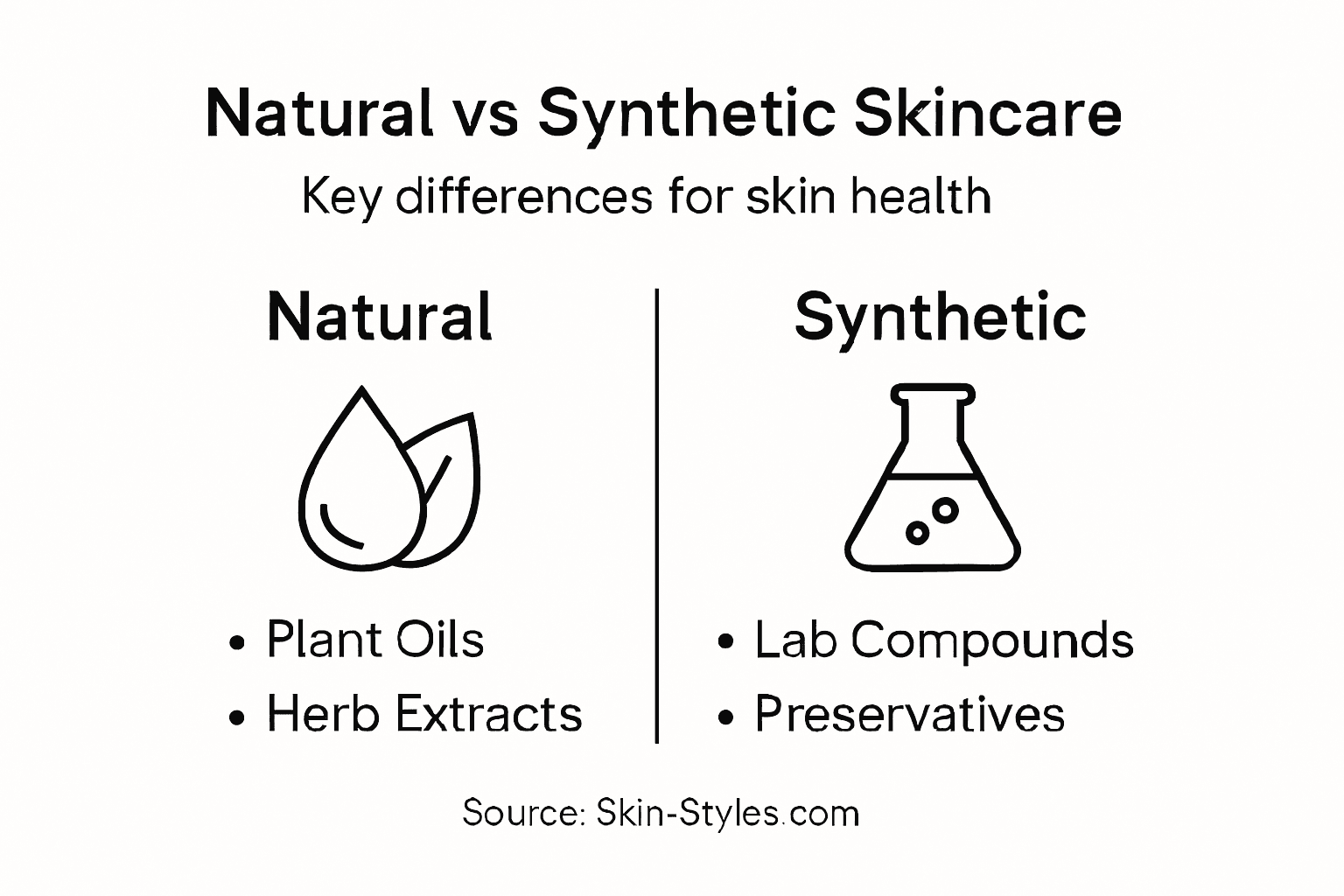
Understanding the nuanced differences requires examining multiple factors beyond simple categorization. Synthetic ingredients often undergo rigorous testing and can provide consistent, stable formulations that natural alternatives may struggle to match. Conversely, natural products can offer complex botanical compounds with potentially beneficial properties that synthetic versions cannot easily replicate.
Key comparative factors between natural and synthetic skincare products include:
- Ingredient Stability: Synthetic products typically maintain longer shelf life
- Allergenic Potential: Natural ingredients can sometimes trigger more adverse reactions
- Environmental Impact: Synthetic ingredients might have lower ecological footprints
- Effectiveness: Both categories can deliver significant skincare benefits
- Cost: Natural products often require more expensive sourcing and processing
Not all chemicals are harmful, and not all natural substances are safe - scientific evaluation matters most.
Ethical considerations extend beyond ingredient composition, encompassing sustainability, production methods, and overall environmental responsibility. Consumers should prioritize transparent sourcing, comprehensive ingredient understanding, and personal skin compatibility over simplistic natural versus synthetic dichotomies.
Here’s a comparison of common natural and synthetic skincare ingredient characteristics and their practical impact:
| Aspect | Natural Ingredients | Synthetic Ingredients |
|---|---|---|
| Sourcing | Derived from plants or minerals | Lab-created or refined compounds |
| Consistency | May vary by batch | Highly standardized |
| Innovation Potential | Uses traditional remedies | Enables advanced formulations |
| Shelf Stability | Prone to spoilage or oxidation | Typically long-lasting |
| Regulatory Oversight | Lacks strict universal standards | Often subject to safety regulations |
| Allergen Profile | Can cause unpredictable reactions | Usually pre-screened for irritants |
Pro tip: Research individual ingredients thoroughly and perform patch tests, regardless of whether a product is marketed as natural or synthetic.
Risks, Allergens, and What to Avoid
Skincare risks extend far beyond surface-level concerns, encompassing complex interactions between ingredients and individual skin biology. Common skincare allergens can trigger significant health reactions, even in products marketed as natural or hypoallergenic.
Even seemingly harmless natural ingredients can provoke unexpected responses. Essential oils, botanical extracts, and plant-based compounds often contain potent chemical structures that might cause inflammation, allergic reactions, or skin sensitivity. Understanding these potential triggers requires careful examination of ingredient profiles and personal skin characteristics.
Key allergens and ingredients to approach with caution include:
- Essential oils: Potent concentrated extracts that can cause severe skin reactions
- Fragrance compounds: Hidden triggers for multiple allergic responses
- Preservatives: Both natural and synthetic versions can irritate sensitive skin
- Plant extracts: Not all botanical ingredients are universally safe
- Synthetic additives: Potential hormone disruptors and irritants
Natural does not automatically mean safe - scientific understanding matters most.
Comprehensive ingredient research helps minimize potential health risks, revealing hidden dangers in both natural and synthetic formulations. Consumers must look beyond marketing claims and investigate specific ingredient interactions and potential long-term effects.
Pro tip: Maintain a detailed skincare journal documenting product ingredients and your skin’s reactions to build personalized knowledge about your unique sensitivities.
Ethical, Environmental, and Wellness Impact
Wellness-driven skincare represents a holistic approach that extends far beyond individual health, encompassing broader ecological and social responsibilities. Skincare production significantly impacts global environmental ecosystems, creating complex challenges that conscientious consumers must carefully navigate.
The environmental footprint of skincare involves multiple interconnected considerations, from ingredient sourcing to packaging waste. Palm oil production, microplastic contamination, and petrochemical-derived substances contribute substantially to ecological degradation, making consumer choices increasingly critical in promoting sustainable practices.
Key ethical and environmental factors in skincare selection include:
- Ingredient Sourcing: Prioritize responsibly harvested botanical components
- Packaging Sustainability: Choose minimal, recyclable, or biodegradable packaging
- Manufacturing Transparency: Support brands demonstrating ecological commitment
- Carbon Footprint: Consider production and transportation environmental costs
- Animal Welfare: Select cruelty-free and ethically produced products
Conscious consumption transforms individual choices into collective environmental impact.
Ethical skincare involves comprehensive considerations beyond product performance, demanding consumers evaluate social and environmental implications of their purchasing decisions. This approach recognizes that wellness extends beyond personal health to encompass planetary well-being.
Pro tip: Research brands’ sustainability certifications and environmental commitments before making skincare purchases to align your personal wellness with broader ecological responsibility.
Discover Safe and Effective Natural Skincare Solutions Today
Choosing natural skincare means prioritizing your skin’s health and overall wellness while navigating the complexities of ingredient safety and environmental impact. If you want products that honor your skin’s unique needs and harness the power of responsibly sourced natural ingredients, start by exploring our curated range of Facial Serums and Facial Creams & Gels. These selections are designed to protect, hydrate, and support your skin’s natural barrier without compromising on quality or ethics.

Don’t wait to embrace a skincare routine that balances science and nature for lasting benefits. Visit Skin-Styles.com now and find trusted products that empower you to make informed, skin-friendly choices. Experience the difference that transparency, safety, and sustainability can make starting today.
Frequently Asked Questions
What are the primary benefits of using natural skincare products?
Natural skincare products offer various benefits, including cellular regeneration, hydration maintenance, antioxidant protection, inflammation reduction, and microbiome balance. These advantages contribute to healthier skin and overall well-being.
Are natural skincare ingredients always safe for my skin?
Not necessarily. While many natural ingredients can be beneficial, some can cause allergic reactions or skin irritation. It’s crucial to research specific ingredients and perform patch tests to ensure compatibility with your skin.
How do natural skincare products compare to synthetic ones?
Natural skincare products often contain complex botanical compounds with unique benefits, while synthetic products may offer stability and consistent formulations. Both types can be effective, but safety depends on the specific ingredients and their testing, not just their classification.
What should I avoid when choosing natural skincare products?
Avoid products with known allergens, such as certain essential oils, fragrance compounds, and preservatives, as they can cause skin irritation. Always examine ingredient lists and opt for products that prioritize transparency and sourcing.