

Finding the right moisturizer can feel overwhelming when so many bottles claim to do the same thing. For those who care about healthy skin, knowing the true difference between a lotion and a cream is key. These two everyday essentials offer unique textures and moisture benefits that go far beyond personal preference. This guide helps you make smarter choices for your routine by breaking down what sets lotions and creams apart from the inside out.
Table of Contents
- Defining Lotions And Creams In Skincare
- Texture, Ingredients, And Absorption Differences
- When To Use Lotions Vs. Creams
- Common Misconceptions And Mistakes To Avoid
- Comparing Lotions, Creams, And Similar Products
Key Takeaways
| Point | Details |
|---|---|
| Lotions vs. Creams | Lotions are lightweight and absorb quickly, making them ideal for oily skin, while creams provide deeper hydration for dry skin. |
| Skin Type Consideration | Choose products based on your skin type: lotions for oily or combination skin and creams for dry or sensitive skin. |
| Climate Adaptation | Use lotions in warm, humid climates for a light feel, and switch to creams in cold, dry climates for better moisture retention. |
| Layering Strategy | Combine lotions and creams for optimal results by applying lotion first and sealing in moisture with cream. |
Defining Lotions and Creams in Skincare
Moisturizers come in different forms, and understanding their differences matters for your skin. Lotions and creams are the two most common types you’ll encounter, but they’re not interchangeable. Knowing what makes each one unique helps you pick the right product for your skin’s actual needs.
Understanding Lotions
Lotions are lighter-weight formulations designed to hydrate without leaving a heavy feel. They’re typically oil-in-water emulsions with high water content and lower oil concentration, which means they absorb quickly into your skin. This makes them ideal if you have oily or combination skin, or if you dislike that greasy residue after application.
The high water content gives lotions their signature texture—they pour smoothly and spread easily across larger areas. You’ll feel them sink into your skin within seconds, rather than sitting on the surface. Lotion’s lower viscosity means less product stays on your skin, which is why they work well for warm climates or under makeup.
- Fast absorption with minimal residue
- Lightweight feel during and after application
- Better for oily, combination, or sensitive skin types
- Ideal for face and body use in warm weather
Understanding Creams
Creams take the opposite approach. They’re semi-solid emulsions with higher viscosity and significantly more oil content than lotions. This richer formula provides deeper, longer-lasting moisture, making them better for dry skin that needs intensive hydration.
Pharmaceutical creams balance water and oils to deliver both hydration and nourishment without the heaviness of traditional ointments. They sit on your skin longer, giving active ingredients more time to work. The thicker consistency means a little goes further, and the moisturizing benefits last longer throughout the day or night.
- Richer, more intensive hydration
- Better for dry, mature, or sensitive skin
- Longer-lasting moisture retention
- Thicker consistency requires less product
Key Differences at a Glance
| Feature | Lotions | Creams |
|---|---|---|
| Texture | Thin, pourable | Thick, spreadable |
| Oil-to-Water Ratio | More water, less oil | More oil, less water |
| Absorption Speed | Very fast | Slower, more gradual |
| Best For | Oily, combination skin | Dry, mature skin |
| Feel on Skin | Light, non-greasy | Rich, nourishing |
Lotions work fast but don’t last as long, while creams provide deeper moisture that lingers on your skin. Choose based on your skin type, not just preference.
Both lotions and creams can contain the same active ingredients for treating specific skin concerns. The difference is delivery—lotions get where they’re going quickly, while creams work more slowly but deeper. Your skin type and climate should guide your decision more than any trend.
Pro tip: Layer a lightweight lotion first, then seal it with a thin layer of cream if your skin needs both fast absorption and lasting hydration. This combination gives you the best of both worlds without feeling heavy.
Here’s a quick guide to choosing lotion or cream based on different situations:
| Scenario | Best Choice | Reason |
|---|---|---|
| Hot, humid climate | Lotion | Absorbs fast, feels light |
| Cold, dry climate | Cream | Locks in moisture, protects skin |
| Active daytime routine | Lotion | Works well under makeup |
| Overnight hydration | Cream | Provides sustained moisture |
| Large body coverage | Lotion | Spreads easily over skin |
| Targeted dry patches | Cream | Delivers richer nourishment |
Texture, Ingredients, and Absorption Differences
The real distinction between lotions and creams goes beyond how they feel. Their formulation, ingredient composition, and how quickly they absorb into your skin create fundamentally different experiences. Understanding these differences helps you pick the product that actually works for your skin.
Texture and Consistency
Lotions have a thin, pourable consistency that spreads easily across large areas. You can squeeze them from a bottle and apply them with minimal effort, which is why they’re popular for full-body moisturizing.
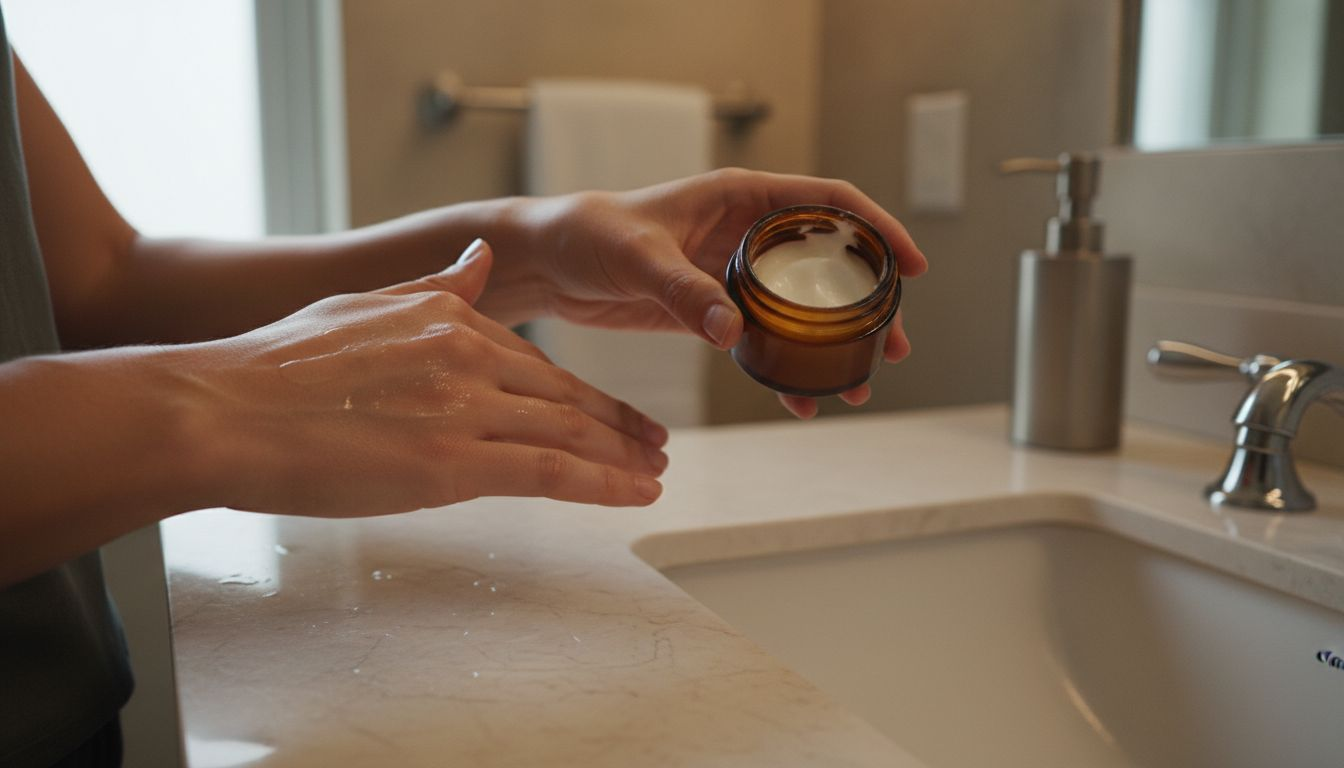
Creams are thicker and more viscous, requiring a bit more effort to spread but delivering that rich, luxurious feel many people love. The thicker consistency means you typically use less product per application, making them more economical despite higher upfront costs.
Texture preference is personal, but it affects how you’ll actually use the product. If you hate the feel of heavy products on your face, lotions win. If you love that nourished, cushioned feeling, creams deliver.
How Ingredients Differ
Both lotions and creams contain water, oils, and emulsifiers that blend these ingredients together. The ratio of each changes everything.
Cream formulations contain more oils and emulsifiers designed to help active ingredients penetrate deeper and stay on your skin longer. This is why creams often feel more nourishing—they’re literally delivering more conditioning ingredients.
Lotions, with their higher water content, include lighter oils and fewer emulsifiers. This keeps them spreadable and quick-absorbing but means less intensive moisturizing power.
- Creams: More oils, stronger emulsifiers, preservatives, active ingredients
- Lotions: More water, lighter oils, minimal emulsifiers, faster-absorbing actives
- Both can contain the same active treatments but in different delivery vehicles
Absorption Speed and Duration
Lotions absorb quickly without greasiness because water evaporates and lighter oils sink in fast. You’ll feel hydrated within minutes, making them perfect for morning routines under makeup or sunscreen.
Creams absorb more slowly, creating a protective barrier that locks moisture into your skin. This slower absorption means longer-lasting hydration, ideal for nighttime or very dry skin. The trade-off: they may feel heavy immediately after application.
Which Covers More Area?
Lotions win for coverage. Their lighter texture and greater spreadability mean you can cover your entire body quickly with a single pump or two. Creams require more product to cover the same area, though less cream may feel more luxurious.
This is why lotions dominate in body moisturizers while creams are popular for concentrated facial care.
Absorption speed and lasting power work inversely—fast absorption means lighter hydration, while longer-lasting moisture means a heavier feel at first.
Choosing Based on Formulation
Consider your climate and daily routine. Warm, humid environments pair better with fast-absorbing lotions. Cold, dry climates benefit from cream’s moisture-locking barrier. Your skin type matters too—emollients in creams provide deeper relief for sensitive skin, while lotions suit oily or combination complexions.
Pro tip: Test products on your inner arm or jawline first—these areas reveal how a product will perform on your face without committing to a full bottle or risking breakouts.
When to Use Lotions vs. Creams
Choosing between a lotion and cream isn’t just about preference—it’s about matching the product to your skin’s actual needs. The right choice depends on your skin type, the area you’re treating, and what you’re trying to accomplish. Getting this right transforms your skincare routine from adequate to effective.
By Skin Type
Oily and combination skin thrives with lotions. Their lightweight texture won’t clog pores or leave your skin feeling greasy by midday. Lotions absorb quickly, letting you move on with your routine without that heavy residue.
Dry skin benefits from creams. Dry skin requires richer moisturizers with more oil content to actually penetrate and hydrate effectively. Creams create a protective barrier that keeps moisture locked in throughout the day and night.
Normal skin has flexibility. You can use either depending on the season and how your skin feels. Winter might call for creams while summer feels better with lotions.
Sensitive skin typically prefers creams. The richer formula is gentler and less likely to cause irritation. Creams also provide better protection for compromised skin barriers.
By Body Area
Where you apply matters just as much as your skin type.
- Face: Lotions for oily skin, creams for dry skin. Facial skin is more delicate and prone to clogging.
- Body: Lotions dominate here. You need something that covers large areas quickly without feeling heavy.
- Hands and feet: Creams work better. These areas get more friction and exposure, needing heavier protection.
- Hairy areas: Lotions work best on larger or hairy skin areas since they spread easily without leaving buildup.
By Season and Climate
Summer and warm climates call for lotions. Heat makes creams feel suffocating, and lotions’ quick absorption keeps you comfortable. Humidity also reduces the need for heavy occlusive barriers.
Winter and cold climates favor creams. Dry air strips moisture from your skin faster, and creams provide the extra protection you need. The richer formula fights environmental damage better.
By Skin Condition
If your skin has specific concerns, the product choice shifts based on severity.
Mild dryness responds to lotions. Moderate to severe dryness needs creams. Eczema, psoriasis, and extremely sensitive skin almost always require creams for adequate barrier support and hydration.
Aging skin often benefits from creams. As you age, skin naturally becomes drier and loses elasticity—creams address both issues with their nourishing formulas.
Your skin’s needs change with seasons, stress, and age. Reassess your moisturizer choice every few months rather than sticking with one product year-round.
Creating a Layering Strategy
You don’t have to choose just one. Many people use both strategically—a lotion under sunscreen or makeup in the morning, then a cream at night for deeper hydration. Understanding the seven types of moisturizers helps you build a complete routine that addresses all your skin’s needs.
Pro tip: Apply lotion to damp skin and seal it with cream on top for maximum hydration—the lotion delivers lightweight moisture while the cream locks everything in.
Common Misconceptions and Mistakes to Avoid
Skincare is full of myths that mislead people into making poor product choices. Understanding what’s actually true versus what’s just marketing hype helps you use lotions and creams more effectively. Let’s clear up the biggest misconceptions so you can make confident decisions.
The Dependency Myth
The most persistent myth: your skin becomes dependent on moisturizers if you use them regularly. This is completely false. Discontinuing moisturizers merely causes skin to revert to its natural hydration state—nothing worse happens.
What actually occurs is this: if you have naturally dry skin, stopping moisturizer means your skin returns to being dry. Your skin doesn’t become “addicted” to the product. It simply goes back to baseline.
Your skin has an inherent ability to produce its own oils. Moisturizers supplement this natural process. Using them doesn’t weaken your skin’s function.
Fragrance and Sensitive Skin
A major mistake is applying fragranced or scented products to sensitive skin. Fragrances and scents cause irritation and allergic reactions, especially on compromised skin barriers.
If you have sensitive skin, stick to fragrance-free options. Your skin doesn’t care about pleasant smells—it needs gentle, effective hydration.
Wrong Product for Your Skin Type
Using a lotion when you need a cream (or vice versa) reduces effectiveness and can cause problems.
- Applying cream to oily skin causes clogging and breakouts
- Using lotion on severely dry skin leaves you dehydrated
- Pairing the wrong product with your skin condition wastes money and frustration
This isn’t a minor error. The wrong product actively works against your skin’s needs.
Application Mistakes
Applying products on damp or broken skin affects absorption and irritation risk. While slightly damp skin can enhance absorption, very wet skin dilutes the product and broken skin becomes more vulnerable to irritation.
Using too much product is another common error. More isn’t better—excess product sits on your skin, causing buildup and potential clogging.
Layering Incompatible Formulations
Mixing products that don’t work together reduces their effectiveness. Some ingredients compete with each other, while others separate when layered incorrectly.
General rule: apply lighter textures first, then heavier ones. Lotion before cream. Water-based before oil-based.
Misunderstanding Occlusiveness
Many people think “more occlusive equals better hydration.” That’s not accurate. Occlusiveness matters only if you’re actually trapping moisture in.
Applying a heavy cream to dehydrated skin doesn’t add water—it just seals in the dryness. You need actual hydration first, then occlusion to lock it in.
The biggest mistake isn’t using the wrong product once. It’s sticking with an ineffective product for months because you expect it to eventually work.
Seasonal Neglect
Many people choose one moisturizer and never adjust it. Your skin’s needs change with temperature, humidity, and indoor heating. What works in summer likely fails in winter.
Reassessing your routine seasonally prevents unnecessary dryness or congestion.
Pro tip: Patch test any new lotion or cream on your inner arm for 24-48 hours before applying to your face—this catches potential irritation without risking breakouts on visible skin.
Comparing Lotions, Creams, and Similar Products
Lotions and creams aren’t your only moisturizing options. Understanding how they stack up against gels, ointments, and other products helps you build a complete skincare arsenal. Each formulation serves a specific purpose based on its water-to-oil ratio and texture.
Lotions vs. Creams: A Quick Recap
Lotions are water-forward formulations with 65-80% water content and lighter oils. They absorb quickly, feel non-greasy, and work well for normal to slightly dry skin and large body areas.
Creams contain 50-65% water with richer oils and butters. They absorb slowly, feel luxurious, and provide longer-lasting hydration perfect for dry or sensitive skin.
Both use emollients that soften and smooth skin by filling gaps in your skin barrier. The main difference is how intensely they work.
What About Gels?
Gels are the lightest option, containing even more water than lotions with minimal oil. They’re ideal for extremely oily skin or acne-prone complexions since they provide hydration without any greasiness.
Gels absorb almost instantly but offer the least lasting power. They’re perfect for layering under other products or using alone if your skin naturally produces enough oil.
The tradeoff: gels won’t help severely dry skin because they lack the oils needed for barrier protection.
Understanding Ointments
Ointments sit at the opposite end of the spectrum. They’re predominantly oil-based with minimal water content, making them the most occlusive option available.
Ointments lock moisture in incredibly well but feel heavy and greasy. They’re best reserved for extremely dry patches, eczema-prone areas, or lips rather than full-face application for most people.
Think of ointments as the heavy artillery—powerful but overkill for everyday use unless you have severe skin conditions.
The Moisture Spectrum
Moisturizer formulations differ mainly in oil content and occlusiveness, affecting how they work and who benefits most.
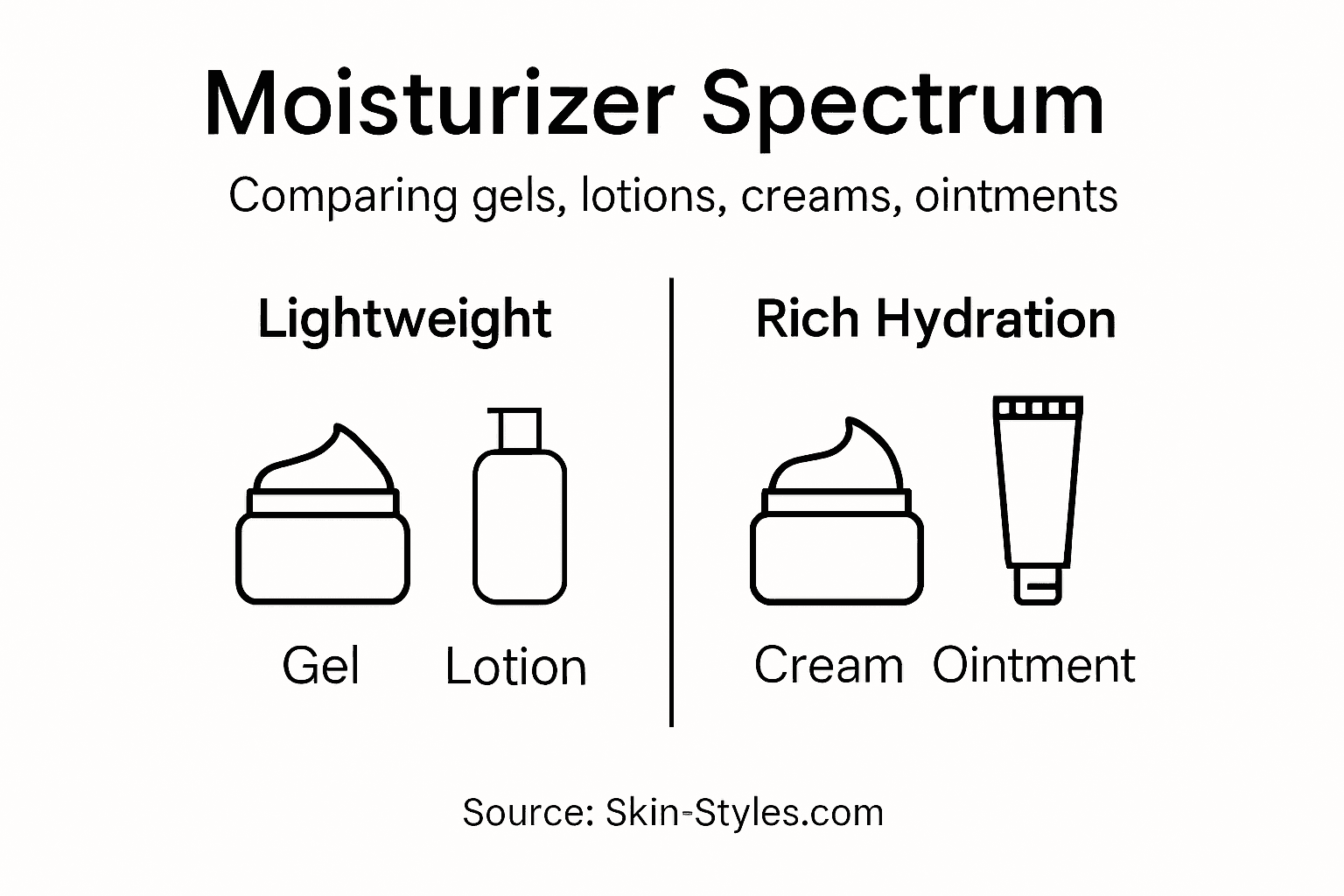
| Product | Water % | Oil Content | Best For | Absorption |
|---|---|---|---|---|
| Gels | 85-95% | Minimal | Oily, acne-prone | Very fast |
| Lotions | 65-80% | Light | Normal, slightly dry | Fast |
| Creams | 50-65% | Rich | Dry, sensitive | Slow |
| Ointments | 5-20% | Very high | Very dry, conditions | Minimal |
Compare how lotions, creams, gels, and ointments fit different skin needs:
| Product Type | Ideal Skin | Texture | Longevity |
|---|---|---|---|
| Gel | Very oily, acne-prone | Cool, watery | Short-term hydration |
| Lotion | Normal to oily | Smooth, fluid | Medium-lasting |
| Cream | Dry, sensitive | Thick, rich | Long-lasting moisture |
| Ointment | Severely dry, eczema | Greasy, dense | Continuous barrier effect |
Serums and Essences
These lightweight hydrators fall outside the traditional lotion-to-ointment spectrum. Serums deliver concentrated actives in minimal product, while essences add hydration without much nourishment.
Neither replaces a moisturizer. Instead, they layer underneath to boost hydration before sealing with lotion or cream.
Choosing the Right Texture
Formulations are tailored to maximize efficacy based on targeted skin layer and sensory experience. Your choice should match where you’re applying it and what your skin actually needs.
Face generally needs lighter products than body. Sensitive areas benefit from richer formulations. Oily zones work better with gels or lotions.
Think of moisturizers as a spectrum, not categories. Choose based on your specific skin condition, not just “dry” or “oily.”
Building Your Complete Routine
You don’t need to pick one product. Strategic layering of different textures maximizes benefits. A serum adds hydration, lotion seals it in lightly, and cream provides overnight nourishment.
Different body areas have different needs. Your face might need a gel cleanser, lotion moisturizer, and eye cream. Your body thrives with just a lotion.
Pro tip: Test a gel on your T-zone, lotion on cheeks, and cream on dry patches simultaneously—this lets you discover which texture works where without committing to full-sized products.
Find Your Perfect Moisturizer Match Today
Choosing between lotions and creams can feel overwhelming when your skin craves hydration tailored just for it. Whether you are struggling with dry patches that need the rich nourishment of creams or prefer the lightweight, quick-absorbing feel of lotions for oily or combination skin, the key is finding a product that truly suits your needs. Understanding terms like absorption speed, oil-to-water ratio, and skin type compatibility is the first step toward healthier skin.

Explore our carefully curated range of moisturizers at Skin-Styles.com and discover options that address your unique skin concerns. From rich creams that lock in moisture in cold, dry climates to refreshing lotions ideal for summer humidity, we offer solutions designed to transform your daily routine. Don’t wait for your skin to feel uncomfortable or dry. Visit our store now to experience hydration that lasts and feels just right. Your skin deserves personalized care — start shopping today for fast, easy delivery and expert product information.
Frequently Asked Questions
What is the main difference between lotions and creams?
Lotions are lighter, water-based formulations that absorb quickly, making them ideal for oily or combination skin. Creams are thicker, oil-based, and provide deeper hydration, suitable for dry or sensitive skin.
When should I use a lotion instead of a cream?
Use a lotion in warm, humid climates or during the daytime when you’re active and need a lightweight moisturizer that absorbs quickly. Lotions are also great for oily skin types.
Can I use both lotion and cream in my skincare routine?
Yes, you can layer a lightweight lotion first and follow it with a cream for enhanced hydration, especially for dry patches or if your skin needs prolonged moisture.
Are there specific skin conditions that require using creams instead of lotions?
Yes, creams are generally better for dry, mature, or sensitive skin conditions as they provide richer, longer-lasting hydration and help create a protective barrier on the skin.