

Mealtime with babies often turns into a messy challenge, especially when you want to protect sensitive skin and keep harmful chemicals away from your little one. Parents everywhere are searching for practical, non-toxic feeding accessories that simplify cleanup while supporting their child’s health. Discover how a baby placemat designed with safe materials and innovative features makes mealtimes cleaner, safer, and gentler on delicate skin.
Table of Contents
- Defining A Baby Placemat And Its Core Purpose
- Key Types And Safe Materials For Babies
- Essential Features And How They Work
- Health, Safety, And Skin Implications
- Care, Cleaning, And Common Mistakes
Key Takeaways
| Point | Details |
|---|---|
| Baby Placemats Serve Multiple Functions | They provide a contained eating space, protect surfaces, and aid in teaching children about boundaries and table etiquette. |
| Material Safety is Crucial | Parents should prioritize non-toxic, BPA-free materials to ensure the health and safety of their children during mealtime. |
| Innovative Design Enhances Functionality | Essential features like non-slip bases and raised edges help create a safe and organized feeding experience for infants and toddlers. |
| Proper Care Extends Lifespan | Regular, gentle cleaning and adherence to manufacturer instructions are vital for maintaining cleanliness and preventing material degradation. |
Defining a Baby Placemat and Its Core Purpose
A baby placemat is a specialized table accessory designed specifically for young children during mealtime, serving multiple critical functions beyond a standard table covering. These innovative mats provide a dedicated, contained eating surface that helps protect both the eating area and the child while making meal cleanup significantly easier.
Based on research about table mat design, baby placemats typically feature several core characteristics:
- Waterproof materials that prevent liquid absorption
- Non-slip bottom surfaces to maintain stability
- Raised edges to contain spills and food debris
- Soft, child-safe construction materials
- Compact sizing tailored for infant and toddler use
The primary purpose of a baby placemat extends well beyond simple table protection. These ingenious accessories help create structured eating environments that support developmental milestones and encourage independent feeding skills. By providing a defined personal space, baby placemats teach young children about boundaries, meal organization, and basic table etiquette.
Design Innovation plays a crucial role in modern baby placemats. Manufacturers have evolved these products from basic table coverings into multifunctional tools that address parents’ practical needs while engaging children’s sensory experiences.
Baby placemats transform chaotic mealtimes into structured, manageable experiences for both parents and children.
Pro tip: Select a baby placemat with suction capabilities to prevent unexpected sliding and create a more stable eating environment for your little one.
Key Types and Safe Materials for Babies
Baby placemats come in various types, each designed to address specific mealtime challenges and developmental needs. Understanding the safe materials for baby products is crucial for parents seeking to protect their children’s health and create a safe eating environment.
The primary types of baby placemats include:
- Silicone Placemats: Flexible, non-toxic, and easy to clean
- Fabric Placemats: Washable and often made from organic materials
- Disposable Placemats: Convenient for travel and one-time use
- Suction Placemats: Designed to stick to tables for added stability
- Divided Placemats: Feature sections to help with portion control and food organization
Material safety is paramount when selecting a baby placemat. Parents should prioritize products made from non-toxic, BPA-free materials that meet rigorous safety standards. Silicone stands out as a top choice due to its durability, ease of cleaning, and minimal chemical composition.
Here’s a quick comparison of popular baby placemat types and their unique advantages:
| Placemat Type | Best Feature | Typical Usage Scenario |
|---|---|---|
| Silicone | Durable, easy to clean | Everyday home meals |
| Fabric | Soft, eco-friendly | Dining at home or outside |
| Disposable | Hassle-free travel use | Restaurants and vacations |
| Suction | Maximum stability | Highchair feeding sessions |
| Divided | Organizes food easily | Promoting self-feeding |
Not all placemats are created equal - the right material can make a significant difference in your baby’s mealtime safety and experience.
Modern baby placemats have evolved beyond simple table coverings, incorporating design elements that support developmental milestones and make feeding times more manageable for both parents and children.
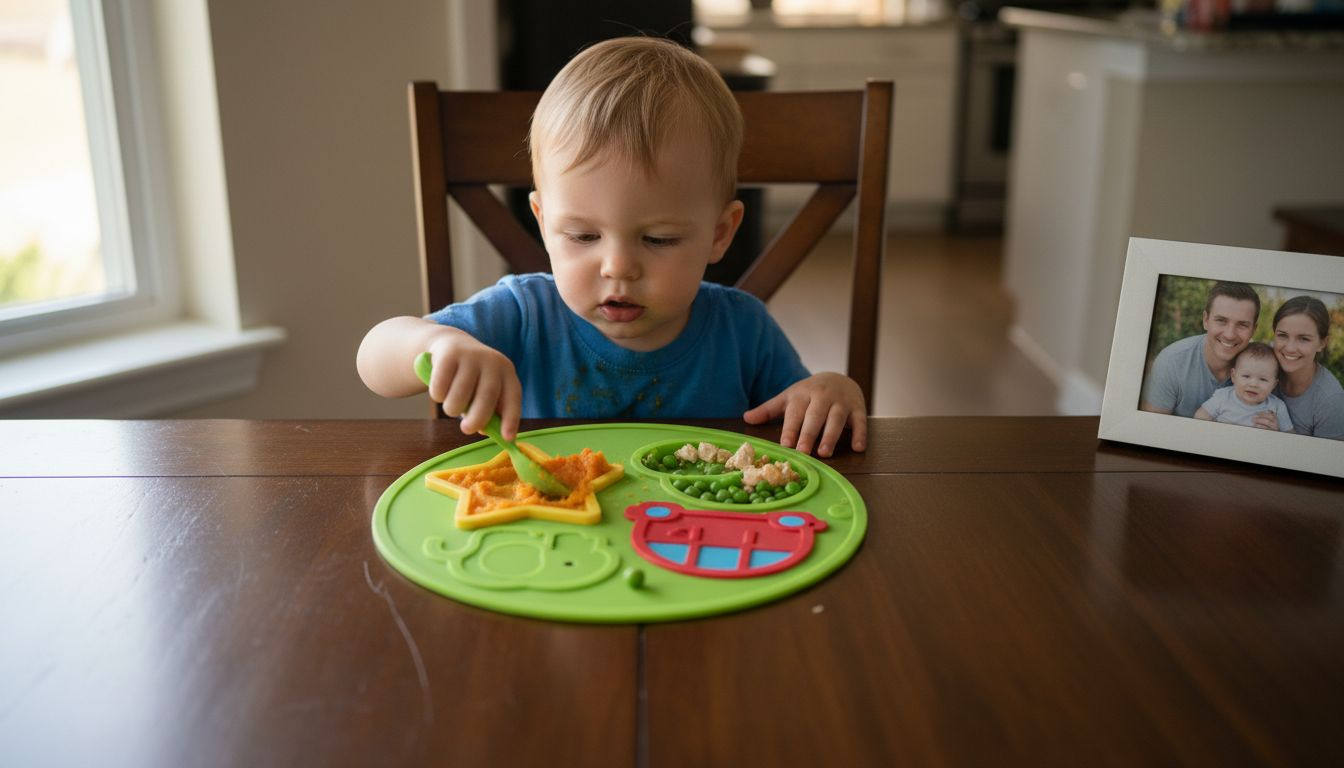
To better understand safe placemat materials, see the comparison below:
| Material | Safety Certification | Skin Impact |
|---|---|---|
| Food-grade Silicone | Usually FDA or LFGB approved | Gentle, inert and non-reactive |
| Organic Cotton | Often GOTS certified | Soft, well-tolerated |
| BPA-Free Plastic | Should be CPSC compliant | Can be less gentle for some babies |
| PVC-Free Film | Child product safety tested | Non-irritating if certified |
Pro tip: Always check for third-party safety certifications and avoid placemats containing potentially harmful chemicals like phthalates or BPA.
Essential Features and How They Work
Baby placemats are engineered with sophisticated features designed to transform mealtime into a safe, engaging, and developmental experience. Innovative placemat design has revolutionized how parents approach infant feeding, creating tools that are far more than simple table coverings.
Key essential features include:
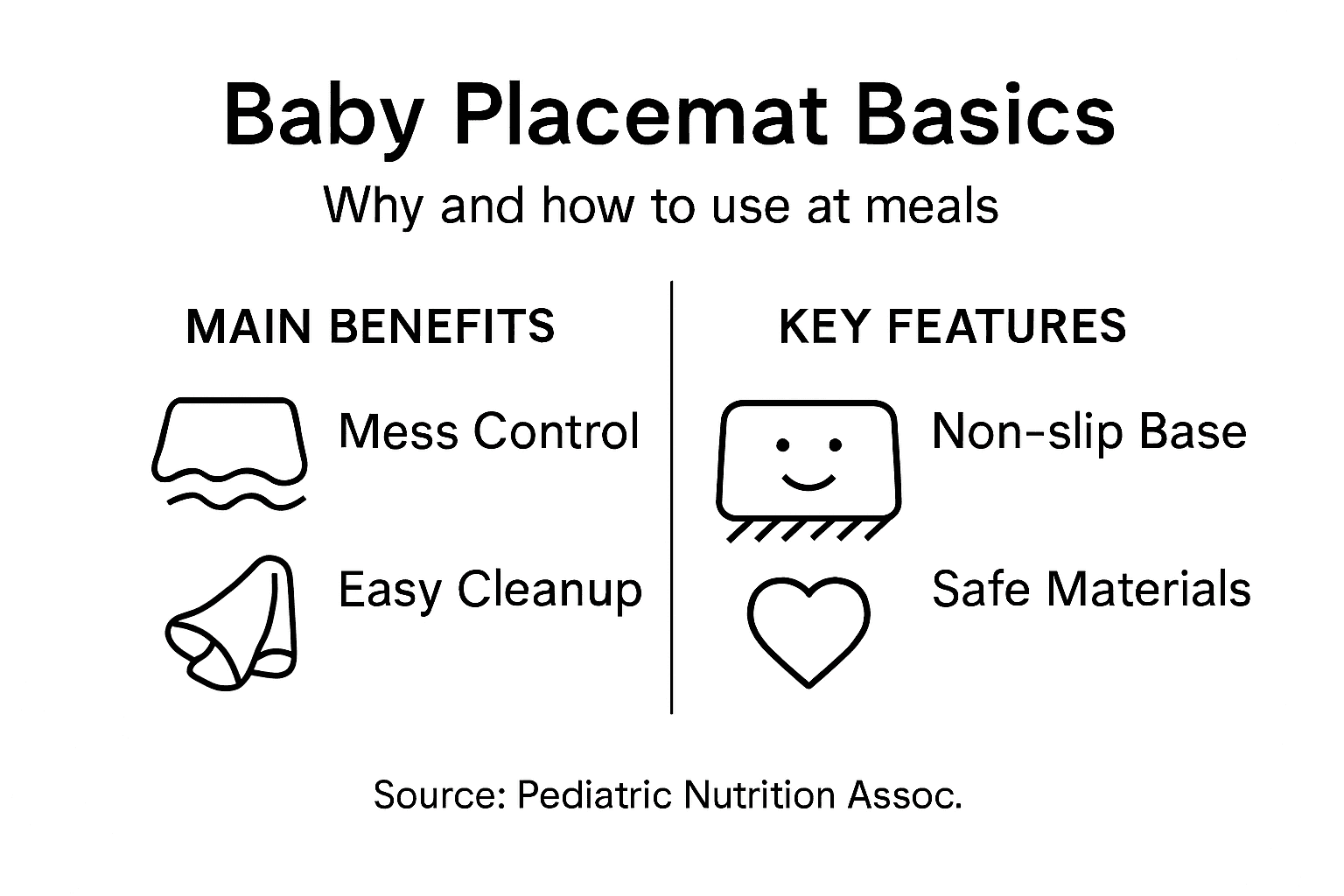
- Non-Slip Base: Prevents sliding and ensures stability during meals
- Raised Edges: Catches spills and contains food debris
- Divided Sections: Helps organize food and encourage portion control
- Easy-Clean Surface: Allows quick wipe-down or dishwasher cleaning
- Flexible Material: Adapts to different table surfaces and child movements
The functional design of baby placemats goes beyond basic protection. These innovative accessories serve multiple developmental purposes, helping children learn motor skills, explore food independently, and develop spatial awareness during meals. The strategic compartments and surfaces encourage babies to interact with their food more confidently and independently.
A well-designed placemat is not just a protective tool, but a learning instrument that supports a child’s sensory and motor skill development.
Modern placemats incorporate ergonomic elements that make feeding time smoother for both parents and children. Some advanced models feature educational graphics, interactive designs, and age-appropriate sections that transform mealtime into a playful, educational experience.
Pro tip: Choose a placemat with multiple functional zones to maximize learning opportunities and make mealtime both fun and educational.
Health, Safety, and Skin Implications
Infant health and safety are paramount when selecting baby placemats, with newborn skin protection requiring careful consideration of materials and design. Babies have exceptionally delicate skin that can easily become irritated by harsh chemicals or inappropriate product choices.
Key health and safety considerations include:
- Chemical-Free Materials: Avoid placemats containing toxic substances
- Hypoallergenic Surfaces: Prevent potential skin reactions
- Easy-Clean Designs: Minimize bacterial growth and contamination
- Non-Toxic Construction: Eliminate potential exposure to harmful compounds
- Soft, Gentle Textures: Protect sensitive infant skin from abrasion
Baby placemats interact directly with an infant’s eating environment, making their material composition critically important. Silicone and food-grade materials offer the safest options, providing a barrier that protects both the child’s skin and overall health during meals.
Choosing the right placemat is more than a convenience - it’s a crucial health decision for your baby’s well-being.
Dermatological research emphasizes the importance of selecting baby products that support skin integrity. Placemats should not only be functional but also gentle, preventing potential skin irritations and maintaining the natural protective barrier of an infant’s delicate skin.
Pro tip: Regularly inspect your baby’s placemat for wear and tear, and replace it immediately if you notice any signs of material breakdown or potential chemical leaching.
Care, Cleaning, and Common Mistakes
Maintaining baby placemats requires careful attention and specific techniques to ensure optimal hygiene and safety. Safe cleaning practices are critical for preventing bacterial growth and protecting your child’s health during mealtime.
Common cleaning and maintenance mistakes include:
- Irregular Cleaning: Allowing food residue to accumulate
- Harsh Chemical Use: Applying toxic cleaning agents
- Improper Drying: Not completely removing moisture after washing
- Ignoring Manufacturer Instructions: Failing to follow specific care guidelines
- Using Abrasive Scrubbers: Damaging placemat surfaces
Effective cleaning involves a systematic approach that balances thorough sanitization with gentle material preservation. Parents should develop a consistent routine that removes food particles, eliminates potential bacteria, and maintains the placemat’s structural integrity without causing wear or breakdown.
Consistent, gentle cleaning is the key to extending your baby placemat’s lifespan and ensuring a safe eating environment.
Modern baby placemats are designed with specialized materials that require specific care techniques. Silicone and food-grade materials often need different cleaning approaches compared to traditional fabric or plastic surfaces, making it crucial to understand the unique requirements of each type of placemat.
Pro tip: Create a dedicated cleaning station with mild, baby-safe detergents and soft cleaning tools to simplify your placemat maintenance routine.
Enhance Your Baby’s Mealtime Safety and Comfort Today
Mealtime challenges like spills, skin irritation, and unstable feeding setups can overwhelm even the most patient parents. This article highlights the importance of choosing the right baby placemat with safe, non-toxic materials and stable designs to protect your child’s delicate skin and support their developmental skills. At Skin Styles, we understand these needs and offer carefully selected products that prioritize your baby’s safety and comfort.

Discover our range of thoughtfully designed baby feeding accessories within our Other Products – Skin Styles collection. Choosing the ideal placemat with features like non-slip bases and gentle, hypoallergenic surfaces provides peace of mind while encouraging healthy mealtime habits. Visit Skin Styles now to explore how our solutions combine practical benefits with skin-friendly materials. Take the first step toward safer, cleaner, and more enjoyable feeding experiences for your little one.
Frequently Asked Questions
What is a baby placemat?
A baby placemat is a designed table accessory for young children that provides a dedicated eating surface, helping to protect the eating area and facilitate meal cleanup.
What features should I look for in a baby placemat?
When selecting a baby placemat, consider features like waterproof materials, non-slip bases, raised edges for containing spills, and easy-to-clean surfaces. These elements enhance safety and functionality during mealtime.
Are all baby placemats made from safe materials?
Not all baby placemats are created equal. It’s crucial to choose placemats made from non-toxic, BPA-free materials, preferably food-grade silicone or organic cotton, to ensure your baby’s safety and comfort.
How can I maintain and clean a baby placemat?
To maintain a baby placemat, regularly clean it with mild, baby-safe detergents and soft tools. Always follow the manufacturer’s care instructions to avoid damaging the material and ensure a hygienic eating environment.